𝘾𝗹𝗮𝘀𝘀 𝗮𝗻𝗱 𝗴𝗹𝗮𝘀𝘀 🪟🌆
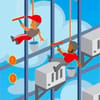
Window Cleaners turns a very normal job into something strangely dramatic. You are not fighting dragons, escaping zombies, or firing rockets into the moon. No. You are hanging outside giant buildings, staring into endless rows of dirty windows, armed with cleaning tools and the quiet pressure of not messing up. And somehow, against all logic, it works. It really works.
The first thing this game gets right is the feeling. Not just the job itself, but the odd little tension around it. There is always something slightly ridiculous about cleaning windows on the side of a skyscraper. One second you are doing routine maintenance, the next you feel like the star of a low-budget action movie where the villain is dust, streaks, and gravity 😅. That weird balance gives the game its own personality. It is simple, yes, but not boring. Light, yes, but not empty.
At its core, this is a cleaning game, a casual simulator, and a reflex-based task challenge all rolled into one shiny package. You move through dirty surfaces, remove grime, restore visibility, and work through levels that ask for speed, precision, or just enough patience to avoid turning one ugly window into three ugly windows. There is something deeply satisfying about seeing a cloudy mess become perfectly clear. It scratches that very specific part of the brain that loves order. You know the one. The part that wants to line up icons, organize folders, and somehow feels emotional after wiping a smudge away.
𝙒𝙝𝙚𝙧𝙚 𝙩𝙝𝙚 𝙟𝙤𝙗 𝙜𝙚𝙩𝙨 𝙛𝙪𝙣 ☁️🧽
This is not one of those games that overwhelms you with systems, menus, currencies, and twelve kinds of upgrades before you even touch the glass. Window Cleaners keeps the focus where it should be: on the act of cleaning and the flow of completing each task. That matters. It makes the whole thing feel immediate. You jump in, you understand the goal in seconds, and suddenly you are locked into this tiny cycle of motion, timing, and visual reward.
The fun comes from rhythm. Dirty area, swipe, clear section, move on, keep going. It sounds basic on paper, but once the pacing kicks in, it becomes weirdly absorbing. A lot of cleaning games rely entirely on comfort. This one adds a little edge. You are not just polishing surfaces in a cozy room with soft music and zero consequences. You are usually working in exposed spaces, often under mild pressure, and that gives the action a little crackle ⚡.
That contrast is what keeps the gameplay lively. It is relaxing, but not sleepy. Fast, but not chaotic beyond control. You are constantly making tiny decisions. Should you clear this corner first? Can you finish this section in one smooth pass? Are you being efficient, or are you panicking because one streak is still sitting there like an accusation? These are small choices, sure, but the game knows how to turn them into momentum.
And then there is the visual payoff. Dirty windows always look annoying. Clean windows always look great. That before-and-after effect never really gets old. It is the same magic behind satisfying cleanup videos, except now your hands are the ones doing the work. Every cleared panel feels like a tiny win. Not dramatic. Not world-changing. Just... right.
𝘿𝗼𝗻’𝘁 𝗹𝗼𝗼𝗸 𝗱𝗼𝘄𝗻 😵💫🏙️
There is also something funny about how this game plays with height. Even if the mechanics are simple, the setting adds tension almost for free. Big buildings, open air, long vertical drops, rows of windows stretching into the sky... it all gives the experience an extra kick. Suddenly a cleaning simulation feels a little dangerous. Or at least dangerous enough to make your palms do that tiny fake sweat thing.
That atmosphere matters more than people think. A game about window cleaning could easily feel flat if the space around the task had no personality. But here, the environment helps. The skyline, the glass, the sensation of hanging outside modern towers like someone who accepted a very questionable work contract for a surprisingly good paycheck 💸. It adds flavor without needing dialogue or big narrative twists.
And honestly, that is part of the charm. The game does not need to explain itself too much. It trusts the absurd beauty of the situation. You are cleaning giant windows in the middle of the sky. Of course that is memorable. Of course that is going to feel a bit cinematic. One gust of imaginary wind and suddenly your brain starts narrating everything like, “This is it. This is the moment I become the legend of floor thirty-seven.”
Window Cleaners benefits from that little layer of danger fantasy while staying approachable. It does not become punishing for the sake of it. Instead, it uses setting to make simple actions feel sharper. That is smart design. Very humble, but smart.
𝙏𝙝𝙚 𝙨𝙢𝙖𝙡𝙡 𝙨𝙩𝙪𝙛𝙛 𝙮𝙤𝙪 𝙨𝙩𝙖𝙧𝙩 𝙘𝙖𝙧𝙞𝙣𝙜 𝙖𝙗𝙤𝙪𝙩 🤏✨
What makes games like this stick is not complexity. It is care. The tiny details start to matter after a while. Clean coverage. Smooth movement. Finishing a section neatly instead of sloppily. Maybe that sounds silly from the outside, but once you are in it, you get it. A messy pass feels wrong. A clean pass feels elegant. Suddenly you are not just playing. You are working with standards.
That shift is where the game becomes quietly addictive. You stop thinking only about completion and start caring about quality. Can you make this run cleaner than the last one? Can you finish with fewer wasted movements? Can you clear the whole area with a kind of mechanical grace? It becomes its own little performance. Not loud, not flashy, just satisfying in that focused, almost meditative way.
There is also a nice universal appeal here. Players who like simulator games will enjoy the task-based progression. Players who enjoy casual games will appreciate how easy it is to understand. And players who secretly love organization, cleanup, and fixing messy spaces will absolutely lock in. No shame in it. Some people want boss fights. Some people want to remove dirt from giant glass panels while vibing in the sky. Both are valid 😌
The game’s accessibility helps too. You do not need a long tutorial. You do not need advanced skills. You just need attention, a little coordination, and the willingness to care about a job most games would ignore. That alone gives Window Cleaners a refreshing identity.
𝘼 𝗰𝗮𝘀𝘂𝗮𝗹 𝗴𝗮𝗺𝗲 𝘄𝗶𝘁𝗵 𝘀𝘂𝗿𝗽𝗿𝗶𝘀𝗶𝗻𝗴 𝗽𝗲𝗿𝘀𝗼𝗻𝗮𝗹𝗶𝘁𝘆 😎🪣
What I like most about Window Cleaners is that it embraces its own premise instead of apologizing for it. It knows exactly what it is. A cleaning game. A timing game. A visual satisfaction machine. A tiny skyscraper work fantasy. And because it commits to that identity, it ends up feeling far more entertaining than you would expect from the title alone.
This is the kind of game that sneaks up on you. You start with mild curiosity. Then you play a little longer. Then you realize your eyes are scanning for missed spots like a hawk. Then, somehow, you are emotionally invested in whether a digital pane of glass is fully spotless. That is how these games get you. Quietly. Politely. Like a mop with ambition.
On Kiz10, Window Cleaners feels right at home because it delivers quick access, readable gameplay, and instant satisfaction. No wasted time, no complicated setup, just straight into the action. It is ideal for players who want a browser game that feels active without being exhausting. You can dip in for a few minutes or stay longer chasing cleaner runs and smoother performance.
So yes, it is about washing windows. But it is also about rhythm, visibility, speed, control, and that very human urge to make ugly things look good again. There is comedy in that. There is calm in that. There is even a weird kind of glory in that. One swipe at a time, one glass panel at a time, one suspiciously satisfying shine at a time ✨
If you enjoy cleaning games, casual simulator games, skill-based browser challenges, or anything that transforms chaos into order, Window Cleaners is an easy recommendation on Kiz10. It is simple, sharp, and oddly magnetic. Also, and this is important, it may leave you staring at real-life windows with dangerous levels of judgment.


















 4.2 (18 votes)
 Share
Share
 Embed
Embed