🔵 A Tiny Sphere With Serious Problems
Beam Ball feels like the kind of game that begins with a simple promise and then, very quickly, starts laughing at your confidence. You see a ball. You see beams. You think, alright, I understand the assignment. Move carefully, avoid danger, maybe reach a goal, maybe survive a little chaos. Easy. Then five seconds later you are locked in, shoulders slightly raised, eyes glued to the screen, reacting like this tiny glowing object has somehow become your entire responsibility in life.
That is the charm of a good arcade skill game. It does not need a dramatic opening speech or a world-ending villain monologue. Sometimes all it needs is momentum, danger, and the quiet threat of failure floating just ahead of you. Beam Ball on Kiz10 takes that formula and turns it into something tense, clean, and weirdly hypnotic. It is the sort of game where every movement matters, every beam feels personal, and every successful run gives you that small but very real burst of pride that says, yes, my reflexes still work. Miracles do happen.
At first glance, the idea is compact. Guide the ball. Avoid the beams. Stay alive. But games like this are never just about the rule set. They are about rhythm. About nerve. About how quickly your brain can translate panic into precise motion.
⚡ Light, Motion, Mistakes
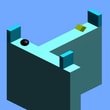
There is something immediately satisfying about the way Beam Ball frames its challenge. Beams are not random obstacles here. They feel sharp, intentional, almost theatrical. They cut across the screen with the kind of energy that makes the whole space feel dangerous even when nothing is technically touching you yet. The ball, meanwhile, becomes this fragile little hero caught in a glowing maze of bad decisions waiting to happen.
And that is where the fun lives.
The gameplay thrives on movement control. Sometimes it is about timing. Sometimes it is about threading a tiny gap while trying not to overcorrect. Sometimes it is about reading the pattern in front of you before your hands panic and do something foolish. It has that delicious arcade cruelty where the solution always looks obvious one second after you fail. “Oh, right, I should have moved left there.” Incredible insight. Very helpful now that the run is over.
What makes Beam Ball stick in your head is how fast it teaches you to respect space. Empty space. Dangerous space. That weird narrow zone between safe and catastrophic. Every gap starts to look either generous or insulting depending on your last five mistakes. A wide opening feels like a gift from the universe. A tight beam pattern feels like the game staring directly into your soul and saying, go on then, show me what you’ve got.
🎯 Reflexes Meet Quiet Strategy
It would be easy to call Beam Ball just another reflex game and move on, but that would miss something important. Yes, fast reactions matter. A lot. But the game also rewards anticipation. You cannot survive on speed alone if your brain is arriving late to the party. The strongest runs happen when you start reading the flow ahead of time, when you sense where the danger is shifting before it becomes urgent.
That changes the feeling completely.
Instead of reacting blindly, you begin to settle into a pattern of micro-decisions. Hold a line. Shift slightly. Wait half a second longer. Cut across now. Not now. Definitely not now. There is a very particular satisfaction in that process because it makes you feel involved at every moment. You are not watching a ball move. You are negotiating with the level in real time.
And when the pace picks up, the whole thing becomes beautifully mean. Not unfair. Mean in a focused, elegant way. Like a challenge designed by someone who knows exactly how much pressure your fingers can handle before they turn into nervous spaghetti.
🌌 The Beauty of Minimal Chaos
One of the smartest things about Beam Ball is how little it wastes. Games built around pure precision often work best when they keep the noise under control, and this one understands that. The visual identity feels direct. The ball is the center of attention. The beams are the threat. The path forward is clear in concept, but never easy in execution. That clarity matters, because in games like this, hesitation is expensive.
There is also a strange cinematic quality to it. Not in a giant blockbuster sense. More in the way a dark room with one moving spotlight can suddenly feel dramatic. Beam Ball creates tension from contrast. Bright danger. Clean motion. A vulnerable object trying to slip through impossible spaces. It does not need a hundred things happening at once. It needs the right things happening at the wrong time. That is much more effective.
And honestly, there is something funny about how emotionally invested you can become in a glowing circle. Ten minutes in, you are no longer thinking, nice little arcade game. You are thinking, no, no, no, not like this, we were doing so well. That tiny shift from casual player to personally offended survivor is where the addiction starts to sink its hooks in.
🧠 The Loop That Pulls You Back
Beam Ball has that dangerous “again” factor. Not the loud, flashy kind. The quiet kind. The one that sneaks up on you after a near-perfect run. You fail, but only barely. You were close. Very close. Too close to leave it there. So you try again. And this next attempt feels sharper. Then one pattern catches you off guard. Reset. Another try. Another slightly better read. Another tiny improvement.
That loop is hard to resist because progress feels visible. You are not unlocking some distant reward after hours of play. You are improving in the moment. Your reactions get cleaner. Your pathing gets smarter. The impossible sections start to look merely rude instead of impossible. Then suddenly you pass them, and your brain gets that sweet arcade signal: do that again.
This is where Beam Ball becomes more than a distraction. It becomes a proper skill game. The kind that turns repetition into mastery instead of boredom. Every failed attempt teaches something, even if the lesson is just “stop panicking when the beams cross.” Valuable wisdom. Surprisingly transferable to life.
🌀 Why It Works So Well on Kiz10
On Kiz10, Beam Ball fits perfectly into that space between quick entertainment and real challenge. You can load it up for a short session and instantly get what makes it compelling. There is no heavy setup. No bloated complexity. Just the immediate thrill of movement, hazard, and control. But beneath that simple surface is enough tension to keep you coming back much longer than you planned.
It is also the kind of online ball game that works for different moods. Want something focused but not complicated? It delivers. Want a skill challenge that punishes sloppy movement and rewards precision? Absolutely. Want to test whether your reflexes are sharp or whether your brain is mostly decorative today? Well… it will answer that too, perhaps a little too honestly.
The best part is that Beam Ball does not pretend to be anything else. It knows its identity. It is about concentration, timing, and the satisfying terror of moving through danger by inches. No filler. No nonsense. Just a clean challenge that gets under your skin in the best possible way.
✨ One Ball, One Beam Too Many, One More Try
Beam Ball is the kind of game that thrives on pressure without becoming exhausting. It gives you clear goals, immediate feedback, and that lovely arcade balance where success feels earned and failure feels fixable. It is tense, sleek, and just chaotic enough to stay exciting.
If you enjoy reflex games, precision arcade challenges, obstacle-dodging ball games, or anything that transforms simple movement into a serious test of timing, this one has a sharp little bite to it. On Kiz10, Beam Ball turns a glowing ball and a few dangerous beams into a full-blown nerve contest. And the weird part is, it works beautifully.











 4.1 (33 votes)
 Share
Share
 Embed
Embed