Detention Air And A Locked Door 🏫🪟
Boy Escape from School: Runaway starts with that annoying, too real kind of trouble. One dumb accident, one broken window, one adult stare that says you are absolutely not winning this argument, and suddenly you are alone in a classroom after everyone’s gone home. The building feels different when it is empty. Desks look like little islands. The clock sounds louder than it should. Your footsteps sound guilty even when you are doing nothing. And the funniest part is that the “punishment” is supposed to make you sit still. But the moment you realize the door is locked and the hallway is quiet, your brain flips into escape mode like a switch. Not panic mode. Escape mode. The kind that says, alright, we are doing this, but we are doing it smart. 😬🔑
This is a puzzle adventure escape game where you win by noticing details. The school is full of small clues that feel harmless until you start connecting them. A chair that is slightly out of place. A cabinet that looks untouched. A keyhole that is not where you expected it to be. The game makes you act like a sneaky little detective with dusty shoes, except your suspect is the building itself, and it is not exactly cooperative.
Hallway Chess With Adults 🚶♂️👀
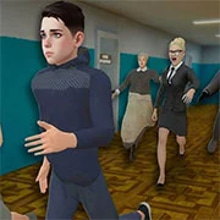
Once you’re out of the first room, you quickly learn the school is not empty empty. Staff and teachers patrol. Not constantly, not like a nonstop horror chase, but enough to make timing matter. That’s what gives the puzzles teeth. You are not only solving what to do, you are solving when to do it. You listen. You peek. You move when the coast is clear. And yes, sometimes you get impatient and take a risky step because you think you have time, and then you hear footsteps and your heart does that weird jump like it just tripped over itself. 😅👂
It feels like a quiet strategy game hiding inside an escape room. You start reading routes. You learn that a certain hallway is safe only for a few seconds. You learn that standing in the wrong place is basically an invitation for someone to spot you. It’s not about super fast reactions. It’s about calm decisions, the kind that make you feel clever even when you are just… walking slowly and trying not to look suspicious. Which is honestly harder than it sounds. 😭
Little Objects That Become Big Plans 🔧🧷
The best escape games treat everyday objects like treasure, and Boy Escape from School: Runaway nails that feeling. A random item you find is never just random. It’s a possibility. It’s a tool. It’s the beginning of a plan that you haven’t fully understood yet. You pick something up and you immediately start guessing. Is this for a lock? A distraction? A hidden compartment? A switch? And the game encourages that curiosity without turning into a messy scavenger hunt.
There’s a satisfying rhythm to it. Explore a room. Spot something odd. Interact. Get a clue. Try it somewhere else. Hear a tiny success sound. Feel slightly smug. Then get humbled by the next puzzle because you thought you were smarter than the school. 😅📚
And because the environment is a school, the puzzles feel grounded in that setting. Doors, cabinets, classrooms, storage spaces, little maintenance details that most people ignore. It’s not fantasy magic. It’s everyday logic, twisted into a challenge. That makes the escape feel more personal, like you’re not saving the universe, you’re just trying to win against the most stubborn building on earth.
Patrol Timing And The Art Of Not Being Seen ⏱️🥿
A big part of the tension comes from movement that has to be careful. You can’t just sprint around like a chaos gremlin without consequences. Sometimes the smartest move is waiting. And waiting in an escape game is weirdly intense, because you’re not bored, you’re listening. You’re watching. You’re counting in your head like, okay, footsteps left to right, now the corner is clear, now I go. It feels like the school is breathing, and you’re trying to move between breaths. 😶🌫️
This is where the game starts feeling competitive, even if you’re alone. You begin to challenge yourself. Can I do this section cleaner? Can I cross this area without stopping? Can I grab the clue and leave before anyone turns back? And when you pull it off, it feels like a tiny victory that your brain treats like a trophy. 🏆😅
Mistakes don’t just cost you time, they cost you confidence. Getting caught makes you rethink your route. It makes you replay the last few seconds in your head, like a mini replay system inside your own brain. That’s what good stealth puzzle design does. It turns you into a planner.
Rooms That Feel Normal Until They Don’t 🗺️📌
There’s something creepy about empty schools, even when the game isn’t trying to be a horror game. The long corridors. The closed doors. The echo. The feeling that you’re not supposed to be here. Boy Escape from School: Runaway uses that atmosphere to keep you alert. You’ll find yourself checking corners for no reason. You’ll pause before opening a door, even if nothing has attacked you so far, because the vibe is tense and your imagination is doing extra work. 😅🫣
As you move deeper, the school becomes a map you build in your head. You remember where you saw that locked door. You remember the room with the weird object you couldn’t use yet. You remember that one hallway that feels too exposed. The game becomes this loop of discovery and return. Find clue. Backtrack. Apply clue. Unlock new area. Repeat. It’s classic quest style puzzle flow, but it works because the building feels like one connected place, not just separate levels glued together.
Hints Are There, But Pride Is Also There 😅💡
Yes, you can get hints if you’re stuck, and that’s a lifesaver when your brain is tired and you’re staring at the same bookshelf like it owes you money. But the game also tempts your pride. You want to solve it yourself. You want that moment where the solution clicks and you go ohhhh… of course… how did I not see that. That click is the real reward. Not just escaping, but feeling like you outsmarted the trap of your own confusion. 🧠✨
And the puzzles are designed to reward observation, which means the hint system feels like a backup, not a crutch. If you take your time, look closely, and think like an escape room player, you’ll usually find the thread. The game doesn’t want you to brute force. It wants you to notice.
Reset Runs, Fresh Attempts, Real Progress 🔁🧠
One of the coolest parts is how each attempt can feel different, because when a run ends, you’re back at the start and your escape plan resets. That sounds harsh, but it creates a “one more try” loop that is dangerously effective. The school feels the same, but you aren’t the same. You remember things. You move faster. You stop wasting steps. You start building a mental checklist. First get that item. Then avoid that patrol timing. Then hit that room before the hallway gets busy. You become your own speedrun coach without even trying. 😅⏱️
That kind of replay design is perfect for a browser puzzle game on Kiz10 because you can play it in quick bursts. One attempt, then another. One clean run, then a messy run where you try a different idea. It stays fresh because you are constantly adjusting.
The Exit Isn’t Just A Door, It’s A Mood 🏁🔓
When you finally get close to escaping, the tension changes. You start acting extra careful because you don’t want to lose it at the end. The last steps feel louder. The school feels like it’s watching you more closely. You’re holding your breath over simple actions because you’ve already invested effort, and the game makes that effort matter.
And if you do make it out, it’s not just relief, it’s this goofy little triumph. Like, yes, I escaped detention, I escaped the patrols, I solved the puzzles, I beat the building. It’s a small story, but it feels big because you lived every decision. Boy Escape from School: Runaway on Kiz10 is for players who love escape room logic, quest style exploration, and stealthy timing where your best weapon is your attention. Now go. The bell isn’t ringing for you. You’re ringing it yourself. 🔔😈





 Share
Share
 Embed
Embed


