🫧 Welcome to Class, Your Exam Is Pure Chaos
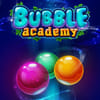
Bubble Academy doesn’t pretend to be calm. It greets you with cheerful colors and a “this is easy” smile, then quietly turns the room lights off and says, alright, show me your aim. On Kiz10, it plays like a classic bubble shooter puzzle game with a slightly enchanted vibe: you fire colored bubbles, match groups, watch clusters pop, and try to keep the board from turning into a sticky ceiling of bad decisions. The difference is the mood. This isn’t just popping for points. It feels like you’re training in a magical bubble school where every shot is a lesson and every miss is… well, a loud, embarrassing correction. 😅
The core rule is instantly familiar: match the same colors, clear space, and keep moving forward. But the game has that old-school “one more try” energy because it’s not only about clearing what’s in front of you. It’s about clearing it in the right order. You can absolutely win by firing randomly for a little while, sure, but Bubble Academy is the type of puzzle that eventually asks you to think like a planner. Look up. Spot what’s holding the biggest chunk. Read the angles. Decide if your next bubble is a weapon or a mistake you’ll regret for the next five shots.
✨ Magical Pops, Real Puzzle Pressure
The first thing you notice is how satisfying the pops feel. When a clean match lands, it’s like a tiny reward bell goes off in your brain. When you trigger a bigger collapse, when a hanging group drops because you removed the last support, that’s the good stuff. That’s the moment you sit up a bit straighter and start acting like you’re in control, even if you’re still one unlucky color away from disaster.
And yes, the game does have that “magic effects” feeling. The bubbles don’t just sit there like plain plastic; they feel enchanted, like the academy wants each match to look like a spell working properly. It gives the whole experience a playful tone, but don’t let that fool you. Under the cute surface is a sharp little logic puzzle. The board is always asking: are you clearing for survival, or clearing for advantage?
🧠 The Secret Skill: Shooting for the Future
Here’s where Bubble Academy becomes addictive: you’re never only solving the current moment. You’re shaping the next moment. If you match a small group in the wrong place, you might “win” the shot but lose the next three turns because you blocked your best angle. If you place a bubble as a setup, leaving two of the same color waiting, you’re basically planting a trap for the board. Then when the right color appears, you cash it in and the whole structure starts to behave.
That’s the rhythm that separates casual popping from real progress. You start building little plans. You start thinking in two-step patterns. You stop chasing the closest match and start chasing the match that changes everything. And the funniest part is how quickly you become emotionally attached to these plans. You’ll find yourself whispering, please give me blue, just one blue, I can drop half the ceiling, and when it happens you feel like a wizard for three seconds. 🧙♂️🫧
🏛️ Ten Worlds, Same Cannon, Different Headaches
Bubble Academy is built around the idea of exploring multiple worlds, and that matters because it keeps the pacing fresh. A bubble shooter can get repetitive if it only changes the wallpaper. Here, the sense of “moving through worlds” helps your brain reset. Each new section feels like a new classroom with a different kind of problem waiting on the board. The layouts shift, the color stacks feel different, and your strategy has to adapt even if the controls stay simple.
Some boards reward patience, where careful clearing creates huge chain reactions. Other boards push you into quick decisions, where hesitation fills the ceiling with clutter and you start playing damage control. That variety is the real fuel for long sessions. You’re not only improving at aiming, you’re improving at reading situations. You become better at spotting anchors, better at predicting what will fall, better at using walls for angles instead of treating them like decoration.
🎯 Angles Are the Academy’s Hidden Language
If you want the game to feel “easy,” learn to love bank shots. Straight lines are fine until the board blocks them, and the board will block them. That’s basically its hobby. The side walls are where your best plays come from. You bounce a bubble into a tight pocket, land a color exactly where it needs to be, and suddenly the level opens like a door that was pretending to be locked.
There’s a particular satisfaction to a good angle shot. It feels intentional. It feels skilled. It also feels like you got away with something. The trick is not rushing it. A sloppy bank shot can stick a random bubble into a bad corner, and that bad corner will haunt you. You’ll be staring at it later thinking, why did I put that there, that bubble is useless, and now it’s blocking the perfect collapse. Classic Bubble Academy punishment: it doesn’t always end your run instantly, it just makes your future harder. 😭
⚡ Energy Bubbles and the “Don’t Ignore the Special Stuff” Rule
Bubble Academy also pushes you to find special energy bubbles. Think of them as the hidden homework: you can clear boards without caring about them, but the game feels more rewarding when you hunt them down. They encourage you to explore the board instead of only clearing the easiest path. Sometimes they’re tucked behind awkward colors. Sometimes they’re sitting in places that tempt you into risky shots. That’s good design for a bubble puzzle game, because it keeps you from playing on autopilot.
Chasing special bubbles changes your approach. You stop asking only “what’s the fastest clear?” and start asking “what’s the smartest clear that also grabs what I need?” That extra objective keeps the levels from feeling like copy-paste. It turns your run into a small treasure hunt inside a color puzzle.
😈 The Most Common Mistake: Winning the Shot, Losing the Board
A lot of losses in bubble shooter games come from the same mistake, and Bubble Academy is no exception: you take the obvious match too often. It feels safe, it feels productive, and then suddenly you have a board full of scattered single bubbles with no clean matches. Your cannon becomes a problem generator. Every new bubble color feels like an insult. You start firing for survival, not strategy, and the whole game changes tone from “puzzle” to “please let me breathe.”
The fix is simple and annoying: slow your thinking down, not your hands. Watch for anchors. Prioritize shots that drop hanging groups. Use your “bad color” shots as placement shots, creating future matches instead of throwing them randomly. The moment you start doing that, the game feels fairer, because you’re no longer reacting late. You’re steering the board.
🏁 Why Bubble Academy Feels So Good on Kiz10
Bubble Academy is the perfect type of browser puzzle game: immediate to play, easy to understand, and secretly deep enough to keep you chasing cleaner clears. It’s bright, magical, and satisfying, but it still demands focus. You’ll laugh when a shot goes wrong, you’ll celebrate when a cluster drops, and you’ll absolutely do the thing where you say “last level” and then play three more because you’re convinced you can beat your own performance.
If you like bubble shooter puzzle games, match-3 style popping, bank-shot angles, and that satisfying feeling of turning a messy board into a clean victory, Bubble Academy belongs on your Kiz10 rotation. Just remember: the academy doesn’t grade your effort. It grades your aim. 🫧🎯✨



 3.5 (12 votes)
 Share
Share
 Embed
Embed