𝐓𝐡𝐞 𝐑𝐨𝐚𝐝 𝐈𝐬 𝐀 𝐏𝐚𝐢𝐧𝐭 𝐓𝐞𝐬𝐭, 𝐀𝐧𝐝 𝐈𝐭 𝐇𝐚𝐭𝐞𝐬 𝐇𝐞𝐬𝐢𝐭𝐚𝐭𝐢𝐨𝐧 🎨🚗
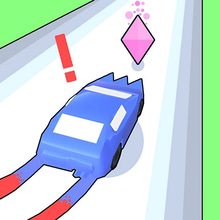
Color Crash on Kiz10 feels like someone took a racing lane, spilled a bucket of neon paint across it, and then decided the only fair rule would be: you may destroy what matches you, and everything else is a problem with teeth. The concept is clean, almost rude in how direct it is. Your car has a color. The lane fills with obstacles of different colors. If it matches yours, you can smash through it like you own the place. If it doesn’t match, you better dodge, because the game isn’t here to be forgiving. It’s here to see if you can keep your head while the screen tries to trick your eyes into making a stupid choice at full speed.
And it’s not just “left, right, survive.” The game has that spicy little twist where your brain starts treating color like a threat system. Red isn’t “red.” Red is “safe” or “danger” depending on what you currently are. Blue isn’t “blue.” Blue is “keep going” or “do NOT touch” depending on the moment. You’re constantly re-labeling reality on the fly, which sounds dramatic, but that’s actually the best way to describe it. One second you feel in control, the next you’re like… wait, was I green or was that obstacle green? Did I just gaslight myself into a crash? 😵💫
𝐂𝐫𝐚𝐬𝐡𝐢𝐧𝐠 𝐈𝐧𝐭𝐨 𝐓𝐡𝐞 𝐑𝐢𝐠𝐡𝐭 𝐂𝐨𝐥𝐨𝐫 𝐅𝐞𝐞𝐥𝐬 𝐋𝐢𝐤𝐞 𝐖𝐢𝐧𝐧𝐢𝐧𝐠 𝐀𝐧 𝐀𝐫𝐠𝐮𝐦𝐞𝐧𝐭 💥🟩
There’s something oddly satisfying about being allowed to hit obstacles on purpose. Most games train you to avoid everything. Color Crash hands you a list of things you’re allowed to destroy, and suddenly you feel powerful, like the lane is finally respecting you. That feeling lasts exactly until you realize the “allowed” list changes depending on color, and now you have to be precise, not just brave.
When you hit the correct color, the impact has a punchy, arcade kind of joy. It’s like the game is saying, yes, that’s the instinct I wanted. Keep going. Keep pushing. Don’t slow down. And because you’re collecting gems along the way, there’s always an extra temptation to take a slightly risky line just to grab one more shiny reward. It’s the classic trap: greed dressed up as confidence.
The best runs aren’t the ones where you play timid. The best runs are the ones where you flow. You’re not swerving like a panicked bee, you’re sliding neatly into safe lanes, smashing what matches, and slipping away from what doesn’t. When you get into that rhythm, the game feels smooth and fast, like you’re surfing a color-coded storm. 🌪️🎨
𝐓𝐡𝐞 𝐁𝐫𝐚𝐢𝐧 𝐏𝐚𝐫𝐭: 𝐂𝐨𝐥𝐨𝐫 𝐌𝐞𝐦𝐨𝐫𝐲 𝐚𝐧𝐝 𝐒𝐩𝐥𝐢𝐭-𝐒𝐞𝐜𝐨𝐧𝐝 𝐋𝐢𝐞𝐬 🧠⚡
Here’s the sneaky thing about Color Crash: it’s not only testing reflexes. It’s testing attention under pressure. The lane gets busy, obstacles stack up, and your brain tries to simplify the world. It wants to assume patterns that aren’t there. It wants to go “okay, I’ve been smashing blue stuff for a while, so blue must be safe.” Then the game changes the context and suddenly blue is the reason your run ends. That moment is always funny in the painful way, because you can feel yourself making the mistake as it happens.
A lot of players crash not because they didn’t react fast enough, but because they reacted to the wrong information. They saw “bright color” and moved. They didn’t confirm “matching color” and moved. Color Crash is basically teaching you to do a tiny verification check without slowing down. It’s like playing a sprinting version of “read carefully,” which is evil, but also kind of brilliant. 😅
And then there’s the timing layer. Some obstacles look safe until you realize you don’t have space to escape after you commit. You dodge an unsafe color… only to dodge into another unsafe color. The lane is a funnel, and it punishes messy movement. Clean movement is everything. Small corrections. Calm choices. No dramatic swerves unless you absolutely have to. Drama is expensive. 🎭💸
𝐆𝐞𝐦𝐬, 𝐁𝐨𝐨𝐬𝐭𝐬, 𝐚𝐧𝐝 𝐓𝐡𝐞 𝐌𝐨𝐦𝐞𝐧𝐭 𝐘𝐨𝐮 𝐆𝐨 “𝐎𝐡 𝐍𝐨, 𝐍𝐨𝐖 𝐈𝐭’𝐬 𝐅𝐚𝐬𝐭” 💎🚀
Gems are the little shiny magnets that turn a safe run into a risky run. You see them and your brain goes, I can grab that. Of course I can grab that. I’m basically in control. Then you shift lanes, clip the wrong color, and your confidence becomes a memory. But when you do collect gems cleanly, it adds this nice layer of purpose beyond survival. You’re not only lasting, you’re building a better score and pushing for that “perfect line” feeling.
Speed boosts add a different kind of spice. They’re exciting because they reward you, but they also amplify your mistakes. A boost doesn’t care if you’re ready. It just makes everything arrive sooner. That’s the moment where Color Crash stops being “fun little color car game” and becomes “okay, focus, focus, focus.” Because the faster you go, the less time you have to confirm colors, plan lanes, and recover from a decision that was slightly off.
The game also nudges you forward with progression. You’re leveling up, unlocking new regions, and that matters more than it sounds. A new region isn’t just a new background. It’s a fresh mood. Fresh visual noise. New little ways your eyes can get distracted. Your hands might be ready, but your eyes have to adapt too. And that constant refresh keeps the loop from going stale. You’re always chasing the next “clean run” in a slightly different atmosphere.
𝐓𝐡𝐞 𝐂𝐡𝐚𝐨𝐬 𝐒𝐭𝐫𝐚𝐭𝐞𝐠𝐲: 𝐇𝐨𝐰 𝐓𝐨 𝐒𝐮𝐫𝐯𝐢𝐯𝐞 𝐋𝐨𝐧𝐠𝐞𝐫 𝐖𝐢𝐭𝐡𝐨𝐮𝐭 𝐆𝐞𝐭𝐭𝐢𝐧𝐠 𝐁𝐨𝐫𝐢𝐧𝐠 😈🛣️
If you want to get better at Color Crash on Kiz10, the biggest upgrade isn’t speed, it’s discipline. Discipline sounds boring, but in this game it looks cool. It looks like staying centered when you don’t need to move. It looks like refusing a gem that would force you into a dangerous lane. It looks like choosing the safe smash target instead of swerving for the flashy one.
Try this mindset: every lane change is a cost. Every move is a little bet. If you change lanes, you should be gaining something real, like avoiding an unsafe obstacle or lining up a guaranteed smash. If you’re changing lanes just because you feel nervous, you’re feeding the game exactly what it wants. Nervous movement creates accidents.
Another thing that helps is developing a habit of “color first, object second.” Don’t look at the obstacle shape and decide. Look at the color and decide. Your eyes will try to prioritize motion and closeness, but color is the rule. If you lock onto the rule, you’ll feel calmer, and calm is how you survive when the lane gets crowded. 😌
Also, accept that not every run is meant to be perfect. Some runs are for learning. Some runs are for warming up your brain. The funny part is that your best scores usually happen when you’re not desperately chasing them, when you’re just playing clean and letting the rhythm build naturally. And then you’ll mess up anyway because you got excited. That’s fine. The “play again” button is basically part of the game’s design language. 😄🎮
𝐓𝐡𝐞 𝐖𝐢𝐧: 𝐖𝐡𝐞𝐧 𝐘𝐨𝐮 𝐅𝐞𝐞𝐥 𝐋𝐢𝐤𝐞 𝐘𝐨𝐮’𝐫𝐞 𝐃𝐫𝐢𝐯𝐢𝐧𝐠 𝐓𝐡𝐫𝐨𝐮𝐠𝐡 𝐀 𝐏𝐚𝐢𝐧𝐭𝐞𝐝 𝐃𝐫𝐞𝐚𝐦 ✨🚗
When Color Crash clicks, it feels like you’re not reacting anymore. You’re predicting. You’re gliding into the correct lanes early, smashing matching colors with confidence, and avoiding wrong shades without that last-second panic swipe. The lane becomes readable. The chaos becomes manageable. And the game turns into this bright, punchy flow state where you’re basically racing through a color puzzle at high speed.
That’s the magic. It’s simple enough to jump into instantly, but it has just enough bite to keep you coming back. Your score always feels beatable. Your last crash always feels fixable. Your next run always feels like it might be the run where everything lines up and you don’t make that one tiny mistake that ruins the whole story. And yeah, that story is you, a tiny car, and a worlds that only respects you when you match the right color at the right moment. 🎨🏁





 4.4 (37 votes)
 Share
Share
 Embed
Embed