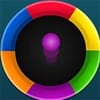
𝐎𝐧𝐞 𝐁𝐚𝐥𝐥, 𝐎𝐧𝐞 𝐖𝐡𝐞𝐞𝐥, 𝐀𝐧𝐝 𝐍𝐨 𝐑𝐨𝐨𝐦 𝐅𝐨𝐫 𝐒𝐭𝐮𝐩𝐢𝐝 𝐌𝐢𝐬𝐭𝐚𝐤𝐞𝐬 🎨
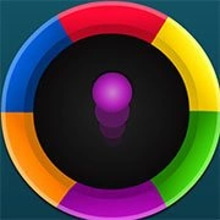
Color Spin is built on the kind of idea that sounds almost too simple to be dangerous. A ball bounces. A wheel spins. Your job is to rotate the circle so the ball lands on the matching color. Easy, right? Public app descriptions lay it out exactly like that: you spin the wheel left or right so the color at the bottom matches the ball, then try to keep the bounce going as long as possible.
And that, of course, is where the trap begins.
Because games like this live in the gap between understanding and execution. Understanding takes about three seconds. Execution is where your nerves start sweating. The rules are clean, almost elegant. Match the color. Keep the rhythm alive. Do not let one late reaction turn the whole run into a tiny public disaster. Color Spin on Kiz10 feels exactly like that kind of arcade challenge: immediate, bright, fast, and secretly vicious once the pace starts climbing.
What makes it click is how little clutter there is between you and the pressure. No giant menus. No bloated mechanics. No dramatic story about ancient color guardians and the sacred spinning orb of destiny. Just timing, reflexes, and a board that becomes less forgiving the moment your confidence gets loud. It is a pure skill game wearing a cheerful face, which honestly makes it even meaner.
𝐓𝐡𝐞 𝐖𝐡𝐞𝐞𝐥 𝐋𝐨𝐨𝐤𝐬 𝐂𝐚𝐥𝐦. 𝐘𝐨𝐮 𝐖𝐢𝐥𝐥 𝐍𝐨𝐭 𝐁𝐞 🌀
The central mechanic is brilliant because it asks for speed without letting you get sloppy. You are not simply reacting to a random visual cue. You are rotating the whole structure to create the right landing. That tiny difference matters. It means every save feels active. You are not waiting for the correct color to appear. You are making it appear just in time.
That creates a very specific kind of arcade tension. The ball comes down, your brain identifies the color, your hand moves, the wheel turns, and for one sharp little moment everything depends on whether that timing lines up. When it does, the game feels smooth and clean and almost hypnotic. When it does not, the run ends with the kind of tiny failure that somehow feels louder than it should.
And then you restart, obviously.
That is the real power of Color Spin. It has the perfect retry loop. One attempt is quick. The mistake is easy to understand. The correction feels possible. So instead of walking away, you go again. Maybe this time the sequence stays clean. Maybe this time your reactions hold. Maybe this time you stop pretending that panic-spinning the wheel counts as strategy 😅
𝐂𝐨𝐥𝐨𝐫 𝐌𝐚𝐭𝐜𝐡𝐢𝐧𝐠 𝐖𝐢𝐭𝐡 𝐀𝐫𝐜𝐚𝐝𝐞 𝐓𝐞𝐞𝐭𝐡 ⚡
What gives Color Spin its bite is how it turns a color-matching concept into a reflex challenge instead of a calm puzzle. Plenty of games use color as a relaxed visual layer. This one uses color like a demand. See it fast. Read it right. Rotate now. The whole experience becomes less about decoration and more about immediate recognition under pressure.
That makes the game surprisingly intense for something so visually clean. A red ball is not just red. It is a deadline. A wrong segment is not just wrong. It is the edge of failure approaching at speed. The wheel itself becomes this little arena where every successful match buys another second of control and every hesitation starts a countdown to embarrassment.
There is something oddly beautiful about that. Great arcade games do not always need complexity. They need tension that can be felt instantly. Color Spin gets there with almost nothing. A circle. A bounce. A decision. Then another. Then another, faster than before. It is minimal design doing maximum emotional damage in the most entertaining way.
𝐑𝐡𝐲𝐭𝐡𝐦, 𝐅𝐨𝐜𝐮𝐬, 𝐀𝐧𝐝 𝐓𝐡𝐚𝐭 𝐎𝐧𝐞 𝐌𝐨𝐫𝐞 𝐑𝐮𝐧 𝐏𝐫𝐨𝐛𝐥𝐞𝐦 🎯
After a while, the game stops feeling like separate reactions and starts feeling like rhythm. That is always a good sign in a skill game. You are no longer translating each bounce into panic. You are flowing with the pattern. See color. Turn wheel. Land clean. Repeat. When that rhythm appears, even briefly, Color Spin feels fantastic.
Of course, the problem with rhythm games disguised as arcade puzzles is that once you feel the flow, you want it back immediately. One broken run turns into three more because you know what the smooth version feels like now. You have touched competence, and unfortunately that makes average attempts unbearable.
This is where the game becomes properly addictive. Not because it overwhelms you with rewards or unlocks, but because it makes improvement visible. A cleaner streak. A longer survival run. Sharper reactions. Better anticipation. These are small gains, but they matter. They give every retry purpose. You are not just replaying. You are refining.
That is a big part of why Color Spin fits so well on Kiz10. Browser arcade games thrive when they are quick to enter and hard to master. This one absolutely lives in that space. The setup takes seconds. The challenge takes longer. The obsession arrives right on schedule.
𝐒𝐢𝐦𝐩𝐥𝐞 𝐑𝐮𝐥𝐞𝐬, 𝐋𝐨𝐮𝐝 𝐁𝐫𝐚𝐢𝐧 🧠
One of the best things about Color Spin is how honest it is. The public descriptions call it very easy to play but hard to master, and that feels exactly right for this kind of design. You never lose because the game hid the rules from you. You lose because you were late, or rushed, or drifted out of focus for one tiny second. That honesty makes failure irritating, yes, but also motivating.
And because the wheel is always right there in front of you, the game keeps your mistakes visible. You can see what should have happened. You can feel the fraction of a second that slipped away. That makes the next attempt irresistible. It is not mystery driving you forward. It is clarity.
There is also a nice mental split in the gameplay. Part of your brain is reading color. Another part is managing direction. Another part is trying not to overreact. Those layers make the experience richer than it looks from the outside. It is not just “spin the thing.” It is controlled recognition under pressure. Tiny decisions, constant input, zero room for sleepy hands.
𝐖𝐡𝐲 𝐂𝐨𝐥𝐨𝐫 𝐒𝐩𝐢𝐧 𝐖𝐨𝐫𝐤𝐬 𝐒𝐨 𝐖𝐞𝐥𝐥 𝐎𝐧 𝐊𝐢𝐳𝟏𝟎 🌈
If you enjoy arcade reflex games, color-matching challenges, spinning mechanics, or browser games that turn one clean idea into a serious score-chasing habit, Color Spin is a very easy recommendation on Kiz10. Its whole strength comes from focus. It does one thing, and it does it with enough pressure to keep every second meaningful.
It also has that rare arcade quality where the mood stays bright even while the challenge gets nasty. The visuals stay colorful. The concept stays approachable. Meanwhile your hands are fighting for survival against a wheel that suddenly feels way less friendly than it did thirty seconds ago. That contrast gives the game charm.
So yes, Color Spin is simple. But simple is not the same as soft. It is sharp, reactive, and wonderfully unforgiving in the exact way a good arcade game should be. Match the color, keep the bounces alive, and try not to let one tiny lapse ruin a beautiful run. That is the whole deal. More than enough, honestly.





 4.3 (16 votes)
 Share
Share
 Embed
Embed