🎨 A tiny game with loud nerves
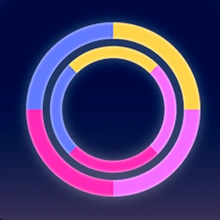
Color Tease looks harmless at first. Bright colors, clean shapes, a simple idea you can understand in one glance. Then you play it on Kiz10 and realize it’s basically a stress test for your timing, dressed up like a neon candy dream. The rules are easy to say out loud: move through only the matching color, avoid the wrong ones, keep going. The hard part is that your hands want to rush, your eyes want to guess, and the game keeps changing the situation just fast enough to make you doubt yourself.
It’s the kind of arcade skill game that doesn’t need a complex story because the story is happening in your head. One second you’re calm and confident, the next you’re whispering “wait… wait… now” like you’re defusing a cartoon bomb with a paintbrush. And when you nail a perfect sequence, it feels ridiculously satisfying, like you just outsmarted the color wheel itself 😅
🟣 The core thrill: commit to a color, commit to a moment
Color Tease is built around commitment. You don’t get to half-choose a color. You either match it or you don’t. That “all or nothing” vibe is what gives it that punchy rhythm. When the gate is your color, you feel brave. When it isn’t, you hesitate. And that hesitation is exactly where mistakes are born.
The best runs happen when you stop negotiating with yourself. You read the color, you trust your timing, you move. Clean. Simple. Almost musical. The worst runs are the ones where you try to outthink it and end up tapping like you’re asking the screen for mercy. The game doesn’t do mercy. It does consequences. In bright, cheerful shades. Which is honestly rude, but also kind of funny.
🧠 Patterns, fake patterns, and the human brain being dramatic
After a few rounds, your brain starts inventing patterns. “It always goes red after blue.” “Green shows up twice in a row.” “The safe option is left.” Then the game flips it and you realize you were just telling yourself bedtime stories to feel in control. This is part of what makes Color Tease addictive. It messes with that very human need to predict.
You’ll also start feeling micro-habits forming. Maybe you’re always more comfortable with certain colors because they stand out more. Maybe you tap too early when things speed up. Maybe you tense up after one mistake and that tension causes a second mistake. It becomes a small mirror, a goofy one, but still a mirror. The skill isn’t only reflexes. It’s staying calm when the screen tries to make you panic.
⚡ Speed is a trap, consistency is the secret
It’s tempting to treat Color Tease like a pure speed game. Faster taps, faster decisions, go go go. But the real high scores come from consistency. The game rewards clean sequences more than frantic bravery. When you stay steady, you read better. When you read better, you move cleaner. When you move cleaner, the streak grows, and that’s when the score starts to feel like it’s climbing for real.
There’s a moment in good runs where you stop thinking in words. You stop saying “blue, red, yellow.” You just see the correct path and your hand follows it. That’s the flow state, the little arcade trance, the part that makes you hit replay even when you promised yourself you were done. Because once you’ve felt that clean rhythm, you want it again. You want to prove you can hold it longer.
🌀 The “almost” moments are what hook you
Color Tease has a special talent for giving you heartbreak in tiny doses. You’ll be on a beautiful streak, everything feels controlled, and then the game throws a quick switch and you barely miss it. Not a huge dramatic fail, just a tiny slip. And somehow that tiny slip feels personal. You’ll stare at the screen like it betrayed you, then immediately restart because you know you were close. That’s the loop.
And it’s not just frustration. It’s that feeling of being nearly perfect. The game keeps dangling “you can do this” right in front of you. One more run. One cleaner tap. One calmer decision. One less greedy move. The challenge stays simple, but your desire to master it grows bigger than it has any right to.
🌈 Why it works so well on Kiz10
On Kiz10, Color Tease fits perfectly into that quick-play, high-replay category. No setup, no long tutorial, no complicated menus. You jump in, you instantly understand the goal, and the game immediately starts testing your timing. It’s easy to play for one minute, and dangerous to play for twenty, because you keep chasing that smoother run.
It also hits a sweet spot for players who like color-based games, reflex games, and arcade challenges that feel fair but demanding. When you fail, you usually know why. You rushed. You guessed. You blinked at the wrong time. That clarity makes it feel like improvement is real and reachable, which is exactly what you want in a score-chasing arcade game.
🎭 The mood shift: cute colors, serious concentration
The funny contrast is that the game looks cheerful while asking for serious focus. It’s like being challenged to stay zen while a rainbow tries to trick you. That contrast keeps it from feeling heavy. Even when you mess up, it’s not grim. It’s more like, “Oops, you got outplayed by purple.” And then you laugh a little, tighten your focus, and try again.
If you like games where timing matters, where color matching matters, where you can feel your reactions improving run by run, Color Tease is a slick little obsession. It’s short, bright, and brutally honest. The colors don’t lie. Your timing does.



 4.2 (26 votes)
 Share
Share
 Embed
Embed