Death Car does not feel like a polite racing game. It feels like a metal argument at full speed. The road is there, yes, and your vehicle moves like it has somewhere urgent to be, but the real point is not graceful driving. The real point is domination. Hit first, move smarter, survive longer. That is the pulse running through this game from the first second, and it gives the whole experience a rough, hungry energy that works beautifully for anyone who likes driving games with a little more bite.
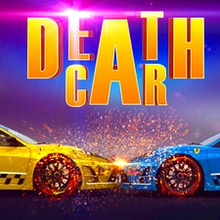
On Kiz10, Death Car drops you into a brutal car death match where survival depends on damaging other vehicles by slamming them from behind or from the sides, while managing boost and brakes at exactly the right moment. That foundation is simple, but not empty. Quite the opposite. It creates a game where every movement matters, every approach angle has consequences, and every mistake can turn your car into a spinning piece of regret.
🚗💀 Steel, Sparks, and Bad Intentions
The best thing about Death Car is that it understands what its name promises. This is not a Sunday drive. This is not a calm lap around a decorative circuit while cheerful music tells you everything is fine. Nothing is fine here. The track feels tense. Rival cars are not background decoration. They are moving threats, violent obstacles, and occasionally very satisfying victims if you line things up correctly.
The goal sounds easy enough when you say it quickly: stay alive and destroy the others. But then the match begins, bodies of steel start sliding around the arena, and suddenly every decision becomes deliciously ugly. Do you chase the weakened opponent and risk exposing your side? Do you hold boost for an escape route? Do you brake for a split second and let two rivals crash into each other like idiots in a demolition ballet? These are the questions that make Death Car fun. Not elegant questions, maybe. But fun ones.
There is something deeply entertaining about a game that turns cars into weapons without pretending to be subtle about it. You are not here to admire scenery. You are here to create panic on wheels. When you catch another car at the right angle and feel the impact connect, the game delivers that small burst of arcade satisfaction that makes you lean forward a little closer to the screen. It is quick, messy, and oddly beautiful in a chaotic way 😈
🔥🛞 Driving Like the Rules Burned Down
A lot of vehicle games focus on precision. Death Car prefers pressure. You are still controlling movement carefully, of course, but the emotional rhythm is different. It is not about perfection. It is about reading danger, improvising under stress, and realizing that the best path through the arena might involve turning someone else’s fender into a public warning.
Boost plays a huge role in that feeling. Used well, it lets you close distance fast, strike before your rival reacts, or escape when things start collapsing around you. Used badly, it sends you forward with the confidence of a man running into a wall he has not noticed yet. And honestly, that risk makes it better. Speed is more fun when it feels a little reckless.
Then there is the brake, which sounds less exciting until you start surviving because of it. In a game like this, stopping at the right moment can be nastier than accelerating. A tiny slowdown can make an enemy overshoot, expose a weak angle, or smash into someone else while you slide past like you planned the whole disaster. You did not always plan it, obviously. Sometimes genius in arcade games is just panic wearing sunglasses 😎
That balance between aggression and control gives Death Car a strange little rhythm. It is harsh, but readable. Brutal, but not random. Once you begin to understand the flow, the matches stop feeling like noise and start feeling like a series of tiny ambushes.
⚙️💥 The Arena Has No Patience
What makes the game stick in your head is how quickly it turns defensive driving into offensive survival. You are not just avoiding damage. You are shaping the battlefield with every bump, every dodge, every desperate correction. Rival cars become moving puzzles with bad attitudes. One is rushing too hard. One is circling carefully. One is damaged and panicking. Suddenly you are not just playing a car combat game. You are hunting patterns in a storm of engines.
And that is where the player fantasy really kicks in. Death Car makes you feel cunning when you are at your best. Not clean. Not noble. Cunning. You spot weakness, you wait half a second, then you strike from the right side and watch the whole situation tilt in your favor. It creates these little triumphs that feel personal. You did not just survive. You outplayed someone with a bumper and some nerve.
The pace helps too. Matches do not meander. They snap into motion. The game trusts the core idea enough not to bury it under clutter. No endless explanation, no giant pile of systems fighting for attention. Just car combat, movement, timing, and destruction. That directness gives the whole thing a raw arcade quality that fits Kiz10 perfectly. You click in, you understand the threat instantly, and a few seconds later you are already committed to a terrible decision at high speed. Beautiful.
🧨🏁 Where the Fun Really Lives
There is a particular kind of joy that only comes from games that let you be slightly mean without consequence. Death Car lives in that space. It invites you to be opportunistic. To be annoying. To let two rivals fight, then swoop in like a vulture with horsepower. A lot of the fun comes from those morally questionable little moments. You are not merely reacting. You are exploiting chaos.
That also makes the replay value stronger than it first appears. On paper, the concept is compact. In practice, the match dynamics change constantly because the flow depends on positioning, timing, and how aggressively you choose to play. One round might reward patience. Another might reward pure madness. Sometimes you survive because you calculated the impact perfectly. Sometimes you survive because everyone else made an even worse decision than you did. That counts too.
The car handling style supports this nicely. It feels immediate enough to stay readable, but loose enough to create panic when the situation gets crowded. That middle ground is important. Too stiff, and the game would lose its wild edge. Too slippery, and every crash would feel random. Instead, Death Car stays right in that dangerous sweet spot where control and disaster keep shaking hands.
☠️🚘 Not a Race, a Rolling Ambush
Calling Death Car a driving game is technically correct, but it undersells the mood. This is closer to a rolling ambush simulator with engines. The joy comes from impact, from momentum, from hunting the correct angle and committing at just the right second. There is tension in every approach because you always know the same trick you want to use on someone else can be used on you two seconds later.
That constant threat keeps the game alive. Even when you feel strong, you are never fully safe. Even when an opponent seems finished, they can still become a problem if you get sloppy. It creates the kind of arcade tension that makes quick sessions dangerously replayable. One more match becomes three. Then five. Then suddenly you are sitting there trying to explain to yourself why ramming cars in a digital arena feels so deeply rewarding.
Because it does. That is the truth of it. Death Car is fast, sharp, and proudly rough around the edges in the best possible way. It takes a simple idea, car combat where the key to survival is destroying others with well-timed hits, boost, and braking, and builds a tense little machine out of it. On Kiz10, it works because it wastes no time pretending to be anything else. It is steel against steel, instinct against instinct, and the winner is usually the one willing to turn the road into a war zone first.





 4.2 (47 votes)
 Share
Share
 Embed
Embed