🌪️🥚 THE DUNGEON IS MADE OF WOOD, THE VILLAINS ARE EGGS, AND YOU ARE THE WEATHER
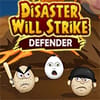
Disaster Will Strike Defender doesn’t waste time pretending it’s peaceful. The whole game is basically one big invitation to be petty with gravity. You’re staring at these smug little “bad eggs” sitting inside towers, cages, and wobbly constructions, acting like they’re untouchable. They’re not. Not if you’ve got a toolbox full of natural disasters and the patience to set up the perfect collapse. On Kiz10, this is the kind of physics puzzle that feels simple in the first second and then immediately becomes a delicious chain-reaction addiction.
The core idea is wonderfully cruel: the eggs must be destroyed, but you can’t just tap them and win. You have limited disasters per level, and the structures are designed to survive your first instinct. So the game becomes a conversation between you and the level designer. You say, “I’ll quake the base.” The level answers, “Nice try, it’s reinforced.” You say, “Fine, I’ll loosen the side supports and let the whole stack tip.” The level answers, “Okay, now we’re talking.” And when you finally solve it, the result is always the same kind of satisfaction: everything falls exactly the way it should, the egg gets crushed, and you feel like a chaos engineer with a degree in destruction.
🔥🧠 IT’S NOT ABOUT BIG BOOMS, IT’S ABOUT THE RIGHT BOOM
Here’s the trick: Disaster Will Strike Defender isn’t a mindless smash game. If you throw disasters randomly, you’ll get a few lucky wins, then hit a stage that shrugs and refuses to die. The game rewards planning, timing, and the ability to look at a structure and see what it wants to do when it loses one crucial support.
You start learning to read materials like they’re emotions. Wood says “I’ll break if you poke me right.” Stone says “I’m stubborn, push elsewhere.” Glass says “I’m dramatic, touch me and I’ll explode into the worst possible mess.” You’ll stop thinking, “How do I hit the egg?” and start thinking, “How do I remove the lie holding this whole tower upright?” Because that’s what the best solutions feel like. You’re not attacking the egg directly. You’re making the world betray it.
And yes, sometimes the best move is not the strongest one. Sometimes a small, precise disaster at the correct angle does more than a giant shockwave that just scatters pieces in every direction. Big power without direction is just noise. The Defender levels love punishing noise.
🌋🧩 DEFENDER ENERGY: THE LEVELS FIGHT BACK
This entry has that “late-series” vibe where the puzzles are a bit meaner and the setups feel more protected. Eggs hide behind barriers, tuck themselves under platforms, or sit in spots where a simple collapse doesn’t reach them. So you’re forced to think like a saboteur. What can you knock loose? What can you roll? What can you drop? What can you destabilize first so the second disaster becomes unstoppable?
That’s where the game becomes a chain-reaction playground. You might start by triggering something to tilt a block, which slides a weight, which cracks a pillar, which releases a piece that finally smashes the egg. You’ll have runs where the whole solution is a slow domino dance that ends in a single crunch. And you’ll have runs where you do everything “right” and one tiny piece lands softly instead of crushing, and you stare at the screen like the laws of physics personally betrayed you. It’s fine. You try again. This game is built for that stubborn loop.
⚡🥴 THE MOST DANGEROUS THING IN THE GAME IS YOUR OWN GREED
You’ll see it happen in your own hands. You get a clean partial collapse, the egg is now exposed, and you think, “One more disaster and it’s done.” But you rush. You fire too early. You hit the wrong support. The whole structure collapses in the wrong direction, and the egg survives on a tiny platform like it’s mocking you. That’s the moment Disaster Will Strike Defender teaches you its most important lesson: don’t celebrate before the egg is paste.
The smartest players do something that feels boring but wins constantly: they pause and watch. They let the debris settle. They see what’s still supporting what. They wait for the structure to finish wobbling before using the next disaster. Because in physics puzzles, movement is information. If the tower is still shifting, you don’t actually know the final shape of the problem yet.
🌪️🎯 STRATEGY THAT ACTUALLY WORKS (WITHOUT TURNING IT INTO HOMEWORK)
If you want a cleaner experience, focus on three habits:
First, remove support before you apply force. A disaster is more effective when the structure is already weak. If you can create a “hinge” point, the next quake or blast turns into a full collapse instead of a minor shake.
Second, use the bottom of the structure like a pressure point. Knocking out low supports often creates bigger chain reactions because everything above has to decide where to fall. A top hit might break a piece, but a bottom failure rewrites the whole building’s future.
Third, think in paths, not hits. Where will the heavy pieces travel? What will slide? What will roll? What will land with weight? You’re not trying to make pieces explode. You’re trying to make the right piece arrive at the egg with bad intentions.
When you play like that, the game stops feeling random and starts feeling like a puzzle you can actually control. You’ll still fail, sure, but the failures become readable. And readable failures are the best kind, because they turn into improvements.
💥🥚 THE PAYOFF: THAT PERFECT COLLAPSE FEELING
The best moment in Disaster Will Strike Defender is when your plan looks risky, then turns beautiful. A tower leans, a block slides, the egg tries to survive, and then the weight drops exactly where it should. Crunch. Done. You don’t just win the level, you feel like you solved it in style. And that’s why it’s so replayable on Kiz10: the game isn’t asking for fast reflexes, it’s asking for clever destruction.
It’s also perfect for short sessions. You can clear a handful of levels, get that “I’m smart and evil” satisfaction, then leave. Or you can do the more dangerous thing and keep going because one level beat you and now it’s personal. You’ll replay a stage not because you must, but because you know there’s a cleaner solution and your pride wants to find it.
So yeah. If you like physics puzzle games where planning beats button mashing, where chain reactions are the real reward, and where the villains are tiny eggs with way too much confidence, Disaster Will Strike Defender on Kiz10 is a perfect mess.






 Share
Share
 Embed
Embed