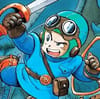
Dragon Quest 1 2 sounds like the kind of game that belongs to an older, rougher fantasy world, the sort where the road is dangerous, the monsters are everywhere, and nobody hands you victory just because you picked up a sword. The title itself carries that classic quest energy. Not polished, modern comfort. Real quest energy. Dusty paths, dark caves, dragons with terrible attitudes, and a hero who probably starts with more courage than good equipment.
That is exactly why a game with this name works so well in your head before it even begins. You already expect danger. You already expect a long road. You already expect some ugly battle where the dragon is too big, the odds are bad, and somehow the only reasonable answer is still to keep moving forward. Good fantasy games live on that feeling. Not convenience. Momentum. The idea that every new screen could contain treasure, disaster, or something with claws waiting behind a ruin.
And honestly, that is what makes Dragon Quest 1 2 feel strong as a title. It sounds like a journey more than a gimmick. A real adventure. The kind where the player is not just passing levels, but pushing through a world full of enemies, traps, ruins, and that constant little tension fantasy games do so well. Am I ready for what is next? Probably not. Am I going anyway? Obviously.
The best part of dragon-themed quest games is that they naturally mix two very satisfying moods. One is wonder. Castles, caves, hidden paths, old magic, strange enemies, forgotten lands. The other is pressure. Because dragons ruin peace very quickly. The second the quest points toward a dragon, everything feels heavier. Every fight matters more. Every item matters more. Every mistake feels more expensive because the game has already promised that somewhere ahead is something powerful enough to justify the whole title.
That makes even the smaller moments feel important. A basic enemy is not just target practice. It is part of the climb. A simple weapon upgrade is not just a stat change. It is one more reason to believe the final battle might actually be possible. Good quest games understand that progression should feel emotional, not just numerical. The player should feel more prepared, more dangerous, more capable with every stretch of road. And if Dragon Quest 1 2 follows the spirit of its name, that is exactly the rhythm it should chase.
There is also something timeless about the “1 2” part of the title. It gives the whole thing a retro, sequel-like, slightly mysterious flavor. Like this is part of a larger heroic journey, or maybe the sort of fantasy adventure that grew out of older browser game logic where nobody wasted time explaining too much. You just entered the quest, learned the danger by surviving it, and figured out the rest while fighting your way deeper into the world. That kind of design still works because it respects the player’s curiosity. It lets the quest feel discovered, not overexplained.
And the dragon angle changes everything. A normal fantasy quest can still be fun, sure. But add a dragon and suddenly the atmosphere sharpens. Dragons make the world feel more mythic, more hostile, more dramatic. Even if the actual gameplay is simple, the presence of that kind of enemy raises the emotional stakes immediately. A bandit can block the road. A dragon can define the whole journey. That difference matters. It makes the quest feel worth the trouble.
I also like how a title like Dragon Quest 1 2 suggests a broad adventure instead of one single mechanic. It could be sword fights. It could be exploration. It could be collecting items, opening paths, surviving monsters, solving old-world problems in dark places where every corridor looks like bad news. That flexibility is part of the appeal. Fantasy quest games are often strongest when they let the road itself become the story. One cave, one bridge, one ruined tower, one dragon’s lair, all of it adding up into the feeling that you are actually crossing a dangerous world instead of just clearing stages.
And that is where the best moments usually happen. Not only in the final boss fight, but in the smaller victories along the way. The fight where you barely survive. The item you almost missed. The section of map that looked impossible until you learned its rhythm. The enemy that kept beating you until suddenly it did not. Those are the moments players remember in quest games. They make the larger dragon story feel earned.
There is usually a nice emotional shift in these kinds of adventures too. You start uncertain. Weak, maybe. Under-equipped. A little too easy to kill. Then little by little the world stops feeling impossible. You still respect it, but you stop fearing every corner in the same way. The hero gets stronger, yes, but more importantly, the player gets more confident. Better timing. Better decision-making. Better understanding of what the world is trying to do to you. That growth is one of the strongest things any fantasy action game can offer.
And when the dragon finally becomes more than a title word, when the quest finally reaches the creature that justifies all the danger, the payoff is much better because the road mattered. You were not teleported into greatness. You walked there. Fought there. Stumbled there. Probably got hit by something deeply avoidable several times on the way there. That is real quest energy. Messy, dramatic, and satisfying.
Dragon Quest 1 2 feels like the kind of fantasy browser game that wins by sounding classics and delivering the right mood: monsters, movement, tension, and a world that wants the hero to earn every step. If you like dragon games, medieval quests, action adventures, and fantasy titles where the road to the final enemy matters just as much as the final enemy itself, this is exactly the kind of concept that fits Kiz10-style play. It promises danger, discovery, and that wonderful feeling of walking into the unknown with just enough skill to believe you might come back stronger.





 4.6 (7 votes)
 Share
Share
 Embed
Embed