🎈⚠️ Up is the only direction… and it’s full of problems
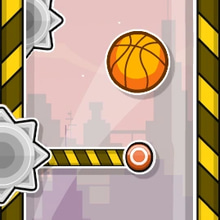
Flying Ball starts with a simple, slightly suspicious promise: you’re a ball, you’re going up, and you just need to “avoid the hazards.” Easy, right? Then the first trap shows up and you realize the game is basically a vertical anxiety machine with a cute name. It’s an arcade reflex challenge on Kiz10 where your job is to climb higher, thread through danger, and keep your timing clean while the level tries to shave pixels off your confidence. The movement feels quick and snappy, the hazards feel impatient, and the whole experience has that classic “one more try” gravity that drags you back in even after a messy fail. 😅
🌀🧠 The controls are friendly, the timing is not
Flying Ball doesn’t bury you under complicated mechanics. It’s more brutal than that: it makes small mistakes matter. You steer, you adjust, you commit. Every move is a tiny agreement with physics and spacing. The moment you get sloppy, the game doesn’t lecture you, it just… ends your run. That’s why it feels so sharp. You’re not solving a slow puzzle, you’re surviving a rhythm of hazards. You start paying attention to micro-details you didn’t think you cared about, like the exact moment a saw swings away, the tiny safe lane between two spinning threats, the way the ball’s movement needs a half-second of patience instead of a panicked shove.
You’ll have runs where everything feels smooth and you start thinking you’ve “got it.” Then you’ll hit a section that punishes overconfidence and you’ll hear yourself say something like, “Okay wow, rude.” And then you restart immediately because your brain already knows what you should have done. 🙃
🪚🔥 Traps that don’t chase you… they just wait for you to be dumb
What makes hazard-based arcade games special is how personal they can feel without having any AI at all. A spinning blade doesn’t hate you, but it does have perfect timing, and you don’t. A moving obstacle doesn’t need to hunt you, it just needs to exist in the wrong place at the wrong moment. Flying Ball leans into that style of threat. The danger is predictable, but only if you’re calm enough to read it. If you rush, everything feels unfair. If you slow down just a little, the level starts revealing patterns, like it’s secretly telling you the safe route… in a language made of timing windows and narrow gaps.
That’s the key. This game doesn’t reward bravery. It rewards discipline. The best runs come from controlled movement, not from desperate zigzags. And yes, the moment you learn that, you instantly become better… until the next section invents a new way to test your patience. 😄
🎯🧊 The sweet spot: moving fast while thinking slow
Flying Ball is at its best when you find the balance between speed and calm. You can’t crawl forever, because some sequences demand momentum, but you also can’t treat every section like a sprint. The game pushes you into a very specific mindset: eyes forward, hands steady, decisions early. If you wait until you’re on top of a hazard to decide what to do, you’re already late. You learn to plan one step ahead, not with a big strategy sheet, but with a small inner voice that goes, “Okay, after this gap I’m cutting left, then I’m holding center, then I’m waiting half a beat.”
It sounds small, but it’s everything. In vertical climb arcade games, tiny anticipations are the difference between clean progress and a fast reset. And resets are quick here, which is dangerous, because the game never gives you time to cool off. You fail, you breathe, you’re back in it. 😅🎈
🌋✨ The climb feels like a dare that keeps escalating
There’s a special kind of tension when your goal is “go higher.” Because the higher you go, the more your brain starts protecting the run. You become attached to your progress. Your hands tighten up. Suddenly you’re not just playing, you’re defending your altitude like it’s a high score in your bloodstream. Flying Ball uses that feeling. It keeps raising the stakes with tighter spaces, harsher timing, and obstacle combinations that force you to commit. The game doesn’t need a story. The story is your climb. The “plot twist” is always the next hazard you didn’t expect.
And when you break through a tough section? That’s the good stuff. It’s not a cinematic victory, it’s a personal victory. You proved your timing can stay steady under pressure. Then you immediately meet a new trap and the game reminds you that pride is temporary. 😬
😵💫😂 The comedy of failure is part of the design
Let’s be honest: half the fun of games like this is how dramatic your mistakes look. You’ll make a move that feels correct, and then your ball clips something by a hair and the result is instant regret. You’ll overcorrect and bounce into danger like you were magnetized. You’ll hesitate, and hesitation will betray you. The game makes failing fast, and failing clearly, which means the improvement loop is satisfying. You don’t lose and wonder why. You lose and go, “Yep. That was me being greedy.” Then you try again with one small adjustment.
That “one small adjustment” mindset is how you get good. You don’t need a grand plan. You need to change one thing: a slightly higher arc, a slightly earlier move, a slightly calmer pause. Flying Ball rewards that kind of learning, and that’s why it’s so easy to get hooked on Kiz10. 😄
🧪⚡ Your best weapon is consistency
A lot of players chase perfect moments. The better approach is to chase a repeatable rhythm. Find a reliable way through each hazard pattern and stick to it. Consistency builds confidence, and confidence makes your hands steadier, and steadier hands make the next pattern easier to read. It’s a feedback loop, but the good kind. The game becomes less like chaos and more like a dance with rotating blades and floating platforms.
And if you’re stuck? That usually means you’re trying to brute force a timing window that isn’t there. Back up mentally. Watch the pattern. Give it one beat. Then move when it opens. Flying Ball doesn’t want you to be reckless. It wants you to be sharp. 🎯
🏁🎮 Why it belongs on Kiz10
Flying Ball is exactly the kind of arcade skill game that works beautifully in a browser: quick to learn, instantly replayable, and built around real improvement rather than long grinding. It’s perfect for short sessions that accidentally become long sessions because you keep telling yourself you’re one clean run away from cracking the next section. It’s tense, it’s simple, it’s satisfying, and it has that delicious “I can do better” energy that makes you come back.
If you love reflex games, trap-dodging challenges, tight timing, and that clean arcade feeling of climbings higher with every attempt, Flying Ball hits the target. Just don’t blame the saws when you get greedy. They were there first. 😅🪚








 4.2 (14 votes)
 Share
Share
 Embed
Embed


