🐔 𝗢𝗡𝗘 𝗟𝗜𝗧𝗧𝗟𝗘 𝗝𝗨𝗠𝗣, 𝗢𝗡𝗘 𝗕𝗜𝗚 𝗔𝗥𝗖𝗔𝗗𝗘 𝗣𝗥𝗢𝗕𝗟𝗘𝗠
Happy Jump is the kind of game that looks harmless for about ten seconds. A cheerful little chicken on a spring. Floating platforms. Bright colors. One tap to jump. Cute, simple, friendly. Then you miss one landing by half a pixel, fall into nothing, and immediately decide you need another try because clearly that last attempt does not count. That is the real power of a good arcade game. It takes one tiny mechanic and turns it into a full addiction loop.
This is a vertical jumping game built around clean timing, endless climbing, and the constant temptation of a higher score. You tap to jump, land on platforms, keep moving upward, and try not to let gravity win. The structure is simple enough that anyone can understand it instantly, but the pressure arrives fast. One jump becomes another. Then another. Then the platforms start looking smaller, the rhythm gets tighter, and your brain goes from relaxed to completely invested in not embarrassing itself in front of a chicken.
That mix of simplicity and pressure is exactly why Happy Jump works. It does not need huge systems, a long tutorial, or complicated rules. It just needs a clean climb, a steady score chase, and the lovely little disaster of knowing that every mistake sends you back to the ground.
🚀 𝗧𝗛𝗘 𝗖𝗢𝗥𝗘 𝗟𝗢𝗢𝗣 𝗜𝗦 𝗕𝗥𝗨𝗧𝗔𝗟𝗟𝗬 𝗖𝗟𝗘𝗔𝗡
At its heart, Happy Jump is doing one thing and doing it well. Jump. Land. Jump again. Keep going. That is the whole challenge, and that is more than enough. Good arcade games do not always need variety. Sometimes they just need a mechanic that feels sharp enough to support constant replay.
Here, the vertical climb gives the whole game its shape. There is no finish line waiting to congratulate you. No final platform where the music swells and a victory screen tells you that you have mastered the sky. The only goal is higher. Then higher again. That endless structure is what makes each run feel alive. You are not really trying to “complete” Happy Jump. You are trying to outdo your previous self and maybe prove that your timing is slightly less embarrassing now than it was three attempts ago.
That is a powerful hook. It gives the game endless replay value without needing to reinvent itself every few minutes. The challenge remains pure, and purity is often what makes these games so hard to stop.
⏱️ 𝗧𝗜𝗠𝗜𝗡𝗚 𝗜𝗦 𝗘𝗩𝗘𝗥𝗬𝗧𝗛𝗜𝗡𝗚, 𝗔𝗡𝗗 𝗚𝗥𝗔𝗩𝗜𝗧𝗬 𝗜𝗦 𝗡𝗢𝗧 𝗙𝗢𝗥𝗚𝗜𝗩𝗜𝗡𝗚
The real skill in Happy Jump comes from timing. Not frantic timing. Clean timing. Controlled timing. That makes a huge difference. Because the controls are so simple, the game has nowhere to hide your mistakes. If you jump too early, the arc feels wrong. If you jump too late, the landing disappears. If you panic and spam inputs, the game will punish you immediately.
That is why each successful climb feels satisfying. It is not random luck carrying you upward. It is rhythm. Patience. Learning when to trust the bounce and when to commit. The better you get, the more the jumps start feeling deliberate instead of desperate. That progression is one of the best things about the game. You can actually feel your skill improving.
And when the rhythm breaks, it breaks fast. One awkward platform, one mistimed leap, one tiny hesitation, and suddenly you are falling, staring at the screen, and mentally preparing the excuse you will use to justify another attempt. Usually something noble, like “I was just warming up.”
⭐ 𝗦𝗧𝗔𝗥𝗦 𝗔𝗗𝗗 𝗝𝗨𝗦𝗧 𝗘𝗡𝗢𝗨𝗚𝗛 𝗚𝗥𝗘𝗘𝗗 𝗧𝗢 𝗠𝗔𝗞𝗘 𝗧𝗛𝗜𝗡𝗚𝗦 𝗜𝗡𝗧𝗘𝗥𝗘𝗦𝗧𝗜𝗡𝗚
A pure climbing game is already satisfying, but Happy Jump adds stars to tempt you into bad decisions. That is a great move. Stars do not just decorate the climb. They turn it into a risk-reward challenge. Now you are not only trying to survive. You are trying to survive while grabbing extra points and boosting your score.
This creates exactly the kind of small internal conflict a good arcade game needs. Do you go for the safe platform, or do you reach for the star and trust your timing? Sometimes the answer is obvious. Sometimes it absolutely is not. And that uncertainty is where the fun lives. A player chasing every star will feel more daring, but also more vulnerable. A player focused only on height may survive longer, but the score race remains tempting.
That balance helps the game avoid feeling flat. The stars give each run a little extra texture. They create tiny choices inside the bigger climb, and those choices make every session feel more personal.
🎈 𝗧𝗛𝗘 𝗕𝗥𝗜𝗚𝗛𝗧 𝗦𝗧𝗬𝗟𝗘 𝗠𝗔𝗞𝗘𝗦 𝗧𝗛𝗘 𝗙𝗔𝗜𝗟𝗨𝗥𝗘𝗦 𝗙𝗘𝗘𝗟 𝗟𝗜𝗚𝗛𝗧𝗘𝗥
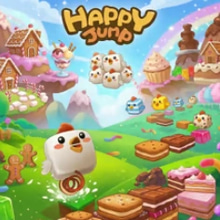
One of the reasons Happy Jump stays so easy to replay is its tone. The visuals are colorful, clean, and cheerful, which does a lot of subtle work. In a harsher-looking game, repeated falls might start to feel annoying. Here, the cartoon style softens the punishment. You fail, but the game does not feel mean about it. It just quietly drops you back down and waits for you to prove that you have learned anything.
That is the right mood for a one-tap arcade climber. The difficulty should come from execution, not from the atmosphere trying to drag you down. Happy Jump keeps the screen lively and readable, which makes it easier to focus on landings and platform spacing while still giving the whole experience a playful identity.
And honestly, that little chicken on a spring is a perfect lead for this kind of game. The character looks goofy enough to make the struggle funny and focused enough to make the climb feel energetic.
📈 𝗧𝗛𝗘 𝗦𝗖𝗢𝗥𝗘 𝗖𝗛𝗔𝗦𝗘 𝗜𝗦 𝗪𝗛𝗔𝗧 𝗞𝗘𝗘𝗣𝗦 𝗣𝗨𝗟𝗟𝗜𝗡𝗚 𝗬𝗢𝗨 𝗕𝗔𝗖𝗞
Happy Jump is built on one of the strongest loops in arcade design: the run is short, the goal is obvious, and failure always feels fixable. That is a dangerous combination in the best possible way. If the game were long or messy, you might stop after one bad drop. But because the restart is instant and the rules stay clear, every fall feels like an invitation instead of a punishment.
This is why score-based vertical games remain so addictive. They do not need complex progression systems because the score itself becomes the progression. You see your best run. You know you can beat it. Or at least you convince yourself that you can. Then you start again.
The climb also creates a natural emotional arc. Early platforms feel calm. Mid-run starts demanding more concentration. High up, every landing matters in a different way because the run has become valuable. The higher you go, the harder it becomes to stay relaxed. That pressure is what gives the score chase its real bite.
🎮 𝗪𝗛𝗬 𝗛𝗔𝗣𝗣𝗬 𝗝𝗨𝗠𝗣 𝗙𝗜𝗧𝗦 𝗞𝗜𝗭𝟭𝟬 𝗦𝗢 𝗪𝗘𝗟𝗟
Happy Jump feels right at home on Kiz10 because the site already has live jumping and vertical arcade pages like Mega Jump, Doodle Jump, Happy Hop Online, Climb Up!, and Super Bloody Finger Jump, all built around reflex timing, endless climbing, or high-score chasing. That gives Happy Jump a clear place among Kiz10’s fast, replayable jump games.
If you enjoy arcade skill games, one-button platforming, endless score chases, and browser games that are easy to start but suspiciously difficult to stop replaying, this one is a strong fit. It is bright, clean, and built around one mechanic that keeps getting more intense the longer you survive.
Jump clean, grab stars when you can, and try not to let one tiny platform ruin a beautiful run. In Happy Jump on Kiz10, gravity is patient, and that is exactly what makes it dangerous.





 2.5 (153 votes)
 Share
Share
 Embed
Embed