🧠 Bright colors, quick choices, zero mental peace
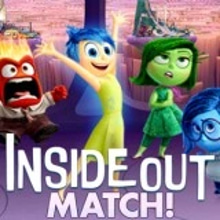
Inside Out Match looks harmless for about five seconds. Maybe eight, if you are feeling optimistic. Then the board starts talking to your brain in that very specific puzzle-game language: colors everywhere, little visual cues begging to be grouped, and that strange pressure that appears the moment you realize one bad move can turn a neat setup into a tragic little mess. It is a match puzzle game, yes, but not the sleepy kind you play while your mind drifts away. This one has that sparkling, twitchy energy where every move feels tiny and important at the same time.
That is what makes it instantly fun on Kiz10. You jump in, understand the core idea almost immediately, and then the game starts doing what good casual puzzle games do best: it quietly steals your attention. “Just one more try” becomes a lifestyle. A quick round becomes a miniature obsession. You begin by matching simple pieces, and before long your eyes are scanning the whole board like a caffeinated detective hunting for the one perfect move that will save everything. It is elegant. Also mildly rude. In a good way.
Inside Out Match works because it mixes color recognition, pattern reading, and pure puzzle instinct into a format that feels light but never empty. You are not overwhelmed by pointless complexity. The challenge comes from momentum, from board management, from the satisfying little fight between order and clutter. The game keeps asking the same question in different forms: can you stay calm long enough to make the smartest match? Sometimes yes. Sometimes absolutely not 😵💫
🎨 Matching things should not feel this dramatic
There is a special kind of joy in games where the controls are simple but the consequences are not. Inside Out Match belongs to that family. The action itself is easy to understand. You identify the pieces, connect or swap what belongs together, and try to create clean, efficient clears. Straightforward. Friendly. Very approachable. But then the puzzle starts shifting under your hands. New arrangements appear. Opportunities open and close. Suddenly your “safe” move is not so safe anymore, and the board is staring back at you like it knows something you do not.
That tension is where the game gets its personality. Matching games live or die by whether they can make small decisions feel meaningful, and this one absolutely can. A good move does not just clear space. It changes the entire rhythm of the screen. It gives you breathing room. It creates combos. It sets up your next move before you even need it. A careless move, on the other hand, can leave the board awkward and stubborn, the digital equivalent of dropping all your groceries in front of your crush. Not ideal.
The great part is that the game never feels unfair. Fast, yes. Demanding, sure. But not random. When things go badly, you usually know why. You rushed. You ignored a better setup. You chased a tiny match when the board was quietly begging for a smarter one. That clarity makes every retry feel useful. You are not just repeating the same level. You are learning its mood, its little traps, its weird moments of generosity.
💥 Combos, chain reactions, and the tiny thrill of being right
Let us be honest: the real magic in a game like this is not just matching pieces. It is making the board collapse beautifully after one clever move. That tiny chain reaction. That lovely little avalanche of correctness. The kind of moment where everything lines up and your screen suddenly feels like it is applauding you with colors. Inside Out Match understands this very well. It knows that players want more than simple clears. They want the feeling of setting something in motion.
When you begin spotting these opportunities, the game changes. You stop reacting and start planning. You look beyond the immediate match and start asking better questions. If I move this now, what happens next? Can I open a space in the center? Can I build a larger chain instead of settling for something small? That shift from instinct to strategy is where the game starts getting sticky. It turns casual play into focused play without ever losing its bright, easy-to-read identity.
And yet it still leaves room for panic. Lovely, familiar panic. The sort where you see the correct move one second too late and whisper something dramatic to your monitor. Or the sort where you think you are building a perfect combo, only to realize you just created a puzzle situation with the emotional stability of a shopping cart missing one wheel. It happens. That is part of the charm. Puzzle games should humble you now and then. Keeps the soul flexible.
🌈 A mood-driven puzzle without the heavy feeling
What makes Inside Out Match especially easy to enjoy is its tone. It feels colorful, lively, and emotionally readable. Even when the challenge rises, the game does not become grim or stiff. It stays playful. The visuals keep things approachable, and the whole experience feels built to entertain rather than intimidate. That matters, especially on Kiz10, where a good browser puzzle game should feel welcoming in the first minute and rewarding after the tenth.
There is also something nice about how the theme supports the mechanics. A game with this kind of title naturally benefits from vivid imagery, expressive pieces, and a playful, almost mood-based identity. Matching becomes more than just moving symbols around. It feels like organizing chaos, calming noise, and turning scattered visual energy into something clean and satisfying. Weirdly therapeutic, actually. Not peaceful exactly. More like productive chaos. Like cleaning your desk by throwing half the desk into the void and somehow ending up with a better desk.
That balance makes it a strong choice for players who enjoy match games, brain games, and casual puzzle challenges. It is easy to start, but there is enough structure in the board logic to keep your mind engaged. You can play it casually, sure, but it quietly rewards attention. The more present you are, the better it feels.
⏳ Why “just one round” is always a lie
Here is the trap. Inside Out Match looks like a perfect little break-game. A quick session. A tiny five-minute brain stretch. Very innocent. Completely normal. Then you fail by a narrow margin, or you notice one missed combo, or you become convinced you now understand the board in a deeper and more spiritual way than before. So you play again. Naturally. For science.
That loop is the heart of its replay value. Because the rules are easy to read, every mistake feels fixable. Because the feedback is immediate, every success feels deserved. Because the board keeps changing, every round has its own shape. You are not grinding through repetition. You are chasing cleaner runs, smarter setups, faster recognition, and that perfect puzzle flow where your hands and brain finally agree on something for once.
And yes, there is ego involved. Healthy ego. Puzzle-game ego. The completely rational belief that this bright little matching game is not going to outsmart you again. Then it does. Then you return. This is a respected tradition.
🏆 One more match before your brain complains
Inside Out Match is exactly the kind of online puzzle game that works so well on Kiz10: immediate, colorful, easy to learn, and secretly better the longer you stay with it. It gives you fast visual satisfaction, but it also asks for planning, focus, and a bit of nerve when the board gets crowded. That combination keeps it lively. It never has to fake excitement. The excitement comes from the moment-to-moment decisions.
If you enjoy matching games that blend bright style with real puzzle rhythm, this one hits the sweet spot. It is casual enough to feel welcoming, but sharp enough to stay interesting. You can play it for the soothing color flow, for the combo hunting, for the little bursts of brainy triumphs, or simply because there is something deeply satisfying about turning a messy board into order one move at a time. Inside Out Match gets that feeling right. It is clever, cheerful, slightly chaotic, and honestly pretty hard to leave once it gets its hooks into you. Which is exactly what a good puzzle game should be. 🧩



 4.3 (29 votes)
 Share
Share
 Embed
Embed