🏰⚔️ The fall isn’t inevitable… unless you play sloppy
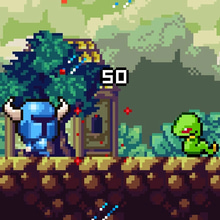
Knightfall starts with a simple medieval promise: hold the line, protect the realm, don’t let the enemy break your defenses. Then the first wave hits and you realize the title is a warning, not decoration. On Kiz10, Knightfall plays like a strategy defense game where your choices matter immediately. You’re not watching a battle from a distance. You’re shaping it: deciding what to deploy, where to position power, when to upgrade, and when to stop being greedy and spend your resources before the whole defense collapses like a badly built wall.
The best part is the pressure curve. Early moments feel manageable, like you’re setting up your plan. Later waves feel like a test of whether your plan was actually good or just lucky. The game creates that satisfying commander tension: you’re doing quick math in your head, deciding between “buy now” and “save for later,” and the enemy doesn’t wait for you to finish calculating.
🛡️🧠 Strategy is about coverage, not just damage
Knightfall doesn’t reward one-dimensional play. If you build only damage, you might delete small enemies but crumble when tougher threats push through. If you build only defense, you might survive longer but get flooded by numbers. The real skill is coverage: building a defense that handles different threats at different times without leaving gaps.
That means thinking in layers. A frontline to slow the rush. Support power to punish groups. A plan for the “heavy” enemies that refuse to go down quickly. And a backup plan for the moment your line gets messy, because it will. The game is designed to make sure something goes wrong eventually. Your job is making sure “wrong” doesn’t become “game over.”
⚔️🔥 Knights that feel like units, not decorations
The knights in Knightfall are the soul of the game. They aren’t just pretty medieval icons, they’re your moving tools. Where you place them matters. When you deploy them matters. A knight in the right spot can stabilize a wave and buy you time to upgrade. A knight in the wrong spot can leave an opening that turns into a leak, and leaks turn into full breaks fast.
You’ll feel this shift as you improve. Early on, you deploy reactively. Later, you deploy proactively. You start placing units where the next wave will become dangerous, not where the current wave already is. That one change makes you feel smarter instantly, because you stop playing catch-up and start controlling the tempo.
💰⏱️ Upgrades that decide whether the title becomes reality
In defense games, upgrades are survival. Knightfall is no exception. Upgrades don’t just make you stronger; they change the pace of the whole match. A damage boost can turn a crowded wave into something manageable. A defensive improvement can stop your frontline from cracking under pressure. An economy upgrade can create the breathing room that lets you adapt instead of panic.
The tension is that you can’t buy everything at once. The game forces you to choose. Do you spend now to survive the next wave, or do you save for a bigger upgrade that might win you the mid-game? Do you patch your weakest point or stack strength where you already feel safe? Those decisions feel small in the moment and huge later. That’s why Knightfall stays engaging: it makes you responsible for the outcome.
🌪️🧱 Waves that punish laziness
Knightfall doesn’t just throw more enemies, it throws different pressure. Waves change pacing, density, and threat type. That means the same defense setup won’t always work forever. The game rewards adaptation. If you notice a new wave type pushing through, you need to respond quickly. If you ignore it and keep doing the same thing, the title catches up with you.
This is where the best “commander brain” moments appear. You’ll be mid-wave, resources tight, and you’ll decide on one upgrade that saves the run. It won’t feel flashy. It will feel practical. And practical decisions are the ones that win strategy defense games.
😈🏰 The “greed trap” that kills most runs
Most losses in Knightfall happen the same way: you save too long. You want a bigger upgrade. You want the perfect purchase. You hold your resources while the wave grows, and then the line breaks before you ever spend. It’s the oldest strategy game trap. The best players spend before it’s too late. Not wastefully, but decisively.
If the defense is struggling, that is the sign. Spend now. Stabilize. Then build. The game rewards survival first. You can’t buy the dream upgrade if you’re already dead.
🏁⚔️ Why Knightfall works on Kiz10
On Kiz10, Knightfall is perfect because it delivers strategy with fast feedback. You can jump in, understand the objective instantly, and still feel real depth as waves scale. It’s the kind of medieval defense game that makes you replay because every loss feels fixable. You can see what went wrong. A gap. A late upgrade. A bad placement. A moment of greed. That clarity makes you want another attempt, because you know you can do it cleaner.
If you like tower defense, unit defense strategy, medieval battles, and the satisfying feeling of building a line that holds under pressure, Knightfall is a strong pick. Command your knights, manage your upgrades, and don’t let the castle become a headline. Hold the line and proves the fall is optional ⚔️🏰🔥





 2.5 (47 votes)
 Share
Share
 Embed
Embed


