🀄🌿 Quiet tiles, loud decisions
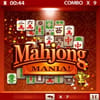
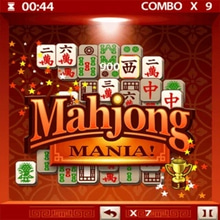
Mahjong Mania looks peaceful the way a snowfield looks peaceful right before you slip. It’s the classic mahjong solitaire idea, yes: match identical tiles, remove them, clear the board. But the moment you start playing on Kiz10, you realize this isn’t just “relax and click.” This is a steady mental tug-of-war between what you want to match and what you should match. The board is stacked, layers are hiding behind layers, and the game keeps whispering the same tempting lie: “Just take the first pair you see.” That lie is how you end up staring at two lonely tiles at the end with no way to connect them, like… how did I do this to myself? 😅
Mahjong Mania leans into that classic satisfaction loop. You spot a pair, you free a tile, the layout breathes, and suddenly the board opens like a puzzle box. The soundless drama is the best part. There are no explosions, no boss fights, no loud characters yelling at you. It’s just you, your eyes, and a board that slowly reveals whether you planned well or clicked on impulse.
⏳🧠 Time pressure without the shouting
Some levels feel like a calm walk. Others feel like a sprint where the clock isn’t screaming, but you can feel it. Mahjong Mania often nudges you to play faster if you want the best results, and that changes your mindset. You’re not only solving, you’re prioritizing. Do you chase the obvious match to keep momentum, or do you pause for two seconds to see if there’s a smarter pair that unlocks a whole layer? That pause is expensive, but so is a bad decision. The game’s tension is subtle like that. It doesn’t punish you with chaos; it punishes you by making your future options smaller.
And then you get into the rhythm. Your brain starts scanning automatically. You stop “seeing tiles” and start seeing paths. You notice which symbols appear often, which ones are rare, which pairs are trapped behind awkward corners. It becomes less about luck and more about board reading, like you’re reading a map in a dim room and you’re trying not to bump into furniture.
🧱🪄 Layers, locks, and the tiny joy of freeing a tile
Mahjong is all about access. A tile that looks available might be a trap if it’s the last of its type. A tile that looks useless might be the key to releasing a whole section. Mahjong Mania gets a lot of mileage out of this simple truth. Every time you remove a pair, you’re not just scoring, you’re changing the geometry of the board. New edges become free, new options appear, and suddenly the layout shifts from “tight” to “open” in a way that feels oddly rewarding.
There’s also a very specific kind of satisfaction when you unlock something that’s been trapped for a while. A tile finally becomes free, you match it immediately, and you feel clever, like you planned it all along. Even if you didn’t. Especially if you didn’t. 😄
🎯🧩 The real game is choice management
If you want to play Mahjong Mania well, you stop treating matches as equal. They aren’t. Matching two tiles that have many duplicates on the board is usually safer. Matching two tiles that appear only once or twice is riskier, because you might be removing your only flexible option. The board is basically a conversation between short-term progress and long-term survival, and the best players learn to speak both languages.
You’ll have moments where the board is full of matches, so you feel unstoppable. Then you remove a few pairs and suddenly it’s like the whole thing stiffens up. Options disappear. The layout becomes stingy. That’s not random cruelty. That’s consequence. Mahjong Mania is quietly teaching you to avoid burning your bridges.
🌙😌 “Relaxing” doesn’t mean “mindless”
Mahjong games have this reputation for being calm, and they are, but calm doesn’t mean empty. This one is the perfect example. It’s soothing in its look and pace, yet it asks for genuine attention. You can play it like a warm-up puzzle while you’re sipping something, but you can also play it like a serious challenge, chasing cleaner clears, faster times, and fewer “wasted” matches.
And because it’s on Kiz10, it fits short sessions beautifully. You can clear a couple layouts, feel accomplished, and leave. Or you can fall into the classic trap of “one more board,” because every layout feels like a fresh personality. Some are generous. Some are stingy. Some are symmetrical and polite. Some are chaotic and just begging you to make one bad move so they can ruin your day.
💎🦉 Little tactics that feel like magic
The best way to describe the strategy is “gentle discipline.” You scan for matches, but you also scan for what your match will unlock. You try to avoid taking the last pair of a symbol too early unless it opens something valuable. You keep an eye on the deepest layers because that’s where your future freedom lives. You occasionally sacrifice speed for clarity because finishing the board is always better than finishing fast and failing.
When you get it right, the board starts clearing in satisfying cascades. Not literal cascades like a match-3 game, but mental cascades where one good decision leads to three easy decisions, and suddenly the whole layout unravels like a sweater thread. That’s the moment Mahjong Mania feels effortless, like you’re in sync with it.
Then it fights back. You hit a layout where two bad choices in the middle can doom the final minutes. You start to feel the pressure. You start hovering over pairs, debating, second-guessing, doing that slow head tilt like the tiles might reveal secrets if you stare hard enough. They won’t. You have to decide anyway. 😅
🏁🀄 Why Mahjong Mania is addictive on Kiz10
It’s the clean loop: quick to start, easy to understand, hard to master. The layouts give variety. The timer and scoring (when present) give urgency. The layered structure gives depth. It’s a puzzle game you can play for relaxation, but it still gives you that competitive itch if you want it. The best runs feel smooth, like you never got stuck once. The messy runs still feel fixable, like you can replay with a better plan and win clean.
Mahjong Mania is basically a quiet challenge with sharp edges. If you enjoy classic mahjong, tile matching, logic puzzles, and that satisfying feeling of clearing a board down to the last pair, it’s exactly the kind of game you open on Kiz10 and accidentally keep playing because your brain refuses to leave a layout unfinished. One more match. One more layer. One more clean clear. 🀄✨

















 4.6 (6 votes)
 Share
Share
 Embed
Embed