𝐁𝐚𝐥𝐚𝐧𝐜𝐞 𝐅𝐢𝐫𝐬𝐭, 𝐏𝐚𝐧𝐢𝐜 𝐈𝐦𝐦𝐞𝐝𝐢𝐚𝐭𝐞𝐥𝐲 ⚪
Moving Up is built on one of the most dangerous lies in browser gaming: this looks easy. A ball, a narrow path, a clean minimalist setup, maybe a few harmless gaps. Fine. Nothing dramatic. Then the game starts moving, the holes appear exactly where your confidence should not be, and suddenly you are leaning toward the screen like posture alone can save your run. That is the trick. Moving Up takes a simple balance mechanic and turns it into a sharp little skill challenge where every tiny adjustment feels personal.
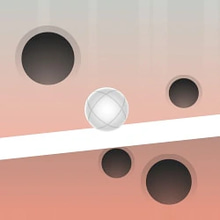
The core idea is beautifully cruel. You move a ball upward while trying not to let it fall into holes. That is it. No long tutorial, no giant list of systems, no nonsense. Just precision, control, and the constant sensation that one rushed correction is about to ruin everything. Kiz10’s own description keeps it simple too: it calls Moving Up a fun and challenging game where you guide the ball upward without letting it fall into the holes, with handcrafted levels and an endless mode included.
That kind of simplicity is exactly why the game works. When a skill game strips itself down to one strong mechanic, there is nowhere to hide. You are either in control or you are not. You are either reading the movement properly or improvising your way into a very avoidable disaster. Moving Up knows that. It does not need to shout. It just puts the ball on the line and waits for your hands to betray you.
𝐓𝐢𝐥𝐭𝐬, 𝐇𝐨𝐥𝐞𝐬, 𝐀𝐧𝐝 𝐓𝐢𝐧𝐲 𝐌𝐢𝐬𝐭𝐚𝐤𝐞𝐬 𝐓𝐡𝐚𝐭 𝐅𝐞𝐞𝐥 𝐇𝐮𝐠𝐞 🕳️
What gives Moving Up its bite is how sensitive the challenge feels. This is not a heavy, lumbering physics game where you can bully the ball into the right direction with wild inputs and hope for the best. It is lighter than that, meaner than that. Small movements matter. Overcorrection matters. Hesitation matters. The game is constantly asking you to make tiny decisions under pressure, and that makes every second more intense than the clean visuals suggest.
There is a very specific tension to games like this. You are not racing enemies. You are not fighting bosses. You are fighting your own tendency to do too much. A soft correction keeps the run alive. A nervous jerk sends the ball straight toward the hole like it has accepted its fate. That makes the challenge oddly elegant. It is not about aggression. It is about restraint. Calm hands. Quiet confidence. A skill set most of us immediately abandon the moment the ball starts drifting somewhere rude.
And because the path keeps forcing new reactions, the game never really settles. Even when you think you have found the rhythm, a new gap appears, the angle changes, and your brain starts doing that arcade math where every inch of movement suddenly feels terrifying. That is good design. It keeps the game active in your head, not just in your fingers.
𝐇𝐚𝐧𝐝𝐜𝐫𝐚𝐟𝐭𝐞𝐝 𝐋𝐞𝐯𝐞𝐥𝐬 𝐌𝐞𝐚𝐧 𝐓𝐡𝐞 𝐆𝐚𝐦𝐞 𝐂𝐚𝐧 𝐆𝐞𝐭 𝐏𝐞𝐫𝐬𝐨𝐧𝐚𝐥 😅
One of the strongest little details in Moving Up is that it is not locked into a single endless loop alone. Public descriptions mention many handcrafted levels in addition to an endless mode, and that matters a lot. It means the game can deliver two different flavors of pressure. The levels give you designed challenges with specific layouts to solve, while endless mode lets the core mechanic stretch into a pure survival test where you chase distance and pride at the same time.
That split is smart. Handcrafted levels create memorable problems. A certain hole placement, a nasty sequence of corrections, one section that keeps wrecking your run because you refuse to treat it with the respect it deserves. Endless mode, meanwhile, is where the obsession lives. That is where the game stops being about finishing and starts becoming about proving something. How far can you go? How long can you stay composed? How many times will you say “that one was stupid, again” before accepting that the game might actually be better at this than you are?
Together, those two modes give Moving Up more staying power than a one-note skill game usually has. You can chase progression through levels when you want structure, then throw yourself into endless mode when you want the full arcade spiral of one more try, one more run, one more attempt to erase the memory of the last ridiculous fall.
𝐓𝐡𝐞 𝐁𝐞𝐬𝐭 𝐒𝐤𝐢𝐥𝐥 𝐆𝐚𝐦𝐞𝐬 𝐌𝐚𝐤𝐞 𝐘𝐨𝐮 𝐅𝐞𝐞𝐥 𝐄𝐯𝐞𝐫𝐲 𝐈𝐧𝐩𝐮𝐭 🎯
Moving Up belongs to that great category of skill games where every input feels visible. You do something, the ball responds, and the result is immediately yours. No ambiguity. No excuses. That directness is a huge part of the appeal. Good runs feel earned because your control is what created them. Bad runs feel maddening for the exact same reason.
And that is where the addiction starts. You fail, but the failure feels fixable. It never feels distant. You can see the correction you should have made. You can almost replay the movement in your head. A little softer there. A little earlier here. Maybe stop panicking near the edge like it personally offended you. This is the perfect fuel for a retry loop. Not randomness. Visibility. The sense that improvement is close enough to touch.
On Kiz10, that kind of game fits beautifully. It loads into your brain fast. You understand the objective almost instantly. Then it starts quietly testing your precision until casual play turns into concentration. A lot of browser skill games try to win people over with noise. Moving Up does it with pressure. Much cleaner. Much sharper.
𝐖𝐡𝐲 𝐌𝐨𝐯𝐢𝐧𝐠 𝐔𝐩 𝐒𝐭𝐚𝐲𝐬 𝐈𝐧 𝐘𝐨𝐮𝐫 𝐇𝐞𝐚𝐝 ⬆️
If you enjoy balance games, ball control challenges, reflex-heavy arcade design, or minimal puzzle-like skill games where one wrong move can end an otherwise beautiful run, Moving Up is a very easy recommendation on Kiz10. Its whole strength comes from how little it wastes. Ball, path, holes, pressure. That is enough.
What makes it memorable is the emotional swing between calm and disaster. One second you are gliding upward smoothly, almost smug about it. The next second the ball slips just slightly off-center and your whole nervous system lights up like this was suddenly a life event. Great arcade games create that kind of drama out of almost nothing. Moving Up absolutely does.
So no, it is not loud. It is not overloaded with gimmicks. It is just a smart, focused skill game that keeps asking the same simple question in increasingly rude ways: can you stay in control for a little longer? Sometimes yes. Sometimes the nearest hole disagrees. Either way, that next run starts looking very tempting.



 4.2 (7 votes)
 Share
Share
 Embed
Embed