🌪️🥚 Nature is your weapon, the eggs are your problem
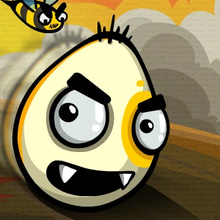
Natural disasters 2 is the kind of physics puzzle that feels innocent until you realize you’re basically playing as the angry weather forecast. You’re not aiming a gun, you’re aiming consequences. A fragile tower of wood and stone sits there, smug and balanced, holding those annoying eggs like they’re protected by law. Then you get handed disasters, and suddenly the level becomes a question with teeth: which part of this structure is lying to you, and what happens if you pull the world out from under it? On Kiz10, this lands as a “one perfect chain reaction” game, where the best wins don’t come from spamming everything. They come from patience, timing, and that quiet grin you get when the whole fortress collapses like it was always doomed. 😅
Every stage is a tiny scene built for destruction, but not mindless destruction. You’re usually working with limited disasters, limited attempts, and very specific weak points hidden inside beams, supports, and stacked platforms. That limitation is what makes it addictive. If you could just press “earthquake” forever, it would be messy and boring. Instead, Natural disasters 2 makes each earthquake, tornado, or collapse-trigger feel like a decision you’ll have to live with. You’re not trying to hit the egg directly. You’re trying to make physics do the dirty work for you.
🧠⚙️ The real skill is “support hunting”
The first few levels teach you the obvious idea: break structures, crush eggs, win. Then the game quietly reveals its real personality. The eggs aren’t the main target. The supports are. Every level has load-bearing pieces that keep the entire stack stable, and once you start spotting them, the game transforms from random destruction into strategy. You’ll begin reading towers like a blueprint. Where is the weight resting? Which beam is doing all the work? Which piece looks decorative but is actually preventing the entire castle from sliding? Natural disasters 2 rewards the player who stops thinking “hit the egg” and starts thinking “remove the lie holding this tower up.” 😈
There’s a satisfying moment when you finally see it: one beam at the bottom that everything depends on, one joint that keeps the top platform from tipping, one tiny connector that looks harmless. You trigger the right disaster, the connector fails, and the whole structure folds in slow motion like it’s surrendering. That’s not luck. That’s reading the level. That’s why people replay these physics puzzle games for years.
🌋🌬️ Disasters as tools, not fireworks
The disasters in Natural disasters 2 are the stars, but they’re also the trap. It’s easy to treat them like spectacle: press button, watch chaos, hope it works. The better way is to treat each disaster like a tool with a specific job. An earthquake is great for shaking loose foundations or nudging stacked pieces off balance. A twister or wind-style effect is perfect for pushing objects sideways, forcing a wobble into a fall, or turning a stable pile into a sliding accident. Fire-style effects in similar games tend to be about weakening wooden structures over time, so even when the destruction looks slow, it’s still doing work in the background. The point is: your disaster choice should match the structure’s weakness, not your mood. 😅
This is where the game becomes quietly tactical. Some fortresses are tall and skinny, begging for lateral force. Others are wide and heavy, begging for a foundation failure. Others look stable until you realize one side is barely supported, like a chair with one leg slightly shorter. Natural disasters 2 keeps mixing these layouts so you can’t solve everything the same way. You have to adapt your plan based on the build of the tower, not just the goal.
🎯🧩 Timing that feels small but changes everything
Physics puzzle games love one thing: timing that looks meaningless until it wins the level. You’ll see it constantly here. Trigger a quake too early and the structure falls “wrong,” leaving an egg safe on a ledge. Trigger it half a second later and the falling debris lands in a way that finishes the job. Use wind while debris is mid-fall and you can redirect a piece into the exact spot you need. Wait until everything settles and that same wind does nothing. It’s tiny. It’s annoying. It’s brilliant. 🙃
That timing turns each level into a small experiment. You try something, it almost works, you learn what moved and what didn’t, and then you adjust. The game doesn’t need fancy storytelling because the story is your attempt: plan, trigger, watch, regret, retry, finally nail it. When you solve a level cleanly, it feels like you didn’t just “win.” It feels like you proved a theory.
😵💫🏗️ When the level looks solved… and then the last egg survives
Natural disasters 2 is excellent at producing that one emotional moment that keeps you playing: the near-perfect collapse that leaves a single egg untouched. Everything else is rubble. The tower is gone. The screen looks like victory. Then you notice the last egg sitting safely on a tiny platform that somehow survived, like it has personal insurance. That’s where the game gets funny and cruel, because now you have to solve a micro-problem with whatever disasters you have left. And those moments teach you discipline.
You learn not to celebrate early. You learn to plan for the “final egg scenario.” You learn to avoid collapsing everything in a way that creates safe ledges. You start guiding debris instead of just creating it. This is where players start feeling “smart” rather than “lucky,” because you’re controlling outcomes rather than watching them.
🧨😈 Greed, impatience, and the reset button
This game is also a masterclass in why impatience ruins solutions. You’ll get excited, trigger disasters too quickly, stack effects on top of each other, and create a chaos pile that protects the eggs instead of crushing them. It’s almost comedic. The faster you try to finish, the more likely you are to create a stable rubble bunker. So you learn a weird discipline: let the physics finish talking before you interrupt. Let objects fall. Let them settle. Then make the next move.
And because it’s on Kiz10, the restart loop is instant and inviting. You don’t lose progress for experimenting. You lose a few seconds. That encourages creativity. Try a risky quake. Try a different angle. Try a delayed wind push. The game becomes this fast lab where the results are always visible, and that’s why it stays replayable. Every failure teaches something you can immediately test.
🏁🌪️ Why Natural disasters 2 works as a Kiz10 physics puzzle
Natural disasters 2 delivers the core fantasy perfectly: you control natural disasters, you topple structures, and you crush the eggs using smart chain reactions. It’s a physics puzzle with simple controls, but the levels reward real thinking: support selection, timing, and reading how objects will fall. It’s satisfying in the clean way, not the noisy way. The best wins look effortless because you made them that way. And once you get hooked on that feeling, you’ll keep chasing cleaner collapses, fewer wasted disasters, and that perfects final crush where nothing survives the fall. 🌪️🥚💥





 Share
Share
 Embed
Embed


