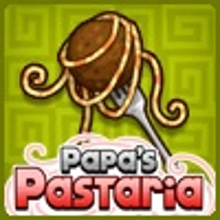
Papa’s Pastaria is a time-management cooking game where you boil pasta, build perfect orders, and survive the dinner rush on Kiz10. (1239) Players game Online Now
🍝⏰ The Bell Rings, The Queue Forms, The Panic Begins Papa’s Pastaria has a special talent: it looks cozy… right up until the first dinner rush hits and you realize you’re running a pasta restaurant with the emotional stability of a person juggling hot plates on roller skates. This is a time-management cooking game, which means your job is simple in theory: take orders, cook pasta, add sauces and toppings, serve customers, repeat. In practice? It’s controlled chaos. On Kiz10, Papa’s Pastaria plays like a delicious scheduling nightmare where every second matters and every customer has the patience of a hungry judge at a cooking competition 😅👨⚖️.You’re not only making food.You’re managing timing, multitasking stations, and trying to keep your brain from melting when three orders overlap and one customer wants something oddly specific. It’s a game about rhythm, but not musical rhythm—kitchen rhythm. The kind where you move fast, think ahead, and still somehow forget one topping at the worst possible moment.📋👀 Orders First, Regret Later Everything starts at the order station. Customers show up with preferences that range from reasonable to “you want HOW much sauce?” You take the order, and the game immediately does that thing where it quietly expects you to remember details while you’re already busy.Pasta type. Cook time.Sauce choice.Toppings. Bread. Extras. It’s a checklist, but it feels like a memory test because your next customer is already staring at you.The best part is how the game rewards attention. If you slow down for half a second to read properly, your entire run goes smoother. If you rush, you’ll spend the rest of the round chasing your own mistakes. Papa’s Pastaria is basically a polite teacher that punishes sloppy reading with loud customer disappointment.🔥🍜 The Boil Station: Where Timing Is a Personality Trait Cooking pasta seems easy until you have multiple pots running and each one wants different timing. The boil station becomes your first real “kitchen brain” challenge.You’re watching timers, moving baskets, avoiding overcooks, and trying to keep everything flowing. Overcook? Score drops. Undercook?Also drops.The game wants that satisfying sweet spot where the pasta is perfect and you feel like a professional, even though you’re doing it in a browser with questionable confidence 😭.What makes it addictive is the small mastery curve. At first, you’ll overcook because you got distracted by toppings. Then you’ll start developing habits. You’ll check timers automatically. You’ll stack tasks in your head.You’ll start thinking like a kitchen manager: “Start that pot now so it’s ready when the build station opens up.” It’s tiny strategy layered into cooking, and it’s surprisingly satisfying.🥫🧀 The Build Station: Art, Precision, and Minor Chaos This is where the game turns into pasta assembly madness. Sauce has to be right.Toppings placed correctly. Portions consistent.The visuals matter because the scoring system judges your build quality, not just your speed. And yes, the pressure is real: you might be building one dish while two others are cooking and a new customer is waiting.You’ll have moments where everything lines up and you feel unstoppable—perfect timing, clean builds, smooth flow between stations. Then you’ll have moments where you accidentally apply the wrong sauce and your brain goes silent for a second like, “No… no… no… I did not do that.” The panic click-back, the frantic attempt to salvage, the tiny shame. It’s part of the experience 😅🍝.The game is generous enough that you can recover from small mistakes, but strict enough that you’ll care.That’s the secret sauce. It makes you want to improve. 🍞✨ Extra Details That Make You Feel Like a Real Chef Papa’s Pastaria isn’t only about pasta. The little extras—like sides and add-ons—add depth to the loop. They force you to split attention and plan your station flow better.You learn to start certain parts early so everything finishes at the right time. That’s when the game feels less like clicking and more like actual kitchen management.It’s also where the “rush” feeling really kicks in. You’re balancing multiple components, trying to sync them like a mini production line. When you nail it, it’s incredibly satisfying. When you miss the timing and one item sits too long, it feels like the restaurant itself is judging you.💸🏪 Progression: Upgrades That Quietly Change Everything The game’s progression is what makes it stick. As you earn money and unlock improvements, the whole restaurant becomes more manageable. Not effortless—just more controllable. That’s important. The challenge doesn’t vanish; your tools get better.And when you upgrade something that reduces stress—faster cooking, better station efficiency, smoother workflow—you feel it instantly.These upgrades turn your early “survive at all costs” gameplay into something closer to mastery.You start running faster, jumping, and handling more customers without spiraling.The transformation is addictive because it feels earned. You’re building a better kitchen by learning the game.😵💫🏃♂️ The Dinner Rush: Where Your Brain Splits Into Three People Every session eventually reaches the point where multiple customers arrive back-to-back, and the restaurant goes from calm to chaos. This is the true identity of Papa’s Pastaria. The rush. The overlapping orders.The timers screaming silently in your head. The moment you realize you’re running three dishes at once and one of them is about to overcook while you’re still placing toppings on another.This is where good players shine. They don’t panic. They prioritize. They keep the boil station under control first because overcooked pasta ruins everything.They read orders carefully, then they build efficiently. They move like they’ve got a plan. And honestly, watching yourself improve here feels great. You start as a stressed beginner. You become a calm chaos-manager.Then you get cocky and mess up one sauce and the cycle humbles you instantly. Perfect.🧠🍝 Quick Tips That Actually Help The biggest skill is order awareness. Always take a half-second to read the ticket properly before you start cooking. Second, treat the boil station like a priority: set up pasta early so you’re never waiting on it later. Third, build clean, not sloppy—accuracy is worth more than speed when you’re trying to maximize score.And finally, don’t stack too many risky tasks at once. It’s better to run two orders smoothly than three orders poorly.If you’re struggling, your workflow probably needs structure. You don’t need to move faster. You need to move smarter.🏁🍽️ Why Papa’s Pastaria Is So Replayable on Kiz10 Papa’s Pastaria nails the cooking management fantasy: satisfying assembly, real multitasking, constant little improvements, and the perfect mix of stress and reward. It’s the kind of game where your best moments feel like a well-run kitchen and your worst moments feel like a comedy disaster, but you always want one more day because you know you can do it better.If you like time-management games, restaurant simulators, cooking challenges, and that special “I’m busy but I’m winning” feeling, Papa’s Pastaria on Kiz10 is a strong pick. Just be warned: once the rush starts, you’ll forget you were supposed to stop playing. That’s the true recipe 😅🍝🔥.
Gameplay : Papas pastaria
FAQ : Papas pastaria
What is Papa’s Pastaria on Kiz10?
Papa’s Pastaria is a time-management cooking game where you take customer orders, boil pasta, add sauces and toppings, and serve dishes quickly to earn high scores.
How do I get higher scores in Papa’s Pastaria?
Read tickets carefully, cook pasta to the correct timing, build dishes with accurate toppings and portions, and keep a smooth workflow during the dinner rush.
Why do customers get unhappy so fast?
Customers lose patience when orders take too long. Keep pots running efficiently, avoid overcooking, and build each plate cleanly so you don’t waste time fixing mistakes.
What’s the best strategy for multitasking stations?
Start pasta early, then switch to building while it cooks. Keep an eye on timers and avoid starting too many pots unless you can manage them without overcooking.
Is Papa’s Pastaria more about speed or accuracy?
Both matter, but accuracy is crucial for high tips and better ratings. A clean build with correct sauce and toppings often beats rushed, sloppy plates.














 4 (449 votes)
 Share
Share
 Embed
Embed