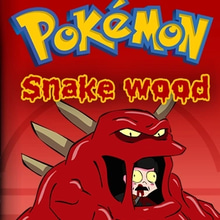
The sky over Hoenn looks wrong, a bruised purple stitched with smoke where clouds should be. The first road you step onto is littered with cracked Poké Balls and footprints that don’t walk straight. Somewhere beyond the ruined trees something groans like a door that learned how to breathe. Pokemon Snakewood: Pokemon Zombie Hack doesn’t whisper its stakes; it throws you into a post-apocalyptic region where routes you remember are now caution tape and memory. It’s still an RPG at heart, tactical and methodical, but every choice hums with danger because the world itself feels slightly tilted, like you’re moving through a dream that refuses to end.
🧟 Rotting beginnings, stubborn hope
You wake up with more questions than supplies, meet survivors who talk in quick sentences, and learn the new laws of travel. Towns aren’t safe because of gates; they’re safe because people agree to watch while others sleep. The first wild encounters teach new habits: chip damage matters, status matters, and stalling for information can be the difference between walking away and limping. When a route goes silent for too long, you stop and listen. When the grass shakes, you don’t rush; you plan. The apocalypse slows you down in the best way, reminding you that patience is a weapon too.
⚔️ Combat on a knife’s edge
Turn-based battles are the familiar spine, but the ribs have changed. Enemies arrive altered by infection, type interactions twist in places you don’t expect, and moves you loved in clean arenas become lifesavers in muddy ones. Suddenly, sleep powder is a kindness you extend to yourself. Burn isn’t just chip; it’s insurance. Switching isn’t just matchup math; it’s a retreat, a feint, a way to drag a foe across a hazard you set two turns earlier. The rush of landing a smart protect into a punish feels bigger here because the backdrop is loud and the victory is quiet.
🧭 Routes rewritten by disaster
Hoenn’s geography still sings—beaches, forests, jagged passes—but the verses are darker. Bridges are barricaded with scavenged wood. Caves echo with dripping water and the clack of something that shouldn’t have claws. Old shortcuts are blocked; new ones exist if you’re bold enough to crawl through collapsed tunnels or skirt the edge of a flooded embankment. You start carrying mental maps of safe circles: a loop you can run if a horde spawns, a rock ledge that buys you a turn to breathe. Exploration becomes negotiation. You ask the world for passage and pay with care.
🧪 Team-building in a broken world
Your party isn’t just a type chart—it’s a survival kit. You’ll want a reliable status spreader, an emergency wall that can soak ugly crits, and a cleaner with enough speed to close when panic sets in. Held items aren’t garnish anymore. Berries feel like little prayers. Leftovers reads like an apology you accept every single turn. Movesets lean practical: priority to snipe, hazards to punish, coverage that answers a new breed of threat muttering in the grass. Coaching a scrappy creature into the backbone of your squad is the kind of joy that keeps you moving from town to town even when the story gets heavier than you planned for tonight.
🏚️ Safe houses, not cities
Gyms aren’t glittering stadiums; they’re rally points wrapped in folklore. Leaders act like militia captains, testing you not with pageantry but with puzzles that train useful habits. One hides switches in dark corners so you practice reading sound and shadow before a boss that lives in those same lies. Another plays with weather in ways that punish greedy play, teaching you to track tempo under pressure. When you win, the badge feels like a pact between stubborn people who intend to see morning.
🔎 Clues, journals, and quiet dread
Snakewood loves its breadcrumbs. Notes on clinic counters, scratched warnings on signposts, half-finished research in a lab where the power still flickers—each one nibbles at the edges of the outbreak’s truth. The mystery isn’t just a who failed and how. It’s a string of small tragedies and unexpected kindnesses. You’ll read a child’s scrawl that says I fed the quiet one and feel your jaw clench as you face a trainer guarding a room they will not abandon. The narrative earns its scares not with jumps but with accumulation, and it lets you be the kind of protagonist who writes answers with effort.
🧠 Micro techniques that keep you alive
Chip before you commit. Scout with a bulky lead holding a safe switch item. If a route goes too quiet, swap to a status opener and walk, not run. Use terrain like it matters: fight on sand when you can steal speed, fight in caves when echoes warn you of patrols. Don’t waste antidotes if a short jog will reach a center; do waste them if your gut says the next bend won’t be kind. When in doubt, set a hazard and invite the enemy to make the first mistake. The apocalypse rewards people who turn small edges into clean exits.
🧰 Scavenging and crafting the long way home
You’ll collect more than experience. Scrounged meds, improvised gear, and oddities that feel useless until a survivor shows you the one trick that turns junk into a tool. A bent spoon becomes an improvised lure. A length of wire becomes a door hold that buys a turn in a pinch. Even your creatures adapt—their abilities matter not just in battle but in the way they touch the world. A lantern-bright partner makes night routes legible. A sturdy one pushes debris aside, revealing side paths and secrets that weren’t on any map you trusted.
👥 People who refuse to quit
NPCs have edges here. A nurse who keeps the generator going by counting heartbeats. A fisherman who guards a dock because someone said they’d come back and he believes them. A rival who alternates between tough love and reckless heroics, forcing you to ask whether this disaster made them brave or just amplified what was already there. Dialogue is brisk and human, sprinkled with gallows humor that never undercuts the danger. You’ll start caring, quietly, and the game will notice, gently raising the stakes without taking your agency.
🎼 Sound that tells the temperature of fear
Music tilts minor and low when hordes gather, climbs to a tight drumline during boss phases, and relaxes into brittle, pretty melodies in the rare safe rooms you linger in too long. Status sounds are crisp enough to read the board without glancing down: a dry crackle for burn, a sticky whisper for poison, a soft bell for sleep that feels almost kind in a world this loud. When you land a clutch catch on the edge of a wipe, the capture chime lands like a breath you didn’t know you were holding.
🎮 Controls and clarity under stress
Menus respond instantly. Move info is readable without digging. The battlefield stays legible even as weather, status, and field effects stack. On touch, selections feel safe against shaky hands; on keyboard, quick toggles make mid-turn adjustments painless. That smoothness supports the fantasy: you are calm because the interface refuses to panic.
🌅 Why this belongs in your Kiz10 rotation
Because it remembers that RPGs are about choices under pressure, and it gives every choice weight. Because the post-apocalyptic dressing isn’t a costume; it’s a ruleset that makes old tricks feel new. Because team-building here is a story about resilience. Because solving a zone with smart routing and careful battles feels like fixing a small corner of a broken map. And because, somewhere around hour three, you’ll realize you’re not just grinding—you’re caretaking, gathering, planning, and believing that a different dawn is possible. That’s a rare feeling for a monster RPG, and Snakewood hands it to you with dirty hands and a steady gaze.


















 Share
Share
 Embed
Embed


