🏺 Clay, pressure, and the quiet panic of getting the curve right
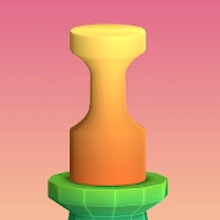
Pottery Online is one of those games that feels peaceful until your hands suddenly decide this vase absolutely needs one more tiny adjustment. Then everything gets dangerous. On Kiz10, the core idea is beautifully simple: shape your own pottery and try to match the target form as closely as possible. That sounds gentle, almost meditative, and sometimes it is. Then you shave off a little too much from the side, stare at your wobbling creation, and realize you’ve turned elegant ceramic art into something that looks like it lost an argument with gravity. The official Kiz10 page describes it as a game where you sculpt your own pots and match the target shapes, and honestly, that clean little sentence hides a lot of delicious tension.
What makes this game so easy to like is the contrast. It looks calm. It plays calm. But somewhere in the middle of shaping a pot, your brain becomes weirdly competitive. Suddenly you are not casually carving clay anymore. You are chasing symmetry like a person possessed. You start rotating the model, checking the silhouette, wondering whether the neck is too thin or the base too chunky. A game about pottery should not be this dramatic, and yet here we are, emotionally invested in a digital vase at midnight.
🌀 The strangely addictive loop of scrape, rotate, regret
The moment-to-moment gameplay in Pottery Online has that rare quality browser games sometimes hit when they are really locked in: it is simple enough to understand instantly, but satisfying enough to keep repeating. You chip away, smooth sections, compare your shape to the target, and try to avoid ruining the whole thing with one overconfident move. There’s no need for chaos from enemies, timers screaming in your face, or explosions every six seconds. The tension comes from precision. Quiet precision. The dangerous kind.
And that works because shaping something by hand, even virtually, always creates a personal connection. If you mess up, it feels like your mess-up. If you nail the contour, that success feels earned in a strangely intimate way. Pottery Online turns that into its whole personality. You are not just clearing a level. You are crafting an object. Okay, yes, a very game-like object with a target shape hovering over your pride, but still. It feels tactile in the way good sculpting and cutting games often do. You look at the clay and think, “Just a little more off the top.” Famous last words.
That tiny risk attached to every movement is what makes the game sticky. One careful pass can improve everything. One sloppy pass can wreck the harmony. So you settle into this loop of cautious confidence, then overconfidence, then immediate regret, then recovery. It is almost poetic. Or annoying. Usually both.
🎯 Matching the target is easy right up until it absolutely isn’t
The target shapes are where Pottery Online gets its real bite. Making a pot is one thing. Making the right pot is another story. A smooth curve that looks fine to you may still be slightly too wide. A neck that seems elegant may actually be too tall. A base that feels stable may ruin the whole proportion. Suddenly the game becomes less about random crafting and more about observation.
That shift matters because it gives the experience purpose. You are not sculpting blindly. You are studying shape, negative space, thickness, and balance, even if you are doing it in a casual, browser-friendly way. There is a little bit of puzzle logic here, a little bit of art-game rhythm, and a little bit of simulation. Kiz10 classifies Pottery Online among puzzle, simulation, and 3D game tags, which feels exactly right because it sits in that interesting space between relaxing creativity and accuracy-based challenge.
And yes, there is something funny about how serious the game can make you feel. You start a level thinking this will be a chill pottery session. Five minutes later you are squinting at the screen like an ancient ceramic inspector. “No, the shoulder line is off.” “The lip is too thick.” “Who approved this bowl?” It brings out a very specific kind of perfectionism, the kind that sounds ridiculous until you’re the one trying to fix a lopsided vase with one final scrape and a prayer.
✨ Why relaxing games sometimes make you focus harder than action games
There is a special category of online game where nothing is technically aggressive, but your concentration gets locked in so hard that the rest of the room stops existing. Pottery Online belongs there. It is relaxing, yes, but not sleepy. The calm atmosphere does not remove challenge; it changes its flavor. Instead of dodging bullets, you are fighting impatience. Instead of defeating enemies, you are defeating the little voice that says “close enough” when the shape is clearly not close enough at all.
That internal battle is surprisingly fun. Maybe even the best part.
Because once you stop rushing, the game starts to reward you in a very satisfying way. Your movements become more deliberate. You notice how much material to remove and where. You get better at reading curves before touching them. You begin to trust your eye. That quiet skill growth is incredibly pleasing. Pottery Online never needs to shout about improvement. You just feel it. The pot that would have collapsed into awkward nonsense earlier now comes together neatly. The shape you used to ruin halfway through suddenly looks clean, balanced, and intentional. That kind of progress always feels good.
And visually, there is something charming about the whole setup. Clay has this natural softness as a concept. Pots have history. Forming an object out of a plain spinning mass feels almost old-world in spirit, even inside a modern HTML5 browser game. Pottery Online taps into that nicely. It gives you a small creative task and lets your own patience decide whether the result becomes graceful or mildly cursed.
🪞 Tiny details, weird pride, and the joy of making it look right
The most memorable part of Pottery Online is not speed or spectacle. It is that little moment when the object on your screen finally starts to resemble the target in a convincing way. That moment rules. It feels less like winning and more like alignment. The curves click. The silhouette settles. The piece stops looking accidental. It starts looking designed.
That is a very different kind of reward compared to louder browser games, and it gives Pottery Online its own identity on Kiz10. The game is not begging for attention. It earns it by being oddly absorbing. You come in because shaping clay sounds relaxing. You stay because it turns out precision is satisfying, and because every level contains a tiny personal duel between your artistic instincts and your lack of self-control.
And yes, there is also comedy in failure. Bad pottery in this game is funny. Not cruelly funny, just... honest. Sometimes you overshave one side and the piece becomes a strange museum object from a civilization that absolutely should not have been trusted with ceramics. Sometimes the top becomes too narrow, the bottom too heavy, and the entire pot gives off “I tried” energy. Those failures help the game, weirdly enough. They make success feel more human. More earned. Less mechanical.
🌿 A browser game with a calm pulse and a surprisingly sharp hook
Pottery Online works because it understands restraint. It does not overload the player with distractions. It gives you clay, a target shape, and enough room to succeed or ruin everything yourself. That simplicity is the hook. Kiz10’s page confirms the essentials clearly: it is an HTML5 browser game, playable on desktop, mobile, and tablet, built around sculpting pots to match specific shapes.
For players who like relaxing simulation games, shaping games, satisfying crafting mechanics, or casual puzzles experiences with a 3D feel, this one has a very easy charm. It is cozy without being empty. Focused without being stiff. Creative without drifting into chaos. Well... mostly without chaos. The chaos usually arrives the second you think, “I can totally fix that edge.” Then the clay disagrees.
So if you want a Kiz10 game that trades noise for concentration and turns pottery into a weirdly compelling precision challenge, Pottery Online is a lovely pick. It is soft, satisfying, and just risky enough to keep you saying one more pot, one more shape, one more careful pass. That is how it gets you. Quietly. Like all the best relaxing games do.





 Share
Share
 Embed
Embed