🦠🚨 SIRENS, STREETS, AND A CITY THAT WON’T SIT STILL
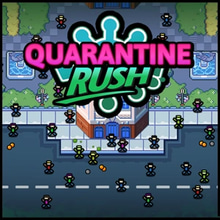
Quarantine Rush drops you into that specific kind of panic where everything looks normal for half a second… and then you realize the whole map is basically a living emergency. People are moving, infections are spreading, and your job isn’t to “win a fight” like a shooter. Your job is to manage a rushing, messy outbreak with quick hands and smarter priorities. On Kiz10, it plays like an arcade rescue game with a mission that feels oddly urgent: save as many healthy people as you can, send them home, and deal with infected citizens before the situation turns into full-blown chaos.
It’s a simple premise, but it has teeth. You’re constantly scanning the screen, making fast decisions, and trying not to waste movements. Because in Quarantine Rush, time doesn’t just pass… it bites. Every second you hesitate, the pressure rises, the city gets noisier, and your score potential slips away like a bar of soap in a hospital sink.
🚑🏃 THE “SAVE FIRST, ASK QUESTIONS NEVER” LOOP
The heart of the game is this frantic rhythm: spot people who need help, move fast, guide them to safety, and keep the infected from becoming the only ones left on the street. It feels like a rescue sprint with arcade rules. You don’t get the luxury of long planning sessions. You have to react, adjust, and keep going.
The best runs are the ones where you become weirdly efficient. You start thinking in routes, not in single actions. “If I grab these two, I can swing past that cluster, then cut across for the next group.” Your brain turns into a little GPS that only speaks in stress. And the moment you mess up that mental path, the whole run starts wobbling, because Quarantine Rush rewards flow. Smooth movement, fast choices, minimal backtracking. That’s how you climb.
And yes, the game will tempt you into greed. There’s always “just one more person” you could save before you head back. There’s always one risky detour that might pay off big… or might cost you everything. That tension is what makes it addictive. You’re not just saving people. You’re gambling with momentum.
🧪✨ POWERUPS THAT FEEL LIKE PANIC BUTTONS
Powerups in Quarantine Rush aren’t decorative. They’re the difference between a run that feels under control and a run that collapses into “I’m chasing problems now.” When you pick up a good powerup at the right moment, it’s like the city gives you a brief window to breathe. You can cure infections faster, handle threats more safely, or stabilize situations that were about to spiral.
But here’s the funny part: powerups also change how you think. They make you bolder. Suddenly you’re taking routes you wouldn’t take otherwise, because you feel protected. You start pushing your luck, trying to squeeze more rescues out of the same time. Sometimes it’s brilliant. Sometimes it’s the exact moment you discover that confidence is not the same thing as control 😅.
A good strategy is to treat powerups like tools, not like trophies. Grab them when they actually solve a current problem, not just because they’re shiny. The best players learn to time them. Use them during the busiest moments, when the city feels crowded with decisions. That’s when powerups have maximum value.
💰🛠️ COINS, UNLOCKS, AND THE LITTLE ARSENAL OF HOPE
Quarantine Rush also gives you that satisfying arcade progression: collect coins, unlock items, and gradually become more capable at handling the mess. It’s not a slow, heavy upgrade system that demands hours. It’s more like a steady reward for playing well. The game nudges you with that classic feeling of, “Okay, that run was decent… but if I unlock one more thing, the next run could be insane.”
Unlocks matter because they change your options. More options means more ways to recover from mistakes. And you will make mistakes. Everyone does. The difference is whether your run dies instantly or whether you have the tools to patch the situation and keep moving. That’s the sneaky brilliance of upgrades in an arcade rescue game: they don’t remove difficulty, they give you more ways to play aggressively without falling apart.
😵💫🧠 THE REAL ENEMY IS YOUR OWN ATTENTION SPAN
Let’s be honest: the infection isn’t the only threat. The real threat is you getting distracted for half a second. Quarantine Rush is built around attention management. You’re watching movement, reading what’s happening, predicting where trouble will be next, and trying not to tunnel-vision on one objective while another problem blooms behind you.
One of the most common mistakes is chasing a single target across the map while ignoring easy rescues nearby. It feels heroic to sprint across the city, sure, but the game doesn’t reward drama. It rewards smart efficiency. Tight routes, quick conversions, constant awareness. You want to sweep areas clean rather than zig-zagging in panic.
And then there’s the moment where the screen looks “fine” and you relax. That’s when the game punishes you. Because Quarantine Rush loves the surprise spike. The sudden crowd. The sudden infection cluster. The sudden “wait, when did THAT happen?” moment. The city is never really calm. It just pretends.
🏙️🧼 QUARANTINE AS A GAME MECHANIC, NOT JUST A THEME
What makes Quarantine Rush feel different from generic rescue games is the quarantine idea itself. You’re not just moving people for points. You’re separating danger from safety. You’re trying to keep healthy people from getting caught in the wrong wave at the wrong time. Sending people home isn’t a side objective, it’s the core relief valve that keeps the city from becoming unmanageable.
That creates a satisfying push-pull: the more efficiently you move healthy people out, the more space you regain. The more space you regain, the easier it is to handle the infected. But if you delay the “send home” part, your map stays crowded, routes get messy, and you spend the rest of the run reacting instead of controlling. The game quietly teaches you the same lesson over and over: prevention is faster than cleanup.
🎮🔥 THE PERFECT RUN FEELS LIKE CONTROLLED CHAOS
When Quarantine Rush clicks, it feels amazing. Not calm amazing, more like “I’m barely holding this together but I’m doing it” amazing. You’re weaving through the city, grabbing coins, triggering powerups at the right time, saving people in clusters, and keeping the infected from dominating the map. Your movement becomes smooth, almost automatic. You stop thinking about individual actions and start thinking in waves.
And then you’ll mess up. You’ll misread a situation. You’ll take a route that seemed clever but wastes time. You’ll grab a powerup too early, and when you actually need it, it’s gone. That’s the loop: learn, improve, restart, chase a better score. The sessions are short enough that retries don’t feel like punishment. They feel like practice, like tuning your instincts.
That’s why it fits so well on Kiz10. Quarantine Rush is a browser arcade game with quick replay value, simple controls, and that “one more attempt” magnet. You can play for five minutes and feel satisfied, or you can play for thirty minutes because you’re convinced your best run is still ahead of you. And it probably is.
🕹️😈 ONE LAST THING BEFORE YOU START RUNNING
Don’t try to be perfect on your first run. The city moves too fast for that. Your first job is to learn the rhythm: how quickly trouble grows, how the map feels, how to chain rescues without wasting movement. Once you understand that flow, you’ll start making smarter choices without even realizing it.
Because that’s the secret: Quarantine Rush isn’t a complicated game. It’s a sharp one. It tests your movement, your priorities, and your ability to stay focused while everything looks like it needs attention right now. Save, isolate, cure, collect, upgrade, repeat. And when you finally hit that run where everything lines up and your score skyrockets, you’ll sit back and think… okay, maybe I am good at managing chaos 😅🦠.





 2.5 (85 votes)
 Share
Share
 Embed
Embed


