🚂 When the rails are broken and your brain becomes the repair crew
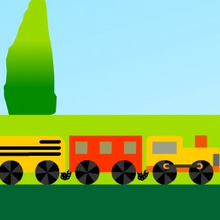
Re-build the Track has the kind of title that gives away the whole problem immediately. No mystery, no poetic nonsense, no dramatic speech from a worried station master. The track is broken. That is the issue. You need to fix it. And somehow, puzzle games built on that kind of blunt honesty are often the most addictive. The moment you understand that a train cannot move until the line is rebuilt correctly, your brain locks in. Suddenly every piece of rail matters, every connection becomes suspiciously important, and every unfinished route starts looking like a personal insult. I could not verify a current dedicated Kiz10 page for this exact title, so I’m treating it as a rail-building puzzle game based on the game name and the train-track puzzle style that Kiz10 already features in closely related titles like Gold Train and Train Crisis Lite.
That genre works because it takes a very physical problem and turns it into pure logic. A train needs a path. The path is incomplete. The board gives you the pieces, the gaps, and the consequences. From there, everything becomes about order. Not boring order. Not tidy little spreadsheet order. Real, mechanical order. The kind where one missing curve or one badly placed straight segment means steel meets disaster and your otherwise glorious plan dies in a puff of rail-based embarrassment.
On Kiz10, train puzzle games already lean into that tension beautifully. Gold Train is all about placing and rotating track tiles to guide a train to the station, while Train Crisis Lite focuses on switching tracks, avoiding wrecks, and getting trains safely to the correct destinations. That makes Re-build the Track feel right at home in the same family of games: clear rules, visible danger, and the constant pressure of building a route that actually works.
🧩 A few missing rails can ruin absolutely everything
What makes a track-repair puzzle fun is how quickly it turns small mistakes into big consequences. A rail piece is just a piece, sure, but in a game like this it might as well be destiny. Put one segment in the wrong place and the entire route becomes nonsense. Suddenly the train cannot reach the station. Or worse, it can reach somewhere, just not the place you intended, which is somehow even more offensive. That is the joy of railway logic games. They do not scream at you. They simply let you build something wrong and then watch you discover the mistake in slow, elegant disappointment.
That creates a great puzzle rhythm. You study the layout. You look for the start point. You look for the destination. You search for the most obvious route, then immediately doubt it because puzzle games have taught all of us not to trust anything that seems too obvious. Then you begin connecting pieces, rotating lines, and imagining the train’s path before committing to the solution.
That mental preview is where the real game lives.
It is not just about placing tracks. It is about seeing motion before motion happens. You are essentially rehearsing a journey inside your head, trying to predict where the train will go, where the line might fail, and whether your route is actually complete or just emotionally convincing. Those are two very different things, by the way.
🚦 Train puzzles are quiet until they suddenly become stressful
There is a special kind of pressure in railway games. The board looks calm. The pieces look harmless. But the second a train enters the equation, everything changes. Now the route is not abstract anymore. It is alive. A track is not just a line on the screen. It is a promise. And promises in puzzle games are dangerous.
That is why train-track rebuilding feels so satisfying. You are not matching colors or deleting blocks. You are restoring function. You are bringing order back to a broken system. There is something deeply rewarding about watching a route that was a mess a moment ago become a clean, connected path. When the train finally rolls along the line you rebuilt, it feels earned in a way that simple puzzle clearing often does not.
Kiz10’s train category makes that appeal very clear. The site describes these games as challenges where you drive locomotives, manage railways, or solve puzzles involving trains and tracks. Re-build the Track fits naturally inside that exact logic: route management, rail connections, and the quiet threat of failure if the line is wrong.
🛠️ This is less about speed and more about clean thinking
A lot of players assume train games are about reaction time. Sometimes they are. This kind of game is more about planning. Good planning, boring planning, glorious planning. The kind that saves you from preventable disaster. Re-build the Track, at least by its title and obvious design logic, seems like the kind of puzzle where you are rewarded for slowing down, reading the board, and deciding how every piece contributes to the route.
And that is a good thing.
Because the best rail puzzles are not frantic. They are tense. Tension is better. Tension means the game trusts you to think. It gives you a broken network and asks whether your brain can restore it before the whole situation turns into a wreck. That is much more satisfying than simple speed tapping.
Gold Train on Kiz10 captures that really well, asking you to lay the perfect tracks, collect coins, and reach the station safely. Train Crisis Lite pushes the same rail-puzzle idea in a slightly more stressful direction by adding multiple trains and dangerous crossings. Re-build the Track sounds like it belongs between those two moods: constructive, careful, and just threatening enough to keep every decision meaningful.
😵 Why one tiny misplaced curve feels like personal betrayal
There is also something strangely funny about rail puzzles. You can spend a full minute feeling brilliant, completely certain the route is perfect, only to realize that one tiny turn piece quietly destroys the entire solution. That is the moment every puzzle fan knows well. The moment where your confidence collapses, but only after making eye contact with the exact mistake that caused it.
That kind of failure is excellent because it teaches without feeling random. You do not lose because the game hates you. You lose because the route was wrong. A station was unreachable. A connection was incomplete. A crossing led nowhere helpful. Those are honest failures, and honest failures create the best retry loops. You restart not because the game was unfair, but because you know the fix is possible.
And once you know a fix is possible, the obsession begins.
You start thinking in cleaner lines. You visualize the route faster. You stop treating each tile as a loose object and start seeing the whole network as one continuous solution. That shift is what makes a simple rail game become a really good puzzle game.
🌟 A small railway problem with big browser-game charm
Re-build the Track is a strong fit for players who enjoy logic games, train puzzles, route-building challenges, and browser games where fixing a broken system feels more satisfying than smashing something apart. Even though I could not confirm a current Kiz10 page for this exact title, the concept lines up extremely well with Kiz10’s real train-puzzle catalog, especially Gold Train, Train Crisis Lite, Train Snake, Off the Rails 3D, and the broader train-games section.
If you like games where one correct connection can transform total mess into clean success, this one has the right kind of hook. It takes broken rails, simple pieces, and a clear goal, then lets your brain do the dangerous part. You rebuild the path, test the line, and hope the train agrees with your logic. When it does, it feels smooth, smart, and oddly triumphant. When it does not, well… that is what the restart button is for. 🚂





 Share
Share
 Embed
Embed