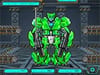
🚀🌌 The universe is quiet… and that’s the scary part
Return To Earth doesn’t feel like a loud, heroic sci-fi parade. It feels like the moment after the disaster, when the radio crackles, the dashboard lights blink like nervous eyes, and you realize you’re alone out there with one job: get back. No speeches. No dramatic medal ceremony waiting. Just you, your ship, and a hostile stretch of space that doesn’t care how brave you are. It’s a space survival action game built around movement, timing, and the constant pressure of “one mistake and it’s over.” On Kiz10, it plays like a tight, focused challenge—quick to start, immediately tense, and weirdly addictive because every run teaches you something you can use on the next attempt.
The core fantasy is simple and powerful: you’re returning home against impossible odds. But the gameplay keeps it grounded in small, urgent moments. Steering decisions that feel tiny become huge. A gentle correction turns into a lifesaving dodge. A greedy move turns into a crash. You’re not just piloting; you’re negotiating with physics and danger at the same time. And once you get into that mindset, the game becomes less about random luck and more about calm control under pressure.
🛰️🧠 Flying isn’t hard… staying calm is
At first glance, piloting in Return To Earth feels straightforward. You move the craft, avoid obstacles, push forward. Then the game starts layering problems. The path tightens. Hazards appear in patterns that punish lazy steering. Your brain tries to do two things at once—aim for a safe route and plan for what’s coming next—and that’s exactly where the tension lives. It’s not a button-mashing shooter. It’s a focus test dressed as a space mission.
You’ll notice that the best runs aren’t frantic. They’re smooth. You make smaller adjustments. You stop overcorrecting. You stop treating every obstacle like a surprise and start treating them like a rhythm. Because once you find the rhythm, the game feels almost hypnotic. The ship glides, you weave through danger, and you get that strange feeling of being both relaxed and intensely alert at the same time. Like your body is calm but your eyes are locked in. 😅
☄️🛑 Hazards that don’t look angry until they ruin your day
The enemies in Return To Earth aren’t always “bad guys with faces.” A lot of the danger is environmental. Space debris, drifting obstacles, tight corridors, sudden threats that force you to pick a lane instantly. That makes the challenge feel more survival-focused than combat-focused. You’re fighting the route, not necessarily an army.
And that’s why mistakes hit hard. When you crash, it doesn’t feel like you lost a fair fight. It feels like you made a bad decision. A rushed turn. A late correction. A moment of tunnel vision. The game is brutally honest about that, but it’s also motivating because it means improvement is real. If you learn the patterns, if you control your movement better, if you stay calm, you last longer. It’s not just “try again and hope.” It’s “try again and be smarter.”
🔧✨ The sweet loop of upgrades and confidence
A good survival action game needs a reason to keep pushing beyond “I want to win.” Return To Earth delivers that through progression—earning rewards, improving performance, and feeling your ship become more capable. Whether it’s upgrades, new tools, or just stronger run momentum, the game encourages you to keep going because you can feel yourself getting more prepared for the journey.
But it never becomes easy in a boring way. Even when you improve, the environment still demands attention. You’ll still have moments where everything looks fine and then suddenly it’s not. That’s the game’s personality. It wants you sharp. It wants you scanning ahead. And it wants you to respect the idea that in space, the smallest mistake can turn into a big problem fast. 😬
🌠🎮 The “one more run” gravity trap
Return To Earth is dangerous for your schedule because runs are quick. Quick runs mean quick restarts. Quick restarts mean you keep chasing that one clean attempt where everything goes smoothly. And it always feels close. You crash and think, “If I just moved left a fraction earlier, I’d have made it.” That thought is almost always true, and that truth is what makes the game addictive. It doesn’t tease you with impossible goals. It teases you with realistic improvement.
You’ll start setting micro-goals without even planning to. “I’ll just beat my best distance.” “I’ll just survive that hazard section.” “I’ll just reach the next checkpoint.” Then you hit it, your confidence spikes, and you immediately aim higher. That’s how the game keeps you playing. Not with long cutscenes, but with the pure satisfaction of skill growth.
🌀🧭 Navigation feels like puzzle-solving at high speed
The best way to describe the gameplay is this: it’s a navigation puzzle that moves. You’re constantly solving path problems in real time. Which lane is safe? Which gap is wide enough? Where will the next obstacle drift? What happens if I commit to this side and the pattern shifts? Your brain is doing tiny calculations while your hands translate them into smooth movement.
That’s why the game feels cinematic without needing flashy storytelling. The story is in your decisions. The near misses. The moments you dodge by a hair and feel your heart jump. The moment you finally glide through a tricky stretch cleanly and think, “Okay… I’m actually piloting now.” Those moments are the highlight reel.
🧯🌍 Tips that keep you alive longer
The biggest survival tip is simple: stop oversteering. Most crashes come from panic corrections that swing the ship into the thing you were trying to avoid. Make smaller inputs and commit earlier. Also, keep your eyes slightly ahead of your ship, not directly on it. If you stare at your craft, you react late. If you read the path ahead, you steer early and smooth.
Another tip: don’t get greedy. If the game offers rewards or pickups in risky spots, remember the core mission. Getting home matters more than grabbing everything. It’s tempting to chase shiny things, but space doesn’t forgive greed. Space is the ultimates “you should have stayed in your lane” teacher. 😄
Return To Earth on Kiz10 is a focused space survival game built on tension, smooth piloting, and the addictive satisfaction of improving your control. It’s quiet, intense, and rewarding in that “I earned this” way. If you enjoy dodging hazards, navigating tight routes, and chasing skill-based progress in a sci-fi setting, this one will hook you fast… and then keep pulling you back with the simplest question a game can ask: can you do it cleaner this time? 🚀🌌









 4.1 (502 votes)
 Share
Share
 Embed
Embed