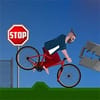
🚴♂️💀 A bicycle, a dream, and a thousand bad ideas
Short Ride starts with the kind of optimism that only lasts until the first spinning blade appears. You’re on a bicycle, the road is ahead, and everything looks almost normal… then the level politely reveals it was built by someone who hates knees. This is a physics-based ragdoll obstacle game where your rider is fragile, the hazards are enthusiastic, and the finish line feels like a rumor you keep chasing. On Kiz10, it plays like a compact burst of chaos: short levels, quick retries, and that immediate “okay I can do better” itch that shows up five seconds after you explode into pieces.
🪖🩹 Safety gear exists in theory, not in practice
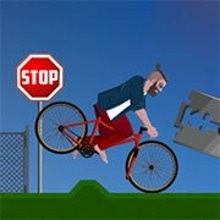
The funniest part is how the game pretends you’re doing something reasonable. A bike ride. Fresh air. Casual pedaling. Meanwhile the track is basically a mechanical prank: spikes that pop up when you commit, swinging maces that punish hesitation, and traps that sit there silently until you roll into their personal space. Your job isn’t just to move forward, it’s to read danger the way you read a mood. Is that platform safe, or is it waiting for you to touch it so it can do something awful? Most of the time it’s waiting. The levels encourage this nervous, suspicious playstyle where you inch forward like you’re testing ice, then suddenly you have to accelerate because a trap is timed and you’re out of options. That push and pull is the secret sauce: calm, panic, calm, panic, dramatic collapse.
🧠⚙️ Physics is the real final boss
Short Ride isn’t hard because it demands perfect combos. It’s hard because it demands respect. The bike has weight, the rider has momentum, and every awkward landing creates a small chain of consequences. You clip a corner and the bike tilts. The tilt becomes a wobble. The wobble becomes a slow-motion disaster where you know you’re about to hit something sharp, and your fingers are doing tiny corrections that feel heroic but probably won’t matter. When the ragdoll physics take over, it’s equal parts comedy and tragedy. You can do everything “right” and still get punished by a bounce you didn’t expect. That sounds unfair, but it’s weirdly satisfying because the game is consistent. It’s not random chaos, it’s predictable chaos… after you’ve failed enough times to understand it.
🗺️🔪 Levels that look short until you’ve repeated them 20 times
The name doesn’t lie: the ride is short, but the suffering is concentrated. Each level is basically a miniature obstacle course built around timing, angles, and commitment. Some stages want you to go slow and controlled, easing the bike through hazards like you’re carrying a cake. Other stages want you to move with confidence, because the traps are timed and staying still is just dying later. The best runs feel smooth, almost clean. The worst runs feel like slapstick. And somehow both are entertaining. You’ll get moments where you barely scrape past a blade and feel like a genius, then immediately get launched by a hidden bump and fold into a shape no human should become. You’ll laugh, then restart, then swear you’re done, then restart again.
⏱️🧨 Timing is everything, but timing hates you
A lot of the challenge comes down to rhythm. Not musical rhythm, more like the rhythm of danger. Wait, go, stop, lean, go again. If you rush, you slam into a trap before it cycles open. If you wait too long, you catch the next cycle and get clipped anyway. There’s this constant feeling that the level is moving on its own schedule and you’re trying to merge into traffic. And when you finally sync up, it feels incredible. You pass something that used to shred you instantly, and it’s not because you got lucky, it’s because you learned the cadence. That’s when the game becomes addictive instead of frustrating. You stop reacting late and start anticipating early.
😬🚲 The bike is your tool… until it becomes your enemy
The bicycle is both freedom and liability. It gives you speed and control, but it also gives the physics more ways to betray you. A small bump can send the front wheel up, and once the bike starts pitching forward, you’re negotiating with momentum like it’s a wild animal. Sometimes the best solution is to slow down and keep the wheels grounded. Sometimes the best solution is to commit to speed and clear the hazard before it can “activate” on you. The game constantly makes you choose between caution and boldness. And what makes it funny is that your brain will confidently pick the wrong one at least half the time. You’ll think, I’ll just go a little faster, and then the level teaches you why “a little faster” is a curse phrase.
🎥😂 The instant replay in your head
Short Ride has that special quality where you can replay your mistake before you even restart. You know exactly what happened. You leaned too much. You touched the spike. You landed crooked. You hesitated. The feedback is brutally clear, which means improvement is also clear. That’s why it works so well as a browser game on Kiz10: you can jump in, fail fast, learn fast, and chase a cleaner run without needing a big time investment. It’s pure trial and error, but in a way that feels personal, like you’re training your reflexes and your patience at the same time.
🏁🔥 The finish line is a flex, not a guarantee
Reaching the end of a tough level feels like escaping a cartoon death factory. You roll in, battered but intact, and there’s this tiny moment of pride because you didn’t just “win,” you survived your own decision-making. The best part is that the game doesn’t ask you to be perfect. It asks you to be smart enough to get through. Sometimes you’ll finish with a messy landing, a wobble, and a last-second save that makes your heart jump. Those ugly wins are the ones you remember, because they feel earned in the most human way possible.
🧊🧯 A quick mindset that makes everything easier
Treat every hazard like it’s waiting for you specifically. Go slower when the path is narrow, and speed up only when the timing demands it. Keep your approach straight before you enter danger, because correcting inside a trap zone is how you lose limbs. And when you fail, don’t rebuild the whole plan in your head. Fix one thing. One timing tweak, one angle adjustments, one calmer entry. That’s how you turn chaos into progress. You’re not just riding a bike. You’re learning the art of not panicking.











 2.5 (134 votes)
 Share
Share
 Embed
Embed