🔫⚡ Tiny character, giant body count
Slay.one is the kind of shooter that understands a beautiful, simple truth: chaos looks even better from above. A top-down arena full of bullets, fast movement, brutal weapons, and players making terrible decisions at high speed? That is already a strong formula. Add the .io flavor, the constant threat of getting erased in two bad seconds, and that lovely “spawn, fight, improve, die, repeat” energy, and suddenly you have something that does not need a fancy introduction. It just needs a battlefield and enough weapons to turn it into a loud mistake.
That is the mood Slay.one carries. It feels lean, direct, and a little mean, which is exactly what a good arena shooter should be. There is no place to hide behind cinematic nonsense here. No dramatic cutscenes trying to convince you bullets are art. The art is the panic. The art is the moment you round a corner, spot another player, and both of you instantly start moving like your keyboards owe you money. It is fast, twitchy, and gloriously unforgiving.
What makes a top-down shooter hit differently from an FPS is visibility. You can see more of the danger, but somehow that never makes you feel safer. It just means you have more information to worry about. Open lanes become sniper invitations. Tight hallways become shotgun prophecies. Little crates and corners stop being scenery and start becoming psychological problems. Slay.one should thrive in exactly that kind of environment, where every room is readable for about half a second before somebody fills it with bullets and ruins the geometry.
💣🧠 The whole match is one long bad idea
A game like Slay.one lives on momentum. Not just the movement speed, though that matters. I mean mental momentum. The second a match starts, your brain begins making tiny ugly calculations nonstop. Can I push this corridor? Was that enemy low? Is that gun worth the risk? Should I chase? Should I absolutely not chase? Why am I chasing anyway? Top-down shooters are great at creating those messy little internal arguments because everything happens fast enough that hesitation becomes its own punishment.
And the weapons, of course, are where the game gets its personality. A good arena shooter is not just about aiming. It is about what the weapon asks of you. Some guns want confidence. Some want patience. Some want you close enough to smell the mistake. Others let you bully space from a distance, but only if you can stay calm while someone flanks you like a rude little demon. Slay.one, as a concept, is perfect for that sort of weapon-driven rhythm. The top-down format makes weapon identity matter even more because spacing is everything.
That means the fights are rarely just “who clicked first.” They become little position wars. Who owned the angle. Who read the room faster. Who baited the corner. Who overcommitted like a man possessed and got rewarded anyway because arena shooters are cruelly funny sometimes. That unpredictability is part of the fun. A polished plan can get destroyed by one explosive panic move, and somehow that does not feel unfair. It just feels like Slay.one did exactly what it came to do.
🗺️🔥 Every map is a trap wearing neutral colors
Top-down shooter maps are sneaky. They look simple. A few lanes, a few walls, maybe some cover, maybe some open zones for long-range pressure. Very clean. Very manageable. Then the match starts and suddenly every piece of the map becomes loaded with meaning. That open stretch is not open. It is a sniper dare. That little corridor is not a shortcut. It is a shotgun confession booth. That bit of cover in the center is not protection. It is bait for people who still believe standing still is a healthy hobby in shooters.
That is where Slay.one should really come alive. In the interaction between clean map design and messy player behavior. The map gives you structure. The players turn it into violence. A good room can support totally different fights depending on who enters it and with what weapon. One moment it is a cautious standoff. Next moment it is a grenade tragedy. Then it becomes a scramble for pickups with everybody pretending they had a plan. Those shifting little dramas keep matches from feeling repetitive, even when the core loop is simple.
And because the perspective is top-down, movement becomes its own language. Tiny side-steps matter. Short retreats matter. Circle-strafing around cover feels sharper. You are always visible in a broader sense, which means positional mistakes are harder to excuse. If somebody catches you in a bad lane, you usually know exactly why. That honesty is part of what makes the game addictive. Death feels immediate, specific, and slightly insulting. Excellent fuel for the next round.
⚔️🕹️ Arena shooters reward nerve, not comfort
Slay.one should feel best when it pushes you out of passive play. Arena shooters are not really built for timid comfort. You can be smart, yes. You can hold angles, manage spacing, and avoid stupid duels. But eventually you need nerve. You need to enter rooms. Contest pickups. Take the risk on a wounded enemy. Commit to a push before somebody else controls the whole map and turns your survival plan into a joke.
That aggressive tension gives this kind of shooter a lovely pulse. You are always balancing caution and momentum. Too passive, and the match slips away from you. Too reckless, and you explode in public. Somewhere in the middle is the sweet spot, where your movement has confidence but not delusion. That is the hard part. That is the good part.
It also means every good run feels personal. You start reading opponents better. You get cleaner with your pathing. You stop entering the same terrible doorway like it owes you an apology. Improvement in top-down shooters is visible. You can feel yourself becoming more dangerous. The map looks smaller, the fights look clearer, and your choices stop feeling random. Not always. Arena chaos never fully disappears. But it starts obeying you a little more, and that is intoxicating.
🎯🌪️ The best matches look messy because they are alive
Some shooters try too hard to feel serious. Slay.one, by its name and style, belongs to that better tradition where fast violence is allowed to be a little ugly. Not visually ugly, necessarily. Emotionally ugly. Desperate. Scrappy. Full of unplanned heroics and accidental disasters. That is what makes the highlights memorable.
You win a fight with two hit points left and suddenly feel immortal. You grab a better weapon and immediately overestimate your own talent. You chase somebody around a wall, get third-partied from the side, and die in a way that feels both unfair and completely your fault. Great. That is the exact texture a multiplayer arena shooter needs. It should produce stories that are half strategy, half nonsense.
And because matches in games like this tend to be quick and readable, the restart loop is dangerously effective. You die, but you know why. A bad angle. A greedy push. Slow reaction. Wrong weapon for the space. That clarity makes retrying irresistible. The next round always feels fixable. Cleaner. Sharper. Smarter. Less embarrassing. Maybe.
🏆🔫 Why this kind of shooter belongs on Kiz10
I could not verify a dedicated live Kiz10 page for Slay.one itself in current search results, so this description is an original title-based interpretation rather than a page-specific rewrite. But the lane it belongs to is definitely present on Kiz10. Confirmed live pages on the site include shooter and top-down action games like Mechar.io, Harpoon Arena, Madness: Project Nexus, Boxhead The Nightmare, and Zombie Road Shooting, which makes Slay.one feel right at home in that fast, arena-driven action category.
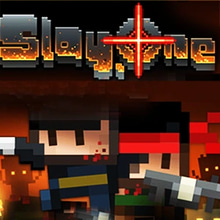
So what is Slay.one, really? It is a top-down multiplayer shooter about space, pressure, weapon identity, and the eternal shooter instinct that says one more fight will go much better than the last one. It is sharp, fast, and built for players who enjoy turning tiny maps into total war. Bullets everywhere. Corners full of betrayal. One clean run followed by three terrible decisions. In other words, exactly the kind of chaos that keeps a browser shooters alive.












 4.3 (34 votes)
 Share
Share
 Embed
Embed