🧱🧠 The Warehouse That Turns Your Brain Into a Compass
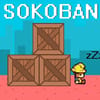
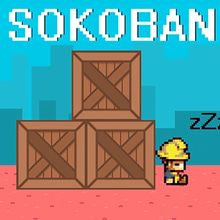
Sokoban is the kind of puzzle game that looks almost too plain at first glance. A tiny warehouse. A worker. A few crates. Some target squares on the floor. Nothing flashy, nothing loud, no explosions begging for attention. Then you make your first confident push, the crate slides exactly one tile forward, and a quiet truth settles in: you can’t pull it back. That single rule changes everything. Suddenly the warehouse isn’t a room, it’s a conversation with consequences, and every move is you signing a tiny contract with logic. On Kiz10, Sokoban lands as a timeless brain game where patience is power and “just try it” is the fastest path to regret. 😅
Sokoban’s magic is how it makes you care about space. In most games, space is background. Here, space is the puzzle. Corridors become lifelines. Corners become traps. One-tile gaps become future problems you can’t unsee. You aren’t fighting enemies; you’re fighting the geometry of your own decisions. And somehow that’s more intense than most action games, because there’s no chaos to blame. If you lose, the warehouse didn’t cheat. You did. 😬
🧭📦 One Rule, Infinite Consequences
The core mechanic is brutally simple: you push boxes onto storage locations. You can walk around freely as long as there’s a tile to stand on, but when you push a crate, it moves one step and now the world has changed. You cannot pull crates. You cannot walk through crates. You cannot politely ask a crate to “scoot back” because you changed your mind. So every push must be intentional, and intentional pushes require planning.
That’s where Sokoban becomes a true logic puzzle. The hardest part isn’t placing the last crate. The hardest part is not ruining your run ten moves earlier. You’ll learn to spot disaster patterns. A crate pushed into a corner that isn’t a target is basically a permanent mistake. A crate pushed against a wall at the wrong time can block a corridor you’ll need later. A crate shoved into a tight hallway can create a traffic jam you can’t untangle. It’s like trying to rearrange furniture in a narrow apartment… except the furniture hates you and refuses to move backward. 🛋️😭
🧠🕯️ The Quiet Panic of “I Think I’m Stuck”
Sokoban has a special emotional arc. At first you feel clever because the first moves are obvious. Push this crate here. Walk around. Push that one there. Then you reach the point where the warehouse looks almost solved… but something is off. One crate is in the wrong place. Another crate blocks the only route to a target. You can see the correct final arrangement in your head, but the board doesn’t care about your imagination. The board cares about what you already did.
This is the moment Sokoban fans secretly love. Because being stuck isn’t failure, it’s information. The warehouse is telling you which decision was wrong. The puzzle is asking you to rewind mentally and find the exact move where your plan stopped being a plan and became a guess. Once you learn to recognize that moment, you start playing differently. You stop pushing crates just because you can. You start pushing crates because you’ve already decided where they will eventually live. 🧠✨
🧩🧲 Thinking in “Crate Paths,” Not Moves
A huge step in getting good at Sokoban is changing how you think. Beginners think move-by-move. “I’ll push this box up.” Better players think in crate paths. “This box needs to end up on that target, so it must approach from the left, which means I need to clear the left corridor first, which means I must not block the hallway with the other crate.” The game rewards that kind of layered planning.
You’ll also start noticing that not all crates are equal. Some crates are “free” early, sitting in open space where you can maneuver around them. Others are “locked” in awkward positions near walls or corners, and they require careful setup before you can push them safely. Sokoban becomes a puzzle of preparation. You spend moves creating space, opening lanes, and positioning yourself behind crates so you can push in the correct direction later. It’s not wasted time. It’s the whole strategy. 🧠🔧
🚫🧱 Corners Are a Promise You Might Regret
Corners are the most dramatic thing in the entire game, which is hilarious because corners are just two walls meeting. But in Sokoban, pushing a crate into a corner that isn’t a goal square is basically writing “GAME OVER” in invisible ink. You can still walk around, sure, but that crate is now a permanent statue. That’s why Sokoban teaches caution like no other puzzle. It trains your eyes to treat corners as radioactive unless they are clearly the final destination.
Walls do the same thing in a softer way. A crate against a wall isn’t always dead, but it often becomes harder to reposition. You need room to get behind it, and room is exactly what warehouses love to deny. So the game becomes a careful dance: keep crates away from permanent traps, keep corridors open, and don’t block your own access routes. It’s almost like traffic planning, except the cars are boxes and they never reverse. 🚗📦
🧠🎭 The “Undo” You Don’t Have Is the Skill You Build
Even if the version you play gives quick resets, Sokoban still feels like it’s teaching you to play clean. The ideal Sokoban solve isn’t just finishing. It’s finishing without messy detours. You start wanting elegance. You want to place crates in the right order, with minimal backtracking, without clogging the warehouse into a tangled knot.
And here’s the fun part: you’ll develop tiny habits that feel like professional puzzle instincts. You’ll pause before pushing. You’ll walk around the board to check future access. You’ll ask, “If I push this now, can I still reach the other side later?” You’ll start treating each push like a point of no return, because it often is. That discipline is what makes Sokoban one of the best classic logic puzzle games ever made. It doesn’t overwhelm you with systems. It sharpens the way you think. 🧠🔍
🌟🧊 Why It’s Still Addictive on Kiz10
On Kiz10, Sokoban is perfect because it’s instant and pure. You load the level, you start thinking, and your brain locks into that satisfying loop: observe, plan, execute, adjust. No distractions needed. It’s a timeless box pushing puzzle that works in short sessions and also in the dangerous “I’ll solve just one more level” mode, because each level feels like a compact mystery you can crack if you stay patient.
Sokoban also has that rare quality where improvement is real and noticeable. Your first runs might be messy, full of restarts and accidental traps. Later, you’ll start seeing solutions faster. You’ll recognize common patterns. You’ll stop making corner mistakes. You’ll set up crate routes intentionally. The warehouse won’t feel like a trap anymore. It’ll feel like a board you can read. And when you solve a tough level cleanly, it feels incredible in a quiet, satisfying way, like you just outsmarted a room that was trying to outsmart you first. 😄🧱
🗝️🧠 The Sokoban Mindset in One Sentence
Don’t push because you can. Push because you already know why.
That’s Sokoban. A classic warehouse transport puzzle where every move matters, every crate is a commitment, and every solution is a small victory for careful thinking. If you want a pure logic challenge on Kiz10 that rewards planning, patience, and precision, Sokoban is exactly the kind of puzzle you can lose yourself in… in the best way. 🧠📦✨



 4 (14 votes)
 Share
Share
 Embed
Embed