Street Racing Mania feels like the kind of game that starts with a simple idea and then immediately drenches it in gasoline, headlights, and questionable life choices. You are not here for a quiet drive. You are not here to admire the city skyline like a civilized person with somewhere normal to be. You are here because the streets are alive, the engine sounds angry, and every race feels like it could end in glory or in a deeply embarrassing mistake two corners from the finish. That is the energy this title carries. Fast, tense, a little cocky, and very happy to let the road punish you for getting greedy.
At its core, Street Racing Mania fits the classic street racing fantasy: buy cars, win races, earn money, and improve your machine so the next challenge hurts a little less. Other versions of the game on the web describe that same loop clearly, with upgrades, harder races, and progression tied to better vehicles. That structure works because street racing games are never just about one finish line. They are about momentum across a whole journey. The first car usually feels scrappy. The first win feels scrappier. Then money starts coming in, upgrades start changing the way the vehicle responds, and suddenly the whole game becomes a story about turning raw nerve into speed that actually listens to you.
🌃🏎️ Asphalt After Midnight
There is something about street racing at night that immediately makes everything feel more dramatic. The road is darker, the colors hit harder, and every overtake looks cooler than it probably deserves to. Street Racing Mania lives inside that atmosphere. It is not trying to feel like a clean professional circuit. It wants the grit, the noise, the impatience. It wants that sensation of throwing a car through a city route while every rival around you seems equally convinced they are the main character.
And honestly, that mood matters more than people admit. A street racing game is not only a driving challenge. It is a fantasy. The fantasy is speed mixed with attitude. It is the illusion that every lane change is heroic, every near miss is intentional, and every victory means you own the road for at least ten smug seconds. The game title alone points straight at that mood, and the broader street-racing titles on Kiz10 tend to lean into rivals, nitro, pressure, and city-speed drama in exactly that spirit.
What gives a game like this its pulse is the way danger never fully leaves the screen. Even when you think you have the race under control, the road always has one more ugly surprise waiting. A rival cuts too hard. A traffic gap closes. You commit to a pass that looked smart half a second ago and now feels like a terrible public decision. Beautiful. That is where the fun starts breathing.
💸🔧 Cash First, Perfection Later
The progression side is a huge part of why Street Racing Mania works as more than a one-race novelty. Win money, improve the car, unlock something better, go again. That loop has been attached to the game across multiple public listings, and it is exactly the kind of structure street racers need. You do not only want speed in theory. You want speed that you paid for with wins, mistakes, retries, and one or two suspiciously lucky finishes.
Upgrades change the emotional texture of a racing game. A weak car makes every straight feel shorter and every bad exit feel crueler. A stronger car gives you swagger. Suddenly a gap that once looked impossible now looks tempting. A rival that used to disappear into the distance now feels catchable. That matters, because progress should not just increase numbers quietly in the background. It should change your attitude. It should make you drive differently, risk differently, dream bigger, and then crash into a wall because confidence got ahead of intelligence. That is tradition.
The nice part is that games with this kind of structure often make failure feel useful. Even when you lose, you usually learn something. Maybe the route needs a cleaner approach. Maybe your upgrades are lagging behind. Maybe you are boosting in the wrong places because your brain loves drama more than results. Whatever the reason, another run starts to make sense immediately.
🚦🔥 Tiny Gaps, Giant Ego
Street racing games live and die by pressure. Not the fake kind where the UI flashes and pretends something important is happening. Real pressure. The kind that comes from narrow windows, fast decisions, and the permanent feeling that the road is daring you to act before you are ready. Street Racing Mania absolutely belongs to that family. Public descriptions of the game mention challenging races, which tracks perfectly with the genre’s whole appeal.
The funny thing is that players always begin these games with noble intentions. You tell yourself you will drive smart. You will not take silly risks. You will wait for the clean opening instead of forcing the dirty one. Then the race begins, another car drifts just slightly off-line, and suddenly you are diving through a gap like you have something to prove to the pavement itself. That is street racing logic. It is irrational, loud, and weirdly convincing in the moment.
And when it works, wow, it works. A clean pass in a street racer feels different from a clean pass in a regular circuit game. On a normal track, it feels technical. Here, it feels personal. It feels like theft under neon lights. You squeeze through, keep your momentum, and for a second the whole race bends around your choice. Those are the moments that make these games replayable. Not just the wins. The little acts of audacity.
🚔⚡ Trouble Is Part of the Flavor
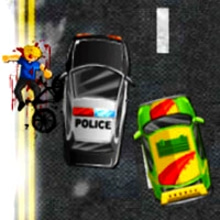
Street racing as a theme always carries a little extra tension because it should feel slightly illegal, slightly unstable, slightly one-bad-turn-away from turning into chaos. Kiz10’s other street-racing pages lean into that same tone, with rivals, nitro, police pressure, and heavy traffic appearing in nearby titles from the same lane of the catalog. Even when Street Racing Mania is doing its own thing, that atmosphere fits it perfectly. The streets should not feel safe. Safe streets are for commuting. This is something else entirely.
That tension helps the city environment feel alive. The best road is never just empty asphalt. It is an argument in motion. Traffic becomes part of the race. Corners become tests of nerve. Straightaways become lies that trick you into overconfidence. Every part of the route asks a different question. Can you stay smooth here? Can you stay patient there? Can you stop pretending that every problem can be solved by going faster? Sometimes yes. Sometimes no. Usually no, if we are being honest.
What really keeps the game fun is the constant mix of control and attitude. You cannot win on style alone, but the game should make style feel useful. It should reward smart risk, clean exits, and those ridiculous late-race moments where you drive like the finish line owes you money.
🏁🌪️ Why Street Racing Mania Sticks
Street Racing Mania has the right ingredients to stay interesting because it is built on a loop that players naturally understand and naturally want to improve at. Race harder, earn more, buy better, return meaner. The web descriptions for the game repeatedly point to that same money-upgrade-car progression, and it is easy to see why it has lasted across portals and platforms. It is clean, effective, and dangerously good at creating “one more race” syndrome.
On Kiz10, it sits comfortably beside other street and arcade racers because the fantasy is so immediate. You do not need a giant manual. You do not need five systems fighting for attention. You need a car, a city, rivals, pressure, and enough reward to make every victory feel like a step toward something nastier and faster. That is exactly the territory this title belongs to. And that is why it works.
So yes, Street Racing Mania is about speed. But more than that, it is about identity. About building a better ride, surviving ugly races, and slowly becoming the kind of driver who treats the whole city like a personal challenge. It is fast, flashy, and full of that specific street-racing arrogance that makes every win feel louder than it should. You start by chasing cash. Then you start chasing cleaner runs. Then, without noticing, you start driving like the night itself is watching. That is the moment the game gets its hooks in. And no, it does not let go gently.





 Share
Share
 Embed
Embed


