🔥 Boots in the dust, mind on the map
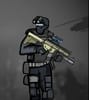
The first seconds in Strike Of War feel like stepping into a radio transmission that was already mid sentence. Orders crackle in your head, the minimap flickers with red blips, and your squad’s breathing fills the silence between gunshots. It is a war game that treats momentum like oxygen. You move, you take ground, you hold, you move again. The camera gives you a clean view of the battlefield from above, just far enough to read angles and just close enough to feel the pressure when a burst of enemy fire chews the edge of a sandbag. There is no waiting room here. The front line is wherever your boots decide it is, and the game rewards that decision with immediate, punchy feedback that makes every meter feel earned.
💥 Firefights that punish hesitation
The core loop is elegantly simple. Advance toward the objective, trade fire at mid range, duck, peek, punish. Shots have weight. You hear the snap when your rifle speaks and you see opponents flinch when a burst lands clean. If you hold the trigger too long, recoil exaggerates your nerves and your aim drifts wide, so you learn to feather the shots, to trust rhythm over panic. Grenades are punctuation, not paragraphs. You save them for the moment the enemy bunches up behind cover, then roll one in and feel the brief silence before the shockwave. The best fights are messy, not mechanical. You win because you read the angle half a second earlier, because you rotated one alley sooner, because your brain gambled and your feet agreed.
🧭 Objectives that shape your route
Strike Of War loves to give you choices that look obvious until you are two steps in. Do you cut through the warehouse with tight lanes and heavy cover or swing wide across the trainyard where flanks come faster than decisions do. Capture points are bright promises on the map, but they carry risk like a shadow. Step inside the capture ring and the timer begins to work for you while the enemy works on you. Holding is a different skill than taking. It means assigning arcs, watching choke points, trusting that your teammate will catch the push you cannot see. And when the bar ticks over and the flag lifts, you feel the map itself lean your way for a moment. That tilt is addictive.
🧰 Weapons that teach habits
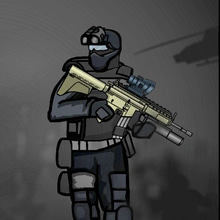
Your starting rifle is honest, steady, good enough to build a career on. But the game tempts you with upgrades that subtly change how you think. A compact SMG encourages aggressive slicing of corners, fast in and fast out. A designated marksman rifle slows your blood and turns alleys into chessboards where every peek is a small bet. LMGs ask for commitment, planting your feet and laying down lanes that make enemies reconsider their life choices. Attachments matter because they nudge your instincts. A slightly calmer recoil pattern invites longer bursts. A bigger magazine changes how often you abandon cover for a reload that gets you killed. None of it is complicated to learn, but each tweak becomes a tiny personality trait in your hands.
🪖 Squad presence and the illusion of safety
You can push alone and feel brave for six seconds, or you can move with your squad and feel dangerous for the whole match. AI allies are more than set dressing. They draw aggro, they suppress, they sometimes even surprise you with a timely flank that opens a door you were too cautious to try. Directing them is simple enough to do in motion. A quick ping here, a hold command there, and suddenly the battlefield breathes in your favor. The truth is you are still mortal. A stray burst will put you on your knees. But the presence of bodies around you creates a comforting lie that buys you just enough confidence to try something bold. And bold is where this game sings.
🌆 Maps that remember your mistakes
Industrial yards, half shattered towns, dusk lit ports where cranes loom like patient giants, each map has a personality you learn by bruises. The first time you cross the open street in Old Quarter, you get stitched up for your optimism. The second time, you chart a jagged path through doorways, pausing to listen for footsteps on tile versus gravel. Bridges look heroic and play fatal unless you smoke the far end. Rooftops feel like thrones until a smart opponent climbs the twin staircase and cuts the crown from your head. A few sessions in, you catch yourself arriving early to key angles, your reticle already waiting. That is how you know a shooter has its hooks in you. It turns geography into memory.
🎮 Controls that vanish when the bullets start
WASD glides you where you need to be, the mouse aims with gentle resistance that keeps you honest, and the reload timing becomes second nature by the third firefight. You do not wrestle with the interface. It gets out of your way so your brain can do the interesting work. Quick swaps between primary and secondary feel snappy enough to rescue a bad peek without turning you into a superhero. Grenade arcs show just enough hint to be useful without killing the joy of a perfect toss. Even small touches matter, like the way your character leans into cover, or how your sprint cuts cleanly into a slide that buys you one hard won second of survival.
🧠 The campaign mindset and the skirmish itch
Strike Of War supports both moods, the long disciplined push where you clear neighborhoods brick by brick and the snack sized skirmish where the scoreboard decides your fate in a handful of minutes. In the longer missions, pacing is your friend. You advance, you consolidate, you breathe, and then you tempt fate with a risk that might save ten minutes or cost five. In quick play, the game is a furnace. You jump in hot and try to make better choices faster than everybody else. Both modes feed the same hunger. You want to be early to the angle, late to the reload, perfect on the peek. And sometimes you are, and it feels like the world narrows to a single clean line between your crosshair and their mistake.
🧨 Chaos moments you will retell
There is always the alley where you pre fired out of pure superstition and somehow clipped two opponents you did not see. The desperate smoke that turned a death sentence into a sprinting miracle. The last second capture that flipped a round and made the chat go very quiet or very loud. These are the memories that keep you queuing again. The game respects that impulse by staying readable. You know why you died. You know what you could try next. It is never about lottery shots. It is about stacking tiny advantages until the enemy runs out of answers.
🎧 Sound, sight, and the second before impact
Audio does real work here. Heavy boots on metal, soft scrapes on wood, the distant cough of a suppressed weapon that gives away a flank if you are paying attention. Visual language is bold and clear. Enemies pop against backgrounds without looking cartoonish, muzzle flashes mark danger without blinding you, and the UI keeps its commentary to a minimum so your eyes stay on the lanes that matter. There is a heartbeat to the way the capture bar fills, a quiet drumroll that invites you to stay one second too long. Risk is a character in this story.
🏆 Why you will keep playing on Kiz10
Because every match feels like a fresh argument with your own habits. Because tiny improvements stack into surprising leaps. Because the maps whisper secrets to the patient and pay the brave with highlight reels. Because upgrades bend your playstyle in interesting ways without burying you in spreadsheets. And mostly because Strike Of War is that rare browser war game that treats your time with respect. It loads fast, it plays crisp, and it gives you just enough friction to make the wins taste earned. One more round becomes two, then three, and when you finally close the tab you will keep thinking about the route you did not take, the grenade you saved too long, the corner you want to own tomorrow. That is the loop. That is the fun. Back to the front.



 4.1 (695 votes)
 Share
Share
 Embed
Embed