🌊🚢 The ocean looks peaceful… until you dive
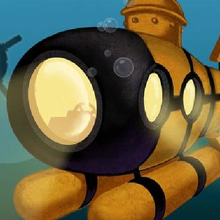
Submarine adventures starts with that classic underwater illusion: everything seems calm, blue, almost soothing. Then you push your submarine forward and the sea immediately reveals its real personality. It’s not a postcard. It’s a living obstacle course filled with tight passages, sneaky dangers, and the kind of “did that rock just move?” paranoia that only happens when you’re trapped in the deep with a metal shell and a plan that keeps changing. On Kiz10, this is the sort of arcade-adventure experience where exploration and survival collide. You’re not just moving left and right like a sleepy fish. You’re navigating, reacting, collecting, and trying not to turn a clean run into a messy underwater accident.
The best part is how quickly your brain switches into focus mode. Underwater games do that. The space feels wide, but it’s actually claustrophobic once hazards start appearing. You feel like you should have freedom, yet every meter you move asks a question: is this lane safe, or is it bait? Are you chasing treasure, or are you chasing trouble wearing a shiny mask? Submarine adventures lives in that tension, and it’s oddly addictive because the ocean always feels one second away from flipping the mood.
🧭🐠 Steering is simple, but the sea is not
The controls are designed to be easy to pick up, which makes the challenge feel fair. You guide your submarine through the water, adjusting your path with small movements, reading the gaps, keeping your momentum controlled. But the sea doesn’t reward big dramatic steering. It rewards clean, calm adjustments. Drift too hard and you slam into something. Correct too late and you clip the edge of danger and lose control. Make two frantic corrections in a row and you’ll feel that awful “wobble” moment where the submarine is technically still moving, but your plan is gone and now you’re just surviving.
That’s where the skill grows. You start making your movements smaller, smoother, more deliberate. You stop chasing every shiny object immediately and start thinking about the safest route to it. You learn to treat the submarine like it has weight, even if the game is arcade. It’s not about realism, it’s about feel. When the movement feels right, you flow through sections with confidence. When it feels wrong, you spend the next ten seconds recovering from your own choices.
💰🫧 Treasure, pickups, and the greed problem
Submarine adventures isn’t only about not crashing. It’s about collecting. Coins, treasure, items, whatever the ocean is offering you, it’s there to tempt you. And temptation is powerful underwater, because everything looks just out of reach. You see a shiny trail near a hazard and your brain instantly starts bargaining. I can grab that and still get out. I’ll just do a small turn. I’ll be quick. Then you realize being “quick” underwater often means being dead.
But when you learn to collect smartly, it becomes a satisfying loop. You start grabbing rewards as a bonus for good navigation instead of a reason to risk your run. You collect what fits your path, you skip what would force a reckless angle, and you notice something important: safe runs usually become richer runs anyway. Because surviving longer means collecting more over time. That’s a simple truth, but your greedy instincts will try to ignore it every single time.
And yes, you’ll still go for the risky treasure sometimes. You’ll still say “one more pickup” and immediately regret it. That’s part of the fun. The ocean is basically a test of your self-control, and it’s hilarious how often self-control loses.
🪨⚠️ Hazards that appear like bad jokes
Obstacles in submarine games always feel personal. A rock sits there, quiet, harmless-looking, then you drift one inch too close and it becomes the reason your run ends. Mines, spikes, enemy sea threats, narrow gaps, sudden blockers, whatever form the danger takes, it’s usually designed to punish lazy steering. The game wants you to stay alert. It wants you to look ahead, not just at your submarine. If you stare at your sub, you react late. If you scan the next gap, you react early, and early reactions are the difference between smooth survival and frantic correction.
The most stressful moments happen when hazards stack. One obstacle forces you to move up, and moving up puts you into the path of the next obstacle. Now you’re doing quick decision math in your head. Up or down? Slow and safe or fast and risky? Do you hold your line and trust the gap, or do you change lanes and hope you don’t drift too far? These micro-decisions are why the game feels alive. It’s not random chaos. It’s pressure that you can manage if you stay calm.
🫀🌌 The deep-sea mood: calm visuals, tense gameplay
There’s a special vibe to underwater adventure games: soothing colors with stressful consequences. Submarine adventures uses that contrast well. You’re surrounded by ocean tones and bubbles, yet your hands are moving like you’re threading a needle. It’s a strangely satisfying mix. The calm look keeps you from feeling overwhelmed, but the gameplay keeps you engaged. You can play for a few minutes and feel like you actually did something, because each run is a story. A story where the ocean tries to ruin you and you try to prove you’re smarter than a rock.
Sometimes the story is heroic. You navigate perfectly, collect a clean line of treasure, dodge everything, and finish the section like a professional explorer. Other times the story is comedy. You see one shiny item, you drift, you clip a hazard, and your submarine instantly becomes a cautionary tale. Both are memorable, and the fast restart makes the comedy feel less painful and more like a challenge.
🧠✨ How you start playing better without noticing
Your first runs are usually messy because you treat the sea like open space. Then you learn it’s about lanes. You learn it’s about keeping options. You learn to avoid getting boxed into a corner where your only escape is a sharp turn that will definitely clip something. You begin setting up your movement earlier. You begin predicting. You begin “holding” a safe line instead of constantly zig-zagging.
That’s the moment the game hooks you. Because now you’re improving in real time. You’re not grinding levels for stats, you’re sharpening your skill. Your survival time increases. Your collection improves. Your movement looks smoother. The ocean still throws surprises at you, but you stop panicking when they happen. Panic is what ends runs. Calm is what extends them.
😵💫🚀 The one-more-run curse
Submarine adventures is dangerous because it’s easy to restart and hard to stop. Every loss feels fixable. You don’t die and think “unfair.” You die and think “I know what I did.” I drifted too far. I chased treasure at the wrong time. I reacted late. I overcorrected. Those are fixable problems, and fixable problems are addictive because they promise improvement on the next attempt.
Then you do the next attempt and you survive longer, and now you want to survive even longer. You start chasing a “clean run.” Not just survival, but smooth survival. Not just collecting, but smart collecting. Not just finishing, but finishing with control. That chase is the core of the game’s replay value on Kiz10. It turns a simple underwater adventure into a personal challenge that keeps pulling you back down into the deep.
🏁🫧 Final dive
If you want an underwater adventure game that mixes exploration vibes with arcade tension, Submarine adventures hits the sweet spot. It’s about steering cleanly, reading hazards early, grabbing treasure without letting greed ruin you, and keeping your submarines alive in a sea that loves mistakes. Play it on Kiz10, take the deep route, and remember: the ocean doesn’t need to be fast to be dangerous. It only needs you to get confident at the wrong moment. 🌊🚢





 Share
Share
 Embed
Embed


