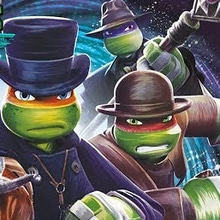
The first thing you notice is the mask. Not just one color or one style, but four sharp silhouettes sliding out of shadow like a promise. Teenage Mutant Ninja Turtles: Monsters vs Mutants throws you into the kind of brawler that remembers why this team became legends in the first place. You are not just mashing through foot soldiers in familiar alleys. You are slipping through time, tracking creatures that never belonged in New York to begin with, and solving problems the way the turtles always do best together, loudly, stylishly, and with just enough pizza talk to keep the world feeling right.
🕰️ Shells through centuries the time-warp hook
One minute you hear subway brakes shriek, the next your feet crunch on frost that hasn’t touched Manhattan for a thousand years. Time gates rip open mid-fight and you step through without ceremony straight into a new ruleset. Medieval courtyards reward patient spacing and shield bashes; neon futures throw drones at you in tricky angles; ancient ruins punish sloppy movement with pits that don’t negotiate. Each era changes enemy mix and platform shapes, so your favorite turtle gets moments to shine while another has to adapt. That ebb and flow keeps the brawl alive. You’re not just clearing rooms. You’re learning how the same combo feels different on slick steel vs dusty stone.
🐢 Four brothers four playstyles real teamwork in your fingers
Leonardo is your balanced blade and your anchor, the turtle who turns a messy wave into a neat line with disciplined slashes. Raphael is aggression with a grin dive-ins, armor breaks, and punish windows that appear the instant he snarls. Donatello extends space the staff gives reach, the gadgets add crowd answers and stuns that feel like strategy in motion. Michelangelo dances between danger spots; his momentum strings add a rhythm you can ride, and when you land a perfect aerial into a ground bounce you swear you hear him laugh in the wind. Swapping between brothers is not a gimmick. It’s the core. You rotate for matchups, manage cooldowns, and invent tag combos on the fly. It feels like co-op even when you’re alone because your team is always at your thumb.
👹 Monsters with personality bosses that test brains and timing
Mutants don’t just hit harder; they write the rules for their arenas. A horned brute telegraphs a three-beat charge that ricochets off columns; if you bait it twice, the third slam stuns him into a free team finisher. A siren-like creature shatters ground tiles with an echo; Leo can dash through gaps, Mikey can hop-string platforms mid-combo, Donnie breaks the pattern with a gadget pulse that interrupts the song, and Raph turns silence into damage windows. Later fights mix puzzle with pressure—switches that only hold under constant hits, walls that open if you bounce an enemy into a sigil at the right angle. The game never confuses cheap with clever. It shows you the trick, dares you to execute, and rewards clean hands.
🎯 Combat that reads clean and punches loud
Hits land with weight. Light strings carve space, heavies plant your feet but buy a small shockwave, aerials juggle with readable arcs, and launchers pop enemies high enough to make you plan the catch. Parry windows are honest a sharp flash, a satisfying clang, then your counter blooms into damage or crowd control depending on who you’re holding. Specials are spice, not crutches: Leo’s disciplined flurry closes distance; Raph’s guard-break tears open armored waves; Donnie’s tech mines pin fast movers; Mikey’s cyclone drags enemies into one neat pile. You feel the difference between panic mashing and real intent in about two rooms. After that, your hands start inventing.
🗺️ Levels that behave like stories not hallways
Each stage is a small adventure with side rooms, secret routes, and little environmental jokes. A museum at night flickers exhibits to life while you fight; a dinosaur skeleton becomes a moving hazard until you learn the tail sweep’s rhythm and duck under for a style finish. Rooftops pitch at wrong angles in a rainstorm, so you use signage as springboards and bounce enemies through neon letters that burst into sparks. In a desert gate, sand eats your dash unless Donnie drops a temporary walkway; later, a future rail-grind section has Mikey written all over it. The game nudges you into playing like the environment wants without turning it into a lecture.
🧰 Upgrades that change behavior not just numbers
You’re earning shards, tokens, old-world trinkets, and future chips—collectibles that translate into small but meaningful perks. Extend Leo’s perfect-parry window by a breath and suddenly boss phases feel solvable. Give Raph a micro-dash after a heavy hit and watch corner pressure become hilarious. Donnie can slot a bounce extender that adds one more hit before gravity cashes the bill; Mikey gets a safe-fall that turns risky aerial strings into crowd control instead of a face-plant. There are skill branches, sure, but what matters is the way they re-tune your habits. You start making different choices because your build invites them.
🎮 Feel first tech later controls that disappear
Movement sits in that sweet spot between arcade and deliberate. Short hops into fast landings make air strings readable. Dashes cancel into guard or jump without argument. Input leniency respects human hands; you get the move you meant most of the time, and when you don’t, you understand why. On a keyboard you tap clean diagonals; on a pad your thumb draws circles that turn into stylish spins. Nothing fights you. The game wants flow, and it does the quiet UI work—thin hit sparks, crisp damage text, restrained meter glow—to let your eyes track the important stuff.
🎵 Sound and style the comic book heartbeat
Every strike has a satisfying thump, a little personality per turtle—Leo’s crisp, Raph’s thuddy, Donnie’s resonant, Mikey’s slap-happy snap. Monster roars telegraph attacks in distinct timbres you learn in minutes. Music rides the era you’re in: lute-heavy percussion under medieval brawls, synth-pulse in neon skylines, low drums and wind in ruins that love echoes. It never overwhelms the action; it frames it. And the art leans bold lines and saturated colors, a graphic-novel vibe that reads clearly at speed. When the Foot show up, the palette shifts and you instinctively settle into combo spacing like your hands remember the comic.
🧠 Difficulty that climbs fair and invites mastery
Early on, you win with movement and two buttons. Mid game injects enemy types that punish lazy habits: shield carriers that only crack from the rear or a parry; leapers that demand anti-airs instead of panicked guarding; ranged pests that teach you to swap turtles mid-string to close distance without losing pressure. Late game composes waves like music—high-low patterns, silence into stutter into flood—and you answer with discipline, not desperation. Failures feel like notes, not insults. You try again because you know the fix.
🥷 Why it sticks even after credits
Because when the last monster fades and the time gate cools, you still feel the rhythm in your thumbs. You remember the first perfect parry into team finisher under a storm as lightning froze the frame for half a second and you grinned. You remember the museum skeleton turning from hazard to highlight when you learned the sweep. You remember swapping from Donnie’s staff control to Mikey’s cyclone just to be flashy and realizing style and safety were suddenly the same thing. Monsters vs Mutants hits that old-school beat ’em up joy without pretending the genre stopped learning. It’s respectful, modern, loud, and smart. And if you’re anything like the rest of us, you’ll queue another run, “just to clean up that medieval S-rank,” and find yourself an hour later arguing with a neon drone while Raph laughs at a joke you swear you’ve never heard before.

















 Share
Share
 Embed
Embed