⚡🏰 The tower is yours, the sky is not friendly
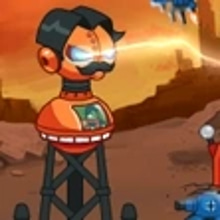
Tesla Defense 2 drops you into that sweet spot between “I can handle this” and “why are there so many enemies already.” You’re defending a watchtower, the battlefield stretches out in front of you, and the first wave arrives like it’s testing your confidence on purpose. On Kiz10, this is pure tower defense strategy with an electric personality: you place your defenses, you upgrade them, you manage resources, and you try to survive wave after wave of soldiers and machines that absolutely do not care about your feelings. The fun starts fast, but the real addiction is how the game keeps making you tighten your plan. You don’t just build towers, you build a system. A system that either holds… or collapses in slow, painful seconds while you whisper “no no no” at the screen. 😅
The vibe is tactical but intense. Every wave feels like a small battle with a bigger one waiting behind it. You’re balancing your money, your tower placement, your upgrade priorities, and your emergency tools, all while the enemy line keeps moving. It’s not a passive defense game. Tesla Defense 2 wants you paying attention, because the second you relax is the second a tank rolls through a gap you thought was “probably fine.” It was not fine.
🔌🧠 Electricity as a weapon, patience as a skill
The signature mood here is electricity. Your defenses aren’t just arrows and cannons, they’re zapping machines, crackling tools of control that feel sharp and satisfying when they work. Watching enemies get stunned, slowed, or shredded by electric fire gives the game a punchy, high-impact feel. But what really makes you good isn’t the visuals, it’s patience. Tesla Defense 2 rewards players who wait a second before spending, who watch the pattern of the wave, who ask the important question: where is the pressure actually coming from?
Because the battlefield lies to you at first. Early waves make you think you can place towers anywhere and win anyway. Then the game starts mixing enemy types. The “easy” lane becomes the dangerous one. A cluster forms where you didn’t expect it. Air units show up and suddenly your ground-heavy build looks like a joke. The game doesn’t need cheap tricks. It just increases complexity until your choices matter.
🧱🎯 Placement is everything, and the map keeps receipts
Tower defense games live and die by placement, and Tesla Defense 2 treats placement like a contract. Put a tower in a lazy spot and you’ll pay for it later. Put it in a smart spot, where enemies stay in range longer, and suddenly your damage feels twice as strong without buying anything extra. Curves and choke points become your best friends. Long sightlines become money printers. Tight corners become kill zones when you stack the right upgrades.
You’ll start looking at the path differently after a few runs. Not as “where they walk,” but as “where they are forced to spend time.” Time is damage. Time is control. Time is survival. If you can make enemies spend two extra seconds in your best tower range, you’ve basically bought yourself an entire upgrade without spending a coin. That’s the kind of strategy that makes this game feel satisfying instead of random.
🚁🪖 Tanks, troops, and the moment your plan gets tested
The enemy roster is where the tension comes from. Infantry waves are annoying, but manageable once you build reliable coverage. Then heavier threats show up and you feel the difference instantly. Tanks don’t care about your weak spots, they invite your weak spots to dinner. Air units add a whole new layer of danger because they force you to diversify. Paratrooper-style pressure can make the battlefield feel unfair for a second, until you realize the solution is not “panic,” it’s “prepare.”
And Tesla Defense 2 is great at creating that dramatic escalation feeling. You’ll have a run where you’re cruising, you’re upgrading, everything is stable, and then a mixed wave arrives and your defenses start bending. This is the moment the game becomes addictive. You’re making micro-decisions on the fly. Do you upgrade your main damage tower now, or do you patch the side lane that’s about to leak? Do you invest in anti-air coverage, or do you gamble that you can burst them down in time? Those decisions feel small, but they shape the whole run.
🛠️💰 Upgrades that feel like building a personality
Progress in Tesla Defense 2 isn’t only “more damage.” It’s shaping your defense identity. You can lean into raw power, deleting enemies before they get close, but that usually costs a lot and can leave you vulnerable to swarm pressure. You can lean into control, slowing and disrupting enemies so your damage has time to work. You can balance both, which is usually the smartest choice, but it takes discipline because the game always tempts you with one flashy upgrade that looks amazing right now.
The best feeling is when your upgrade choices start stacking together. A slow effect makes a kill zone stronger. A damage boost makes a control lane lethal. Your strongest point becomes a true fortress, the kind that turns a scary wave into a pile of scrap. And when your defense finally “clicks,” it’s almost relaxing for a moment, like watching a well-built machine do exactly what it was designed to do. Then the next wave shows up and ruins your relaxation. 😄⚡
🔥🧨 Emergency tools and the art of not wasting them
There’s always that category of tools in tower defense games that feel like cheating when used well. Tesla Defense 2 has that same energy: emergency strikes, special attacks, quick fixes that can save a run that’s collapsing. The trap is using them too early. When you panic-cast your big power the moment enemies appear, you get a little relief… and then you’re helpless when the real spike wave hits.
Smart play is holding your emergency options for the exact moment the line is about to break. The moment a tank reaches your last defense. The moment a swarm stacks so tight you can’t clear it with normal fire. The moment air units slip through and your anti-air is one upgrade short of being reliable. Use your tools there, and it feels clutch, like you saved the whole battlefield with one sharp decision. Waste them, and you’ll spend the next minute watching the consequences crawl forward.
🧠⚡ The “Tesla” part is strategy, not just theme
What makes Tesla Defense 2 memorable isn’t only that it has electricity. It’s that the gameplay feels electrical too. Quick, reactive, alive. Your defense is a circuit, and if there’s a gap anywhere, the whole system fails. When you build well, everything connects. When you build poorly, the weak point gets exposed fast. This gives the game a satisfying learning curve. You can feel yourself improving because the results are immediate. A better tower placement makes a wave easier. A smarter upgrade order stabilizes the midgame. A balanced build keeps you alive into the late waves where the real challenge lives.
And that late-game challenge is where the game becomes a true tower defense obsession. The waves get heavier, the enemy mix gets nastier, and you’re forced to play with intention. You stop clicking upgrades “because they look good.” You start upgrading “because the next wave demands it.” That shift feels great because it turns you from a casual builder into a commander.
🏁🛡️ Why Tesla Defense 2 on Kiz10 is so replayable
Tesla Defense 2 is the kind of strategy defense game that keeps you coming back because your losses feel fixable. If you fail, you can usually point to the reason. Wrong lane coverage. Not enough anti-air. Too many upgrades spread thin instead of focusing on a core kill zone. Using emergency power at the wrong time. The game gives you clear lessons, and that makes the next run exciting instead of frustrating.
If you love tower defense games, electric turrets, wave survival, and upgrade-driven strategy where every decision has weight, Tesla Defense 2 is a perfect fit on Kiz10. Build your kill zones, respect mixed waves, upgrades like you mean it, and keep the tower standing no matter how loud the battlefield gets. ⚡🏰





 4.6 (35 votes)
 Share
Share
 Embed
Embed