🐱🧊 A cube, a cat, and a very questionable travel plan
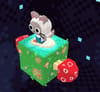
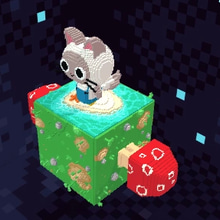
6 Sided Sojourn is the sort of game that looks tiny at first and then quietly eats half your evening. The whole idea is wonderfully odd: a cat named Gnocchi explores a tiny cube-like world, moving from face to face, fighting enemies, collecting power-ups, opening treasure, and trying to survive just a little longer before the planet decides it has had enough. The original itch.io page describes it as a small roguelike planet adventure where you help Gnocchi fight monsters and collect powerups while advancing through as many worlds as possible.
That premise is already doing a lot of heavy lifting. A cat on a cube planet should feel silly, and it does, but it also gives the game a surprisingly sharp identity. You are not wandering through some giant generic map full of empty space. You are trapped in this compact little danger-box where every side matters. Every rotation changes your perspective. Every movement feels more deliberate because the world is so small that there is nowhere to hide from your own decisions. It is cute, yes, but not soft. The game has that sneaky little “tiny world, big consequences” energy that puzzle-adventure games wear so well.
🎲⚔️ The world is tiny, the danger is not
What makes 6 Sided Sojourn interesting is the way it turns a small map into a real survival problem. According to the game’s official controls and summary, you click a face of the planet to jump there or perform an action, and you can rotate the cube left and right to reveal new sides. That one mechanic changes everything. Suddenly exploration is not just about moving forward. It is about orientation. It is about understanding what is hidden just out of view. It is about realizing that a safe-looking route can become a disaster the moment you rotate the cube and discover an enemy sitting there like it has been waiting specifically for your bad judgment.
And that is where the tension starts to grow. The cube is small enough that every face feels important, but complex enough that your choices still matter. You might step toward a potion, then notice a monster. You might eye a treasure chest and immediately wonder whether spending your resources on it is brilliant or ridiculous. You might rotate for a better angle and accidentally discover three more problems. Lovely. Really lovely. The game keeps nudging you into that sweet spot between planning and improvising, where every turn feels like it could either save your run or make you look extremely foolish.
🗝️💀 Potions, enemies, and tiny resource disasters
One of the most charming things about 6 Sided Sojourn is that it is not only about movement. Descriptions from game listings and player comments make it clear that the game includes enemies, potions, treasure chests, and even keys, which adds a layer of resource management to the whole experience. One player comment specifically mentions deciding whether to use keys immediately or save them for later when a box might block the way, which tells you the game has more tactical texture than its tiny presentation first suggests.
That extra layer matters. It keeps the adventure from becoming a plain movement puzzle. You are not just trying to stand on the correct tile. You are weighing trade-offs. Do you fight now or avoid the threat for one more turn? Do you open the chest or hold the key? Do you grab the potion immediately or leave it for a worse situation later? These are great questions because the game never feels huge enough to waste anything carelessly. A single bad choice can follow you. That is the beauty of tiny roguelike design: the scale is small, but the pressure feels personal.
It also gives the game a really fun emotional rhythm. Sometimes you feel clever because you managed your route and resources perfectly. Sometimes you feel like a genius because one potion saved a run that should have ended three moves ago. Sometimes you realize you burned a useful option for no reason and now the cube is judging you in silence. That silent judgment is a big part of the experience, honestly.
🌀👀 Rotation is the real trick
The cube mechanic is not just a visual gimmick. It is the whole soul of the game. Because you can rotate the planet left and right, the challenge becomes less about raw speed and more about spatial awareness. The official controls explicitly tie rotation to mouse dragging or keyboard inputs like Z and X, which shows how central that idea is to the design. You are constantly reading visible sides, guessing hidden threats, and deciding whether a different angle changes your best move.
That makes the game feel more alive than a flat board ever would. A normal grid puzzle gives you full information all at once. 6 Sided Sojourn makes you work for perspective. You do not just see the world. You negotiate with it. You turn it in your hands like a nervous little artifact, hoping the next side contains treasure instead of disaster. Sometimes it does. Sometimes it contains a monster with absolutely terrible timing.
There is also something very satisfying about how readable the system becomes once you settle into it. At first, the cube feels strange. Then your brain clicks into place. You start to anticipate what might be around the corner. You begin rotating before you move instead of after. You stop stumbling through the world and start treating it like a structure you can actually understand. That shift feels great. It is the moment the game stops being merely cute and starts becoming properly smart.
🌍🐾 Roguelike in miniature, chaos in six directions
The official page calls it a tiny roguelike planet, and that description fits perfectly because the game seems to capture the part of roguelikes that really matters: making every choice feel loaded. You are not managing a thousand systems. You are managing just enough. Health, threats, paths, rewards, maybe keys, maybe potions, maybe whether your next move is brave or just self-destructive with better branding. That restraint is a strength.
And because the goal is to advance through as many worlds as possible, the replay loop makes immediate sense. Runs matter. Mistakes teach. Progress feels earned. Public comments from players who mention reaching World 27, World 38, even World 52 show that the game has exactly that addictive “just one more world” structure that roguelike fans fall into very easily.
That loop is probably the reason the game leaves such a strong impression despite its small size. It does not need to be huge. It needs to be replayable. It needs to make you think your last run was almost brilliant and your next run will definitely be better. Then it needs to punish your confidence with one badly timed enemy encounter. Classic. Efficient. A little rude. Perfect.
✨🧠 Why 6 Sided Sojourn is so easy to like
There is a lovely balance here between charm and danger. The voxel look, the cat hero, the tiny planet, all of it invites you in with a smile. Then the mechanics quietly start testing your judgment. The game has been described by players as simple, creative, and easy to grasp, while still offering meaningful challenge and resource decisions. That is exactly the kind of combination that makes small browser adventures memorable.
It also helps that the concept is genuinely distinctive. A lot of browser games are fun for five minutes and then melt into the same gray soup in your memory. 6 Sided Sojourn does not really have that problem. A cat exploring a rotating six-sided roguelike planet is weird enough to stick. More importantly, it is not weird for its own sake. The mechanic supports the theme. The size of the world supports the danger. The danger supports the replay loop. Everything feels compact and intentional.
So if you like puzzle adventures, small roguelikes, turn-based decision making, or games that somehow turn a tiny cube into a full emotional crisis, 6 Sided Sojourn has a very special kind of charm. It is clever without becoming cold, cute without becoming empty, and tense without needing giant explosions to prove it. One little cat. One little planet. Six sides of trouble. That is more than enough.













 4.2 (7 votes)
 Share
Share
 Embed
Embed