🛰️⚡ The Station Doesn’t Move, So You Better Think Fast
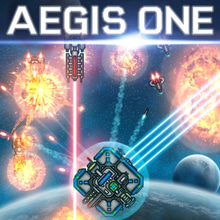
Aegis One drops you into a very specific kind of sci-fi panic: you’re in command of a powerful defensive platform, the enemies are coming from every angle, and the universe has decided “dodging” is not an option. Your job is to survive by pure firepower, smart weapon timing, and calm decision-making while the screen tries to turn into a fireworks disaster. It’s a space defense shooter with that old-school arcade heartbeat, but it isn’t just “hold fire and win.” The moment you treat it like a mindless shooter, you get overwhelmed, your defenses crack, and the game reminds you that this is command duty, not a joyride. On Kiz10, Aegis One feels immediate and intense, like a short mission that somehow keeps turning into “one more run” because you were so close to stabilizing the chaos. 😅
🔫🧠 Your Arsenal Is a Toolbox, Not a Single Button
What makes Aegis One satisfying is the feeling of operating a system rather than a single gun. You have multiple weapon options, each with its own personality, and your effectiveness comes from choosing the right tool at the right moment. Some weapons feel like reliable workhorses, good for clearing small threats and keeping lanes clean. Others feel like emergency levers you pull when a wave stacks too hard and you need breathing room right now. That mix turns every encounter into a tiny strategy puzzle: do you spend your heavy firepower early to prevent a snowball, or do you save it for the moment the game tries to bury you?
And that’s where Aegis One gets its tension. You’re constantly balancing short-term survival and long-term stability. If you blow everything at once, you might clear a wave beautifully… and then stare helplessly when the next wave arrives while your best tools are cooling down. If you play too conservative, you let too many ships live, the screen fills, and suddenly there’s no “good” moment to recover. The game rewards players who can manage tempo like a conductor, not just shoot like a maniac. 🎼🚀
🌌🚨 The Enemy Waves Feel Like They’re Coordinating (They Kind Of Are)
Aegis One doesn’t just toss random targets. It pressures you with pacing. Small ships arrive to distract you and chip at your control. Heavier threats appear when you’re already busy, forcing you to prioritize. Some enemies demand quick deletion because they become a bigger problem if they’re allowed to linger. Others are bait, designed to pull your attention while more dangerous ships slip through the edges of your focus.
You’ll start to feel that classic “I’m fine… I’m fine… I’m not fine” curve. The screen looks manageable, then the density rises, then you’re doing emergency clean-up while your brain runs hot. That’s the fun. Aegis One is basically a stress test for target priority. If you pick targets in the wrong order, you lose control. If you pick targets in the right order, you feel like a commander who’s calmly solving the fight instead of surviving it. 😈
🛡️🔥 Defense Is a Resource, Not a Guarantee
There’s a particular kind of satisfaction in games where your survival isn’t binary. You’re not just alive or dead, you’re managing the condition of your defenses, your shield state, your ability to absorb mistakes. That’s what Aegis One does well. Every hit you take feels like a warning that your system is slipping. And the game quietly teaches you to respect that warning early, not when it’s too late.
The best runs come from preventing damage, not repairing it. That sounds obvious, but under pressure it’s hard. You’ll be tempted to chase kills, to clean up one last enemy, to squeeze extra value out of a weapon cycle. Then you take a hit you didn’t need to take, and suddenly the run feels more fragile. Aegis One is full of these tiny “avoidable” moments, which is exactly why it’s addictive: every failure feels like it had a fix. Not a mystery. A fix. 😅
⚙️💥 Cooldowns, Combos, and the Joy of Perfect Timing
The weapon timing is where the game turns from “fun shooter” into “I’m locked in.” You start learning simple combos without the game ever calling them combos. Clear the small ships with your reliable option, then drop a heavier burst to erase the clustered threats, then reset the screen while you reposition your attention. It becomes rhythmic. You learn to create windows of safety by clearing lanes proactively rather than reacting at the last second.
And when you nail it, it feels amazing. The wave arrives, you don’t panic, you wait for the right density, you fire at maximum value, and the entire screen collapses into clean space. That calm moment after a perfect clear is the reward. The problem is that calm moment is short, because the next wave is already on its way, and now the game is testing whether you can repeat the discipline, not just get lucky once. 😬
🧊🧠 The Mindset Shift: Stop Chasing, Start Controlling
If you want to improve at Aegis One, the biggest upgrade isn’t a weapon, it’s your decision discipline. You stop chasing every ship that appears. You start controlling the flow. You watch where threats cluster, you anticipate when the screen is about to tip, and you act before the tipping point.
This changes how you shoot. Instead of aiming emotionally at whatever annoyed you last, you aim strategically at what will cause the next collapse if it survives. You’ll also start thinking in “lanes” or “zones” even if the game doesn’t label them. Keep one side clean. Don’t let the center become cluttered. Don’t let small threats stack into a shield-drain machine. Once you start playing like that, the game feels less random and more readable. Not easy, but readable, which is the best kind of difficulty. 🛰️✨
🌠🏆 Why It Sticks on Kiz10
Aegis One is perfect for quick sessions because it gets to the point immediately. You’re commanding a defensive platform, waves are coming, you’re firing, you’re adapting. But it’s also the kind of game that keeps pulling you back because the skill ceiling is real. You can always optimize your timing. You can always tighten your target priority. You can always survive a bit longer, take one fewer hit, clear one wave cleaner.
It also has that satisfying arcade honesty. When you lose, you can usually name the moment. You fired the big tool too early. You ignored the fast threat too long. You let the screen fill while you tried to be clever. You got greedy. That clarity is dangerous because it makes restarting feel like a solutions, not a reset. And that’s how you end up playing “one more run” five times in a row. 😅
Aegis One on Kiz10 is a space defense shooter that rewards calm under pressure, smart weapon timing, and the ability to keep your battlefield clean before it becomes unmanageable. It’s simple to understand, tense to play, and extremely satisfying when you finally hold the line like you meant it.





 Share
Share
 Embed
Embed


