🐜⚙️ Tiny hero, huge pressure
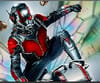
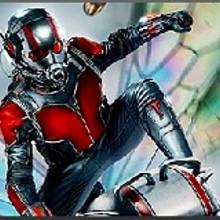
Ant-Man: Combat Training doesn’t start with a victory lap. It starts with a room that looks clean, bright, almost polite… and then immediately tries to knock you flat. This is the kind of superhero action game where the “mission” isn’t saving a city first. It’s proving you can survive your own training. No cheering crowd, no dramatic speech, just you, a suit that bends reality, and a long list of things designed to hit you from angles you didn’t even know existed 😅.
The vibe is simple and delicious: step in, get tested, improve, repeat. But it never feels like boring homework. The training is basically a controlled disaster, like someone turned a lab into an arcade arena and said, alright, hero, let’s see if you can think while everything is trying to delete you. On Kiz10.com, it’s the perfect quick-hit challenge because the rules are readable, the pace is sharp, and the satisfaction comes from those small moments where you stop flailing and start moving like you actually belong in the suit.
🧪🔬 Training that feels like a trap with a syllabus
The name says “Combat Training,” and the game really leans into that. This isn’t wandering around a map looking for the next objective marker. This is drills, pressure, timing, reaction. You’re thrown into sequences that feel like they were built to expose weaknesses. Can you dodge while attacking? Can you keep your rhythm when the screen gets busy? Can you stop chasing the nearest target and instead deal with the thing that will hurt you in two seconds? That’s the whole lesson, disguised as chaos.
And you know what’s funny? At first, your brain will beg for a “safe moment.” A second to breathe. The game doesn’t really give you that. It gives you a tiny pause, just enough to get cocky, and then it sends the next problem sliding in like a smug robot on wheels 😭. That’s where it becomes addictive. Because after the first messy run, you don’t just want to win. You want to look good winning. You want to feel like Ant-Man, not like a person desperately clicking and hoping.
📏🐜 Size is not a gimmick, it’s a mindset
The whole fantasy of Ant-Man is control over scale, and Combat Training makes that feel like the core of your decision-making. Being small isn’t just “cute.” It’s tactical. It’s how you slip through danger lanes, how you avoid getting boxed in, how you reposition without eating a hit. Being bigger isn’t just “strong.” It’s how you break pressure, how you end problems quickly, how you turn a swarm of minor threats into a pile of scrap.
So you start thinking in scale swaps, like you’re flipping a mental switch mid-fight. Small to survive, big to finish. Small to sneak, big to smash. The best runs are the ones where you don’t treat changing size like a panic button. You treat it like a rhythm, a beat you can control. If you get that rhythm right, the game starts feeling smooth, almost cinematic… like you’re choreographing a fight in real time instead of reacting late to everything.
And yes, you’ll have at least one moment where you switch at the wrong time and immediately regret it. That’s part of the training too. Welcome to the lab 😬.
🥊⚡ The punchy part, aka “stop tapping like a maniac”
Combat games love teaching you the same brutal lesson: frantic inputs don’t equal skill. Ant-Man: Combat Training rewards clean choices. Hit when it matters. Move before you’re forced to move. Take control of space. If you just chase targets and mash attacks, you’ll get clipped by something you didn’t track, and the game will feel “unfair” for half a second… until you realize you were basically fighting with your eyes closed.
Once you calm down, everything changes. You start reading patterns. You notice that certain threats telegraph their attack windows. You learn the difference between a safe aggression moment and a greedy one. You begin to use micro-pauses, those tiny hesitations that look like nothing but actually save you. There’s a special kind of satisfaction when you dodge perfectly, land a clean sequence, and the arena suddenly feels quiet because you removed the biggest threat. Quiet, for a second. Then it gets loud again 😅⚡.
🧠🕹️ The real enemy is tunnel vision
Here’s the trap that catches everyone: you see something easy to hit and your brain locks onto it like it’s the only thing that matters. Meanwhile, the arena is setting up the actual danger off-screen or in the corner, and you’re about to learn the hard way that “easy target” is often bait.
So the training becomes about awareness. Where are the hazards? Which enemy is controlling space? Which attack is going to force you into a bad lane? You’re not just playing a superhero brawler. You’re playing a quick tactical puzzle that happens to be solved with punches. That’s why it works so well as an online browser game: it’s fast, but it’s not mindless. It keeps your hands busy and your brain awake.
And the moment you start scanning the whole screen instead of staring at one enemy, the game becomes dramatically easier. Not easy. Just fair. Fair in that mean, honest way where the game says, I’ll respect you if you respect the situation.
🔧🛡️ Progress feels like earning control
A good training game makes you feel improvement, not just “numbers go up.” Even if there are upgrades or progression elements, the biggest upgrade is you. Your timing gets tighter. Your movement gets cleaner. You stop walking into hits you could have avoided. You start predicting, not hoping.
That’s why it fits Kiz10.com so well. You can play short sessions and still feel growth, because every run teaches something small. Maybe you learn when to swap size. Maybe you learn to prioritize threats. Maybe you learn that grabbings “one more hit” is how you lose. And then you try again, a little sharper, a little more confident, a little more hero-ish 😈.
🎬🐜 The superhero fantasy, distilled into pure action
Ant-Man: Combat Training doesn’t need a huge story to feel like a story. The story is your performance. Your first run is messy. Your next run is better. Then you hit a wall. Then you break it. The lab becomes a stage, and you become that tiny unstoppable problem that keeps surviving.
There’s something uniquely satisfying about a hero whose power is basically “changing the rules of space.” The game leans into that feeling. One second you’re slipping between threats like you’re made of luck, the next second you’re hitting back like the room owes you money 💥. It’s chaotic, it’s punchy, it’s quick, and it makes you want “one more attempt” because you can always picture a cleaner run in your head.
If you like superhero games, fast combat, skill-based reaction play, and that constant tiny adrenaline spike of “don’t mess up, don’t mess up, okay nice, KEEP GOING,” this one is a great pick.










 Share
Share
 Embed
Embed