🧊📦 The Arena Is Small, The Ego Is Huge
Anycrate looks simple the first second you load in. Two platforms. Two fighters. A gap in the middle like a quiet threat. Then the first shots fly and you realize this is not “simple.” It’s minimal. There’s a difference. Minimal means every movement matters, every jump is a decision, and every missed shot is a tiny confession that you panicked. On Kiz10.com, Anycrate hits that delicious arcade vibe where the rules are clean but the fights are messy, because the game isn’t trying to overwhelm you with buttons. It’s trying to overwhelm you with consequences.
You’re basically locked in a duel where space is limited and timing is everything. Jump too early and you float into a predictable arc. Jump too late and you eat a bullet you swear you could’ve dodged. And the funniest part? The arena feels like it’s watching you learn. The first round you spray and hope. The second round you aim. The third round you start playing mind games. Now it’s personal. 😈
🔫⚡ Jump, Shoot, Repeat… Until It Becomes Strategy
The core loop is pure: move, jump, shoot. But Anycrate quickly turns that loop into a tactical argument. You’re not just trying to hit the other fighter, you’re trying to control tempo. When you shoot, you’re creating pressure. When you jump, you’re choosing risk. When you hesitate, you’re giving the opponent a window. This is one of those duel shooters where the best player isn’t always the fastest hand, it’s the cleanest brain.
You’ll start noticing patterns in yourself first. Do you always jump when you get nervous? Do you always shoot the moment you see the opponent, even when the angle is bad? Do you chase damage and forget defense? The game quietly punishes habits, which is why it’s so replayable. You don’t lose because the game is random, you lose because you became predictable for half a second.
And when you finally win a duel by waiting, by baiting a jump, by shooting only when the angle is real… that win feels sharp. Like you didn’t just shoot better, you thought better. 🧠🎯
📦💥 Crates Are Not Loot, They’re Chaos Buttons
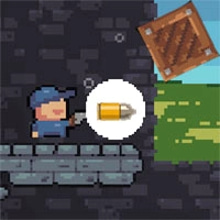
The crates are the heartbeat of Anycrate. They drop in like little gifts from a mischievous universe, and breaking them changes everything. You’re not only fighting your opponent, you’re fighting over opportunities. Shoot the crate and you might get a power-up that flips the duel instantly. Ignore it and your opponent might grab the advantage first. Suddenly the middle space isn’t neutral, it’s a casino.
This creates the best kind of tension: do you take the safe shot at your rival, or do you gamble on the crate for a stronger weapon, a better burst, a surprise advantage? And because crates appear during the duel, they force quick decisions. You can’t stop and plan like it’s chess. You plan while bullets are moving. You decide while jumping. You take risks while trying to look confident. That pressure is the fun.
Also, crates create bait. Players pretend they’re going for the crate, then they punish the opponent for reacting. Or they pretend they don’t care about the crate, then they steal it at the last second. It becomes a tiny psychological war over cardboard boxes. Which sounds ridiculous, and it is, and it’s great. 😂📦
🧲😬 The Distance Between Platforms Feels Like a Trap
The gap between platforms is what makes Anycrate feel tense. In a normal shooter, you can run away. Here, “run away” means jumping into a predictable trajectory, and predictable trajectories are how you get deleted. The air time is both freedom and vulnerability. That’s why good players don’t jump constantly. They jump with purpose.
You’ll learn to treat the jump like a resource. Jump to dodge a shot. Jump to change angle. Jump to reposition for a crate. Jump to punish the opponent’s reload rhythm. The moment you jump without a reason, you become readable, and readable is dangerous.
And then there’s the landing moment. Landing is where fights get decided. If you land clean, you can shoot immediately with control. If you land awkward, you lose spacing and give the opponent a free beat to attack. After a while, you start playing for landings, not just jumps. That’s when your movement stops looking random and starts looking mean. 😈🛬
🎭🕹️ Duels That Feel Like Little Stories
Every round of Anycrate becomes a tiny story. The opening where both players test each other with cautious shots. The mid-game where crates appear and someone gets bold. The moment where one player is ahead and starts playing defensive. The comeback attempt where the losing player takes bigger risks. The final exchange where one clean shot ends everything and someone feels like a genius for about five seconds.
That “story” feeling is why the game stays fun even when you lose. Losses are readable. You can point at the moment it happened. You can say, okay, I jumped too much. I chased the crate at the wrong time. I missed the easy shot because I rushed. That clarity is addictive. It makes you want another duel immediately, because you’re not guessing what to improve. You know.
And yes, sometimes you’ll still do something chaotic on purpose because it’s funny. You’ll go full aggressive, spam shots, jump like a popcorn kernel, and pray. Sometimes it works and you feel unstoppable. Sometimes it fails instantly and you laugh because it was a terrible plan. That’s also part of Anycrate’s charm: it supports both smart play and gremlin play. 🧌🔫
🧠🔥 Tiny Habits That Instantly Make You Better
If you want quick improvement, start with two habits. First: stop shooting the moment you see the opponent. Wait for the angle. Make your shots intentional. Second: jump less, but jump better. A single well-timed jump beats three panic hops.
Another big habit is “crate discipline.” Don’t chase every crate. Only go for crates when you can do it safely or when you can punish the opponent for going for it. A crate is only valuable if you survive long enough to use what it gives you. It’s a power-up, not a miracle.
Also, keep your calm when you’re ahead. Many players throw wins away by getting excited. They start forcing risky shots, chasing crates they don’t need, jumping for style points. Anycrate rewards players who can be boring at the right moment. Boring is how you win. Then you can be dramatic after. 😅🏆
🏁📦 Why Anycrate Works So Well on Kiz10.com
Anycrate is a perfect Kiz10 duel game because it’s fast to start, easy to understand, and surprisingly deep once you realize how much strategy lives inside a tiny arena. It’s a 1v1 shooter that feels like a quick snack but plays like a full rivalry. You can run a few rounds in minutes, sharpen your reflexes, and still feel your skill improving run by run.
If you like quick shooting games, platform duels, arcade reflex fights, and that unpredictable power-up chaos that forces smart decisions, Anycrate is the kind of game you’ll keep reopening. Not because you have to. Becauses you want a cleaner win. A smarter win. A win that feels like you read the opponent’s mind. 📦😈





 4.4 (19 votes)
 Share
Share
 Embed
Embed