🍌🚚 A Truck, A Road That Won’t Sit Still, And Bananas Everywhere
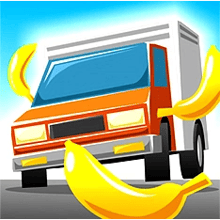
Bananadoh is the kind of puzzle game that looks friendly until you realize the road is basically a prank. You’re guiding a little truck through a colorful, shifting path made of tiles, and your goal is simple in a way that feels suspicious: collect bananas, keep the truck moving, and don’t let it drive straight into a dead end like it forgot how roads work. The trick is that the road pieces can be rotated, and you’re the one responsible for turning chaos into a clean route. On Kiz10, it plays like a quick-thinking arcade puzzle where the pressure isn’t loud, but it is constant, because the truck does not care if you’re still “planning.” It’s moving. Figure it out.
This isn’t a slow, sit-back logic puzzle where you can stare at the board forever. It’s more like an action puzzle: you react, you rotate, you save the run, you grab bananas, and the level keeps unfolding. The satisfaction comes from those moments where you rotate one tile at the last second and the truck smoothly continues, like you just redirected fate with a fingertip. Then you miss a rotation by a fraction, the truck commits to a wrong turn, and you watch your run end with the kind of disappointment that feels weirdly personal. It’s a small game with a big “again” button energy.
🧩🔄 Rotate, Redirect, Breathe, Repeat
The core mechanic is beautifully clean. Tiles form a road. The truck follows the road. You tap or click to rotate a tile and change the direction of the path. That’s the entire conversation between you and the game. But inside that simplicity there’s a sneaky amount of skill. You’re constantly judging which tile matters most right now, which rotation will keep the route safe, and whether you should rotate early to set up a future turn or wait until the truck is closer so you don’t accidentally ruin something else.
And yes, you will ruin something else. A lot. Early on, you’ll rotate the tile in front of the truck because it feels urgent, then realize the smarter move was rotating a tile two steps ahead to line up a perfect banana chain. Later, you’ll start thinking in short sequences: rotate this, then that, then let the truck glide, then rotate again. That’s when it turns from frantic clicking into rhythm. The best runs feel like you’re conducting traffic with calm confidence, even though the “traffic” is one truck and a growing fear of corners.
🍌✨ Bananas Are Tiny Goals That Become an Obsession
Bananas are the fuel of your ambition. They’re not just collectibles, they’re the thing that makes you take risks. When you see bananas scattered along the route, your brain immediately starts drawing an imaginary path that grabs all of them. Sometimes that path is safe. Sometimes it’s a trap that pulls your truck into a dangerous layout where one wrong rotation ends everything. The game loves that tension: do you play safe and keep the run alive, or do you chase the banana line and gamble your future for a prettier score?
That gamble is what makes Bananadoh feel alive instead of mechanical. It turns a simple tile rotation game into a greedy little adventure. You’ll have runs where you ignore a banana because the road looks unstable, and you’ll feel smart. You’ll have runs where you chase every banana and feel like a hero… until you crash the run two seconds later and realize you traded survival for fruit. Then you’ll do it again anyway because the bananas looked too good. Classic.
⏱️😅 The Pressure Is Subtle Until It Isn’t
At first, you might think you can take your time. Then you realize the truck never truly stops being a threat to itself. It keeps moving, and your job is to stay ahead of it mentally. The game creates pressure without needing a screaming timer. The pressure is the truck’s motion. The pressure is the board becoming more complex. The pressure is that moment when you see two possible routes and you only have time to fix one.
This is where your hands and eyes start syncing up. You stop staring at the truck and start staring at the next tiles. You begin predicting. You develop that slightly paranoid habit of always having a “backup” rotation in mind in case the road breaks your plan. When you’re in the flow, it feels smooth and almost relaxing. When you fall out of the flow, it’s chaos in the funniest way, because you’ll rotate a tile, realize it was wrong, rotate it back, realize it’s still wrong, and then watch the truck commit to disaster anyway. The game doesn’t punish you with long loading screens. It punishes you by making you watch your own mistake happen.
🛣️🧠 Reading the Board Like It’s a Living Thing
The biggest improvement you’ll feel is not faster tapping, it’s better reading. You start recognizing risky shapes. You learn which turns tend to create dead ends. You notice how the board’s layout encourages certain paths. You stop rotating randomly and start rotating with intent. The tiles become a language: straight segments are breathing room, corners are danger, intersections are a decision point you must handle with confidence.
And because the layout can shift and surprise you, you also learn adaptability. This isn’t a memorization puzzle where you learn one solution and repeat it. It’s more like a repeated skill test: you’re learning how to think on your feet, how to keep the truck on track even when the board changes, and how to save a run when it starts to unravel. That’s why it stays replayable. The game feels familiar, but it doesn’t feel identical.
🎁🚦 Pickups, Unlocks, And The “I Can Go Further” Feeling
Bananadoh becomes more interesting when you start noticing how it hands you little tools and rewards that change the flavor of a run. Pickups can alter how a section plays, unlockables can add variety to what the board can do, and the whole system gives you a sense of progression even though the game is built around repeated runs. That’s important for a score-chasing puzzle. You want the next attempt to feel slightly different, slightly fresher, slightly more tempting.
Those unlocks also feed a very human kind of motivation: the desire to see what’s next. Even if you’re not a “high score” person, you’ll still find yourself pushing just to unlock the next thing, to experience the next twist, to see how the board can mess with you in a new way. Then you’ll accidentally get competitive, because once you’ve seen your best run, your brain starts demanding you beat it.
😵💫🏆 The Real Challenge: Staying Calm While Everything Moves
The funniest part of Bananadoh is how it turns calm logic into real-time panic. The solution to most problems is simple: rotate the correct tile. The difficulty is doing it at the correct time with the correct confidence. When you get nervous, you over-rotate. You “fix” tiles that weren’t broken. You create problems by trying to prevent problems. The game rewards calm hands and a steady rhythm.
If you want longer runs, the smartest approach is to think one step ahead but not ten steps ahead. Over-planning can make you slow and hesitant. Under-planning makes you frantic. The sweet spot is short foresight: keep the immediate path safe, then set up the next turn, then collect bananas efficiently, then repeat. When that loop clicks, it feels amazing. You’re not fighting the board, you’re guiding it. You’re not reacting late, you’re acting early. And suddenly you’re going farther than you thought you could, with the truck cruising like it trusts you now.
Bananadoh on Kiz10 is a clean, addictive tile-rotating puzzle with a playful theme and a surprisingly sharp skill curve. It’s quick to learn, hard to master, and built for that perfect type of replay where every failure feels like a small lesson and every good run feels like a tiny victory parade for your banana truck.



 4.2 (15 votes)
 Share
Share
 Embed
Embed