🎵 Run first, think later, panic always
Beat It is the kind of game that throws you into motion before your brain has finished introducing itself. There is no cozy setup here, no patient little tutorial holding your hand while you admire the scenery and pretend you are in control. This is a runner. You move forward. You do not stop. You do not turn back. You react, adjust, jump, flip gravity, and hope the path you choose is the one that does not end your run in a humiliating blur. That is the hook, and it is a very good one.
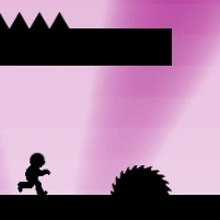
I could not verify a current Kiz10 page under that exact title, but the known game version for Beat It is described as a runner where you cannot stop or turn back, you can jump and change gravity, and several routes appear while only one leads safely onward.
And honestly, that concept alone already has enough bite to carry the whole experience. Because the moment a game gives you unstoppable forward movement and mixes it with route reading, it creates a special kind of pressure. A rude kind. The sort that does not wait for your confidence to catch up. You are always already moving, always already choosing, always one bad decision away from the screen quietly informing you that your instincts are not as impressive as you hoped.
That is why games like Beat It get sticky so fast. They do not ask for long-term commitment. They ask for one more run. Then another. Then one cleaner attempt because that last death was obviously nonsense and definitely not your fault.
🌀 Gravity is not your friend, just a temporary accomplice
The gravity-switching is what gives Beat It its real personality. Without that, it would still be a decent running game. With it, the whole thing becomes stranger, sharper, more alive. Suddenly the floor is not permanent. The ceiling stops being decorative. Safe space becomes temporary. A jump is no longer just a jump. It is part of a larger argument with momentum, timing, and whichever surface has agreed not to kill you for the next second.
That creates a fantastic kind of tension because the game is always asking two questions at once. First: can you react fast enough? Second: can you read the route before your body gets there? That second part matters a lot. Beat It is not only about reflex. It is about recognition. You look ahead, spot a split, judge the geometry, decide whether the next move is a jump, a gravity flip, or a very sincere mistake. Then you commit.
And commitment is everything in a runner like this. Once you move, the game does not politely rewind to let you reconsider. Your choice becomes reality immediately. Good choices feel amazing. The route opens up, your movement stays smooth, and for a few beautiful seconds you look like someone who absolutely knows what they are doing. Bad choices... well. Bad choices tend to become walls, falls, spikes, dead ends, or awkward collisions with the future.
⚡ A wrong path never feels small
What makes Beat It so effective is that the mistakes feel personal. The known description of the game emphasizes that there are multiple ways to go, but only one correct path. That tiny detail changes everything. Now the level is not simply an obstacle course. It is a test of judgment. The wrong move is not just sloppy timing. Sometimes it is bad reading. Bad anticipation. Bad trust in your own panic logic.
And that hurts in exactly the right way.
Because when a game punishes you for choosing badly instead of only reacting slowly, every success feels smarter. You are not surviving on raw muscle memory alone. You are surviving because you are learning the rhythm of the level, the shape of the traps, the way gravity and platforming interact under pressure. That gives the game a sharper aftertaste. You remember your mistakes. You build opinions about routes. You start predicting danger instead of only reacting to it.
That evolution is where the obsession begins. Early runs feel wild and slightly confused. Later runs feel different. Cleaner. Colder. You stop flinching at every split path and start reading them with more authority. Not always the correct authority, obviously. Sometimes the game still catches you acting too clever. But the growth is there, and growth is gasoline for arcade games.
🎮 Rhythm, route reading, and tiny moments of brilliance
There is something almost musical about a good run in Beat It. Not necessarily because it is a rhythm game in the strict sense, but because the movement starts to form patterns. Jump, settle, flip, commit, recover, choose, repeat. The run begins to sound right in your hands. That is when the game gets dangerous, because once you feel the flow even once, you start chasing it again and again.
A strong attempt in this kind of platform runner feels elegant in a very stressful way. You are not relaxed. Not even close. But the panic becomes organized. Your inputs start lining up with the level. Your movement stops looking like survival and starts looking intentional. That transformation is addictive. It makes you believe mastery is possible. Browser games love doing that. They hand you chaos, let you glimpse order for a moment, then dare you to recreate it consistently.
And of course, the moment you start believing you have cracked the system, Beat It probably introduces another ugly route choice or gravity problem and reminds you that confidence is a fragile little thing. Good. That tension is healthy for this genre. A runner without bite gets boring. A runner with route traps and gravity tricks keeps its teeth.
🧠 It looks fast because it is, but it wins through pressure
What I like most about a concept like Beat It is that it does not need to become complicated to feel intense. The rules are readable. Move forward. Jump. Flip gravity. Choose correctly. Survive. Yet inside those rules, there is enough friction to create real pressure. Enough to make every short session feel loaded. Enough to make one death instantly produce a better plan in your head.
That is the best kind of design for a browser game. Clarity outside, chaos inside.
You know why you died. Usually. You hesitated. You committed too early. You flipped late. You trusted the wrong route because it looked cleaner for half a second. The game teaches through consequences, which is rude, but effective. It makes the retry loop feel fair even when it feels mean.
And once the retry loop feels fair, it becomes very hard to quit. Because now every loss contains an argument for another attempt. You were close. You can fix that section. You read the split wrong, but not by much. The next run could be the one where everything lines up.
Classic problem. Arcade games love that problem.
🔥 A sharp pick for players who like runners with a mean streak
Beat It is an easy recommendation for players who enjoy runner games, gravity platformers, reflex challenges, and level designs that punish lazy route choices. It is not a chill endless jog through colorful nonsense. It is a faster, harsher kind of browser challenge where one bad read can end everything and one brilliant correction can save a whole run.
That combination is why the concept works so well, even without a currently verifiable Kiz10 page under that exact title. The core idea is strong: nonstop forward motion, jump timing, gravity control, and split-second route judgment. Those ingredients are enough to make the game feel sharp, stylish, and deeply replayable.
So if you are in the mood for a platform runner that keeps moving, keeps threatening, and keeps turning every clean section into a tiny personal victory, Beat It has exactly that flavor. Fast, tricky, and just annoying enough to become a favorites.





 5 (11 votes)
 Share
Share
 Embed
Embed