🧩 The board looks innocent… and that’s a lie
Block Movers starts the way a lot of puzzle games pretend to start: clean grid, bright blocks, a goal that seems obvious. Move the important block to the exit. Easy, right? Then you nudge one piece and suddenly you’ve created a tiny traffic jam that feels personal. That’s the whole charm here. It’s a sliding block puzzle game where the level doesn’t “fight” you with explosions or timers, it fights you with geometry. Space becomes precious. Corners become enemies. And the most dangerous thing on the board is your own impatience 😅.
On Kiz10, Block Movers is the kind of brain teaser that hooks you in a quiet way. You don’t notice you’re locked in until you’ve done the “one more try” loop five times. The rules are simple, which is what makes the mistakes hurt. Blocks slide, lanes open and close, and the path you thought you were building turns out to be a dead end because you parked something in the wrong place three moves ago. It’s not cruel. It’s honest. And somehow that honesty makes it addictive.
🚦 Sliding, shoving, regretting, repeating
The core mechanic is movement with consequences. You’re not just moving a block, you’re rearranging an entire neighborhood. Push left, and you might free a lane. Push up, and you might trap yourself behind a wall of your own making. The puzzle logic in Block Movers is all about sequencing: what must move first, what can wait, what should never move unless you’re absolutely sure. There’s a rhythm to it, like solving a maze where the walls are alive and you’re the one animating them.
What makes it feel good is how readable the problem becomes once you slow down. At first, the board is chaos. After a few attempts, you start seeing “roles” for each block. This one is a doorstop. This one is a bridge. This one is a troublemaker that needs to be sent away early so it doesn’t clutter the center later. The game quietly trains you to think in lanes and pockets, like you’re managing a tiny parking lot built by a mischievous architect 🧠🅿️.
🟩 The “main block” energy: the hero that can’t jump
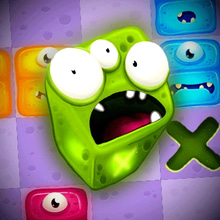
There’s something funny about the main objective block. It’s the star of the show, yet it’s usually the least flexible piece on the board. It can’t phase through others. It can’t hop. It can’t do anything flashy. It just wants a clean route, like a dramatic celebrity demanding an empty hallway. And you, the unpaid stage manager, have to clear the path.
That creates the best kind of tension for a logic puzzle: you can see what you want, but you can’t get it yet. The exit is right there. The target space is right there. And still, one chunky block is blocking the entire dream. So you start negotiating with the board. “If I move this one down, can I slide that one left? If I slide that one left, do I still have room to rotate the flow back?” Your inner monologue becomes a weird little thriller, full of suspicious pauses and sudden confidence that vanishes two moves later 😭.
🧠 Planning like a chess player who forgot how chess works
Block Movers rewards planning, but not in a stiff, robotic way. It’s not about memorizing patterns, it’s about feeling the geometry. The strongest strategy is usually to create breathing room first. A lot of people immediately try to escort the main block to the goal, and that’s when the grid tightens like a trap. Instead, you want to carve out a “pocket” somewhere safe, a place where blocks can temporarily live while you reorganize the lanes. Think of it like cleaning a messy room: you don’t shove everything into the closet at once, you make a clear area, then sort, then commit.
And yes, sometimes you will do the opposite because you’re stubborn. You’ll force a move because it feels correct. Then you’ll realize you’ve placed a long block in a way that blocks two corridors and now the puzzle is basically laughing at you. This is normal. This is part of the experience. The game is a logic workout, and every wrong move is basically the puzzle saying, “Cool. Try again, but with humility.” 😌
🎥 Tiny cinematic moments in a quiet puzzle
Even though it’s a simple sliding block game, there are these small “movie scenes” that happen in your head. The moment the path finally opens and the main block glides forward like it’s been waiting for permission the whole time. The moment you realize a block you thought was useless is actually the key to unlocking the entire midsection. The moment you accidentally solve it while trying a “whatever, let’s just see” move… and you sit there like, wait, that worked? 😳
That’s why Block Movers fits so well on Kiz10. It’s instantly playable, but it doesn’t vanish from your brain after one round. It leaves behind little logic scars, and you come back because you want the clean solution. Not just any solution. The solution that feels elegant, like snapping a puzzle piece into place with a smug little click.
🌀 Difficulty that creeps up like a polite villain
The early stages teach you the language: how blocks interact, how limited space becomes a resource, how “one move” can affect three future options. Then the levels start doing that sneaky thing where the board looks similar, but the required order is completely different. You’ll swear you’ve seen this arrangement before. You’ll try the same opener. And the puzzle will calmly prove you wrong by trapping you in a corner.
That creeping difficulty is what keeps it from being a mindless sliding game. It becomes a proper brain game, a grid-based strategy challenge where you’re not reacting fast, you’re thinking clearly. It’s a different kind of intensity. No explosions, but your eyebrows will still do that dramatic “serious gamer face” thing when you’re deep into a tricky setup 😤.
🕹️ Controls that let your brain do the heavy lifting
A puzzle like this lives or dies by how it feels to move pieces. If the controls are clunky, the logic becomes annoying. Block Movers keeps the interaction straightforward, so the challenge stays where it belongs: in the planning. You slide a block, you see the immediate consequence, and you adjust. That direct feedback loop matters. It makes the game feel fair even when you lose, because you can clearly trace the problem back to your own decisions. Painful, yes. Fair, also yes.
If you’re playing on Kiz10, it’s the perfect “short session that turns into a long session” game. You can jump in, solve a few boards, and leave. Or you can get possessed by the idea that you can solve one level in fewer moves and suddenly it’s 2 AM and you’re counting spaces like a mathematician in a panic 🤯.
💡 Little tricks your future self will thank you for
One of the best mental shifts is to stop thinking “move the main block to the exit” and start thinking “build a highway.” Highways need lanes, and lanes need clearance. Sometimes you must move blocks away from the goal first, which feels wrong, but it’s the only way to create a return path. Another helpful habit is to avoid overfilling the center. The center is the heart of most levels, and if you clog it, every future move becomes expensive.
Also, when you’re stuck, don’t just stare harder. Make a deliberate “reset move” that creates a pocket, even if it feels like you’re stepping back. Sliding puzzles love punishing tunnel vision. The moment you widen your options, the board often reveals the solution like it was waiting for you to calm down 🧘♂️.
🏁 The satisfying finish: when the grid finally says “fine, you win”
The best part of Block Movers is the end of a level. Not because of fireworks, but because of relief. The main block slides into the target like a ship docking after a storm. Your shoulders drop. Your brain unclenches. And you get that small, real satisfaction that only logic puzzles deliver: you didn’t grind for stats, you didn’t buy power, you just thought your way out.
So if you want a sliding block puzzle, a logic game, a classic brain teaser with modern simplicity, Block Movers on Kiz10 scratches that itch perfectly. It’s calm on the surface, chaotic in your head, and weirdly hard to stop playing once you’ve started. One more level? Yeah… that’s what everyone says 😈🧩.



 4.3 (8 votes)
 Share
Share
 Embed
Embed