BOUNCING INTO TROUBLE 😈🟣
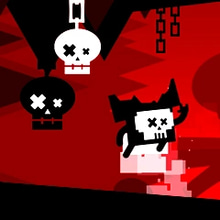
Bouncing Hell drops you into that deliciously simple nightmare: a tiny arena of platforms, a sky that feels just a little too close, and danger that doesn’t wait for you to get comfortable. It’s an action jump game with arcade instincts, the kind that makes you say “okay, quick round” and then realize you’ve been locked in for ten minutes because your last run was almost perfect. Almost. On Kiz10, it hits fast: jump from platform to platform, climb higher, survive longer, and collect points like they’re coins you can spend on ego.
THE RULE YOU LEARN TOO LATE ⚠️⏳
Here’s the trick Bouncing Hell uses to mess with your head: the longer you stay on a platform, the more points you squeeze out of it… but staying still is basically signing a contract with chaos. So you’re always negotiating with yourself. Do you bounce immediately and play safe, or do you linger for that sweet extra score and risk whatever the game is about to throw at your feet? That tension becomes the real engine. You aren’t just jumping upward. You’re gambling in tiny increments, platform by platform, like a high-speed elevator ride where the cables are made of bad decisions.
THE JUMP FEELS SIMPLE… UNTIL IT DOESN’T 🦶💥
At first, the movement feels clean and friendly. You jump, you land, you jump again. Easy. Then your brain catches the hidden workload: timing, spacing, momentum, that micro-panic when your landing spot suddenly looks “less safe than it did half a second ago.” A good run has rhythm. You start bouncing in a steady flow, almost musical, like you’re tapping a beat into the air. A bad run is when you lose that rhythm and everything becomes reactive. You jump late, land awkwardly, hesitate, and suddenly the screen feels smaller than it should.
PLATFORMS THAT FEEL LIKE TRAPS 🎭🧱
The platforms aren’t just stepping stones. They’re little tests. Some feel trustworthy for exactly one second before you realize they’re bait. You’ll land and immediately feel the urge to move again, because the game teaches you this paranoia: comfort is expensive here. The best players aren’t the ones who jump the highest once. They’re the ones who keep their cool when the climb gets messy, when the timing window narrows, and when your fingers want to rush but your brain is yelling “don’t you dare.”
SCORE GREED AND THE SWEATY PALM MOMENT 🪙😅
Bouncing Hell is at its funniest when it turns you into your own villain. You’ll be on a decent run, nothing spectacular, and then you land on a platform and think: I could wait… just a little… squeeze a few more points. The game hears that thought and smiles. That’s when something nasty tends to happen, or the next jump becomes awkward, or you misjudge the distance by a hair and pay for it like you just offended gravity personally. And the worst part is you’ll still do it again, because when the scoring system rewards patience, it also dares you to be reckless.
FOUR CHARACTERS, FOUR LITTLE ATTITUDES 🎮🧠
One of the most charming things about Bouncing Hell is that it doesn’t pretend one play style fits everyone. With multiple characters, it feels like the game gives you different “moods” to climb with. Even if the core loop stays the same, switching characters can make a run feel fresh, like you’re approaching the same tower with a different heartbeat. Sometimes you want the character that feels quick and slippery. Sometimes you want the one that makes you feel steady, like you can actually breathe between jumps. It’s a small feature, but it helps prevent the game from turning into a single repeated routine.
MISSIONS THAT PULL YOU BACK IN 📜🔥
The quests and missions do a sneaky job: they give your chaos a direction. Instead of only chasing a higher score, you end up chasing little goals that reshape how you play. Maybe you stop stalling on platforms because a mission pushes you to move aggressively. Maybe you start stalling more because you’re trying to farm points for a target. It’s a smart way to keep the loop from becoming mindless, because you’re not only reacting to hazards, you’re reacting to your own objective.
THE BACKGROUND IS A MOOD SWITCH 🌈🌪️
Bouncing Hell also understands something that a lot of small arcade games forget: atmosphere matters, even when the gameplay is simple. Different background colors and soundtracks change how the run feels. One moment it’s playful, almost neon and silly. Next moment it feels tense, like you’re climbing through a strange void that wants you to slip. That variety keeps your brain alert. You’d be surprised how much a shift in color makes you feel like the danger changed, even if the mechanics stayed identical.
THE MOMENT YOU START THINKING LIKE A CLIMBER 🧗♂️✨
There’s a point where you stop playing it like a casual jumper and start playing it like a climber. You begin scanning ahead. You start predicting your next two landings, not just the next one. You treat each platform like a quick pit stop instead of a home. You stop letting your eyes lock on the character and instead watch the space around them. That’s when your runs become smoother, longer, and weirdly calmer. Not relaxed, no, never relaxed. But controlled. The kind of control that feels satisfying because it was earned through failures.
FAILURE IS QUICK, WHICH IS WHY YOU TRY AGAIN 😵💫➡️😤
When you lose, it’s usually instant and obvious. No long punishment, no dramatic lecture. Just the clean truth: you waited too long, you jumped wrong, you hesitated, you got greedy. And that’s why it works as an arcade-style score game. You restart immediately with that sharp little thought: I know what I did. I can fix it. The game becomes a cycle of tiny improvements, tiny corrections, tiny victories. You don’t need a level-up screen to feel progression, because your hands are the progression.
SMALL TIPS THAT FEEL LIKE STREET KNOWLEDGE 😎🧩
A good habit is to decide your risk level before you land. If you land and then start debating whether to stall for points, you’re already late. Another habit is to keep your rhythm even when you’re scared. Panic breaks timing. Timing is everything. And maybe the most important one: don’t insult the next jump by overthinking it. If your body knows the spacing, let it happen. Over-correction is the silent killer in jump games, the kind of mistake that looks like “I was trying to be careful” right before the fall.
WHY IT’S SO EASY TO RECOMMEND ON Kiz10 🚀🎯
Bouncing Hell is the kind of game you load when you want fast action, simple controls, and a challenge that lives in your reflexes and your nerve. It doesn’t need complicated systems to stay interesting. The scoring twist alone creates a personal rivalry inside your head, and the climb stays tense because danger is always close enough to punish lazy landings. If you like platform jumping, arcade survival, high score chases, and that feeling of being one perfect run away from bragging rights, Bouncing Hell fits the mood on Kiz10.com.



 4.3 (12 votes)
 Share
Share
 Embed
Embed


