𝗖𝗢𝗟𝗢𝗥 𝗢𝗡, 𝗕𝗥𝗔𝗜𝗡 𝗢𝗡 🦎🌈⚡
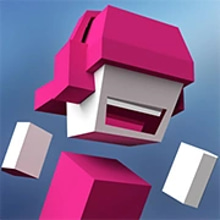
Chameleon Run is what happens when an endless runner decides it’s tired of being “just jump over stuff” and instead becomes a full-on timing obsession. You’re sprinting forward at a confident, almost smug speed, the world is bright and clean like a neon playground, and then the game drops the rule that changes everything: you must match your color to the platform you land on. That’s it. That’s the whole trick. And it’s a brutal trick because it turns every jump into a choice and every landing into a test. On Kiz10, it feels like the kind of skill runner that looks simple enough to try for thirty seconds… and then you’re still there later, whispering “I can do that section cleaner” like you’re negotiating with a laser grid.
The pace is the first thing you notice. You’re not strolling. You’re flying. Your chameleon moves like it has somewhere to be, and you have to keep up mentally. The game is constantly asking for two things at once: control your jumps and control your color. Miss either one and you don’t just lose speed, you lose the entire run. It’s fast, clean, and weirdly elegant, but it also has that spicy arcade cruelty where one tiny mistake makes you restart instantly. No drama, no excuses, just “again.” 😅
𝗣𝗟𝗔𝗧𝗙𝗢𝗥𝗠𝗦 𝗧𝗛𝗔𝗧 𝗗𝗢𝗡’𝗧 𝗙𝗢𝗥𝗚𝗜𝗩𝗘 🧱😬🛑
The platforms in Chameleon Run aren’t just obstacles, they’re conditions. They’re colored lanes that demand you arrive in the correct “state,” like the floor is a bouncer and you need the right wristband to enter. That changes how you see the level. You stop thinking “Where do I jump?” and start thinking “What color do I need to be when I land?” Suddenly you’re planning two moves ahead. You’re watching the next platform’s color while you’re still mid-air over the current one. Your brain starts doing that funny thing where it runs a tiny checklist at high speed: jump, switch, land, switch, jump again, don’t panic.
And the game loves to tempt you with awkward sequences. A safe landing in the wrong color is still a failure. A perfect jump onto a platform you didn’t match is still a failure. The rules are strict, but the strictness is what makes it satisfying. When you clear a tough sequence, it doesn’t feel like luck. It feels like you solved a moving puzzle with your fingers.
𝗧𝗛𝗘 𝗦𝗪𝗜𝗧𝗖𝗛 𝗜𝗡 𝗧𝗛𝗘 𝗔𝗜𝗥 𝗜𝗦 𝗧𝗛𝗘 𝗠𝗢𝗠𝗘𝗡𝗧 𝗢𝗙 𝗧𝗥𝗨𝗧𝗛 🌈🪂🎯
Color switching mid-run is the heartbeat of the game. It’s fast, it’s snappy, and it turns your inputs into something more than “jump now.” You’ll find yourself switching colors at weird times, sometimes immediately after a jump, sometimes right before landing, sometimes twice because your brain is yelling conflicting instructions. The air becomes a decision zone. That’s where the pressure lives: not on the ground, but in that short hang time where you have to commit.
There’s a special kind of tension when the next platform is a different color and your jump arc is already locked in. You can’t “steer” your way out. You have to time the switch properly. Too early and you might forget what you needed for the next landing. Too late and you bounce off the platform like it’s made of pure rejection. It’s hilarious and painful in the same breath. 😭
𝗝𝗨𝗠𝗣𝗜𝗡𝗚 𝗜𝗦 𝗘𝗔𝗦𝗬, 𝗟𝗔𝗡𝗗𝗜𝗡𝗚 𝗜𝗦 𝗔 𝗣𝗥𝗢𝗕𝗟𝗘𝗠 🏃♂️🕳️💥
If you’ve played runners before, you know the usual rhythm: jump over a gap, keep going, repeat. Chameleon Run twists that rhythm into something sharper. Gaps are still dangerous, sure, but the real danger is mismatched landings and split-second hesitation. The game punishes uncertainty. If you hesitate, you drift into a timing window that closes. If you rush, you land wrong. And because you’re moving quickly, mistakes feel sudden. You won’t always see the failure coming. You’ll feel it as a tiny “nope” the moment your feet touch the wrong color.
This is also why the game feels so replayable. Each run is a training loop. You learn by repetition, but not in a boring way. More like, your hands gradually adopt a rhythm and your eyes start reading colors like road signs. After a while, you stop thinking about switching as a separate action. It becomes part of the jump itself, like breathing. That’s when you start getting those satisfying streaks where everything flows and you’re basically surfing the level.
𝗡𝗘𝗢𝗡 𝗙𝗟𝗢𝗪 𝗔𝗡𝗗 𝗧𝗛𝗘 𝗗𝗔𝗡𝗚𝗘𝗥 𝗢𝗙 𝗖𝗢𝗡𝗙𝗜𝗗𝗘𝗡𝗖𝗘 ✨😈🧠
The game is stylish in a way that makes you overconfident. The colors are clean. The movement is smooth. The platforms look welcoming. And then you realize the style is bait. The prettier the track looks, the more likely you are to relax, and relaxing is how the game gets you. Because the moment you stop respecting the next platform, you press the wrong input, and the run ends like it never mattered. That’s the psychological game: staying calm without getting careless.
There’s a sweet spot where you’re focused but not tense. When you’re tense, you over-switch and jump too early. When you’re careless, you under-switch and land wrong. The best runs happen when you’re in that quiet, locked-in zone. Eyes slightly ahead. Fingers steady. No frantic tapping. Just deliberate timing. That’s when Chameleon Run stops feeling “impossible” and starts feeling like a performance you can actually control.
𝗔 𝗟𝗜𝗧𝗧𝗟𝗘 𝗦𝗧𝗥𝗔𝗧𝗘𝗚𝗬 𝗧𝗛𝗔𝗧 𝗙𝗘𝗘𝗟𝗦 𝗟𝗜𝗞𝗘 𝗠𝗔𝗚𝗜𝗖 🧙♂️🦎🧩
If you want to improve fast, stop staring at your character. Look at the next landing color first. Your chameleon will do what it does, but the platform ahead tells you the truth of what you need. Treat color like the primary objective and jumping like the method. Another habit that helps is “switch on purpose.” Random switching mid-air feels safe, but it’s messy. You want one confident switch that matches the next platform, then keep your mind on the following platform immediately. That’s how you avoid the classic mistake where you land correctly but are already wrong for the next jump.
And when you mess up, don’t speed up your inputs to “fix it.” That usually creates a spiral. The game rewards composure. Missed timing is often a symptom of rushing, not slowness. Reset your rhythm, read the colors, and let the run breathe. Even though the runner is fast, your mind should feel slower. That’s the trick. Fast character, calm brain.
Also, embrace the fact that you’ll restart a lot. That’s not a failure state, it’s the design. Every restart teaches your muscles a cleaner pattern. You’ll notice it: a section that used to feel impossible becomes routine. Then the next section becomes the new problem. The game keeps moving the “hard part” forward, and that’s why it stays fun.
𝗪𝗛𝗬 𝗜𝗧 𝗙𝗘𝗘𝗟𝗦 𝗦𝗢 𝗚𝗢𝗢𝗗 𝗢𝗡 𝗞𝗜𝗭𝟭𝟬 🏁🎮🔥
Chameleon Run is perfect on Kiz10 because it’s pure skill, no waiting. You can jump in instantly and the game immediately gives you that sharp, satisfying loop: run, jump, switch, survive, improve. It’s a runner, but it also feels like a color puzzle at high speed. It’s bright, but it’s tense. It’s simple, but it demands precision. And it has that addictive quality where you don’t just want to finish… you want to finish clean, like you’re proving something to the track.
If you love fast platform runners, reaction games, timing challenges, and color-switch mechanics that turn simple movement into a real test of control, Chameleon Run will keep pulling you back. One more run to perfect that sequence. One more run to stop switching too early. One more run to keep your cool at the last jump. Then you crash and laugh and restart because, honestly, the neon world doesn’t care how confident you were. It only cares if you matched the color. 🦎🌈😤
















 4.7 (42 votes)
 Share
Share
 Embed
Embed