🧛♂️🏰 The Kingdom Smiles, Then Locks the Door Behind You
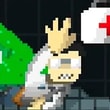
Diseviled 2 doesn’t ease you in. It drops you into a medieval nightmare with one job on your shoulders and an unspoken insult in the air: the princess is gone again, the demons are bold again, and somehow it’s your problem again. You’re one of the Diseviled, a demon eraser, a blade-and-magic specialist who walks into castles the way normal people walk into bakeries. Except this bakery is full of skeletons, traps, angry creatures, and corridors that feel like they were built by someone who hates ankles. On Kiz10, the first minutes feel like a quick test of nerve. You move, you jump, you swing, you realize the game wants you to be brave and careful at the same time, and that’s honestly the cruelest combination. 😅
The vibe is classic action platformer, but with a gritty fantasy heartbeat. You’re not floating through cute levels collecting harmless stars. You’re pushing through dungeons where every room looks like it has a story, and that story is always “something tried to live here and failed.” It’s fast enough to feel exciting, but structured enough that you start learning the rhythm: push forward, read the threat, strike, collect, keep moving. The moment you hesitate, enemies multiply in your imagination. The moment you get greedy, the castle punishes you with a hit that feels personal. ⚔️😤
🗡️💥 Sword First, Questions Later
Combat in Diseviled 2 is built around that satisfying snap of action games: you commit to an attack, you see impact, you feel the pace accelerate. The sword isn’t just decoration. It’s your permission slip to move through danger. You’ll slice demons that rush you, clip enemies that try to corner you, and learn quickly that staying still is basically volunteering to get surrounded. The game rewards forward momentum, but not reckless sprinting. It’s more like a controlled advance, the kind of movement where you look confident even if your brain is quietly yelling, okay okay okay don’t mess this up. 😭
What makes the fighting feel good is how it blends with platforming. Your swings aren’t separated from movement; they’re part of it. You jump into fights, land strikes mid-step, retreat half a tile to avoid getting clipped, then surge forward again like you meant to do that all along. And when enemies stack—one in front, one behind, something crawling in from the side—you start making split-second decisions that feel like tiny battle choreography. Step, strike, jump, strike, breathe, loot. It’s messy, but it can become elegant in your hands. 🕺⚔️
🔮⚡ Magic That Turns Panic Into Options
Then the game hands you magic, and suddenly you’re not only reacting, you’re choosing. Magic attacks change how you approach rooms because they give you reach, pressure, and that delicious “get off me” energy when things get too close. You’ll find yourself mixing sword and spells like you’re improvising a survival playlist: blade for the nearby threat, magic for the one you don’t want to chase, another burst to finish something before it becomes a problem. ✨
But magic also introduces temptation. It feels powerful, so you want to spam it, and the game quietly asks, are you sure you want to rely on that? The smarter way is to treat spells like punctuation. Use them to break enemy patterns. Use them to control a narrow corridor. Use them to safely tag a dangerous target before it reaches you. When you do it right, you don’t feel like a desperate knight flailing in a dungeon. You feel like a trained hunter cutting through darkness with a plan. 😈🔮
💎🪙 Loot Fever and the Trap of Being Too Happy
Ah yes, the shiny stuff. Gems, coins, little rewards that make your brain sparkle even while the world is trying to kill you. Diseviled 2 understands a universal truth: players can resist fear, but they struggle to resist loot. You’ll see a line of gems near a risky ledge and you’ll think, I can grab that. It’s right there. It’s basically free. And then you’ll discover the ancient curse of platformers: nothing is free, everything is bait. 🫠
Still, collecting matters. The game’s progression flavor comes from that steady accumulation. You’re not just fighting for the sake of fighting. You’re building a stronger run, unlocking goals, stacking achievements, pushing deeper. The castle becomes a place you’re stripping of value piece by piece, like you’re stealing the demons’ lunch money while you’re at it. And it feels good because it turns survival into momentum. You’re not only “alive,” you’re profitable. 💰😄
🕳️🦴 Level Flow That Feels Like a Dark Adventure Comic
Each stage has that side-scrolling fantasy feel: platforms, ladders, gaps, tucked-away corners that whisper “secret,” and enemy placements that force you to pay attention. Some rooms are straightforward brawls. Others feel like obstacle puzzles where timing matters more than damage. You’ll jump across broken stone, squeeze through tight spaces, drop into lower areas that look suspiciously rewarding, then scramble back up because you realize you’re not alone down there. 😅
There’s a nice balance between “run forward” and “explore a bit.” If you push too hard, you’ll miss the little advantages hidden in the design. If you explore too greedily, you’ll get caught in awkward fights where the terrain is working against you. The sweet spot is confident curiosity. Peek, grab, move. Don’t overstay. The castle doesn’t like visitors. 🏰🚫
👑🔥 The Princess Isn’t Just a Goal, She’s a Clock in Your Head
Even if the game isn’t screaming a timer at you every second, the story pressure is there. Rescue missions always do that to your brain. You start imagining the princess locked somewhere deeper, and suddenly every delay feels like you’re wasting time. It’s a clever psychological trick. You push onward not only because you want to win, but because the narrative gives your run a direction. You’re not wandering a dungeon for fun. You’re hunting through it with purpose. 🗝️👑
And when you finally hit tougher zones, that purpose becomes fuel. Because the monsters get meaner, the layouts get trickier, and the game starts asking for cleaner play. Not perfect play, just smarter play. You can brute-force early areas. Later, you need better timing, better spacing, and betters choices about when to swing and when to reposition. That’s where the platformer side and the action side truly merge into one identity: you are not a fighter who sometimes jumps, you’re a mover who fights while moving. ⚡🗡️
🏟️⚔️ Arena Energy and the “Prove It” Mood
Then there’s that extra mode flavor, the sense that you can test yourself beyond the story path. The idea of an arena in a game like this is simple and dangerous: you think you’re ready, you enter, and suddenly you realize the arena is where sloppy habits go to die. It’s the place that doesn’t care about your excuses. If you like tight combat loops, this is where you’ll get that “okay, I’m actually learning the game” feeling. It’s not just completing levels, it’s mastering control under pressure. 😤🏟️
Diseviled 2 is the kind of Kiz10 action game that keeps you coming back because it’s immediate. You can jump in, slash through demons, grab loot, and feel progress fast. But it also has that deeper pull: the more you play, the more you see how much cleaner you could be. How much smarter you could move. How many hits you took that you didn’t need to take. And once you start chasing “a clean run,” you’re hooked. Because clean runs feel heroic. Messy runs feel funny. Both feel worth replaying. ⚔️😄✨






 4.3 (22 votes)
 Share
Share
 Embed
Embed