🁣🧠 Dominoes, but with that “one more tile” tension
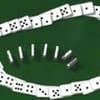
Domino Draw on Kiz10 looks innocent for about three seconds. Clean tiles. Simple rules. Two ends of a chain, like a polite little railroad track of numbers. And then it happens: you place a tile, you feel clever, and the game quietly asks, “Okay… what’s your plan when you can’t move?” That’s the whole vibe. This is a classic domino board game in the “draw” style, where the table can turn on you in a heartbeat and the boneyard sits there like a mysterious snack bowl you keep reaching into, hoping the next bite tastes like salvation.
The magic of Domino Draw is how small choices become big consequences. You’re not controlling a character with a sword. You’re controlling a hand of tiles that can betray you if you ignore them. Every turn is a tiny negotiation between what you want to play and what the table allows. You can have the perfect tile… but if you waste it too early, you might be stuck later watching the chain drift into numbers you can’t match. It’s calm, sure, but it’s also the kind of calm that hides a storm under the surface 😅
🎲🧲 The rule that changes everything: drawing isn’t just “bad luck”
In draw dominoes, not being able to play doesn’t immediately end your turn like a block-only match. Instead, you draw tiles until you can make a legal move (or until the boneyard runs out). That single rule creates a whole different style of strategy. Drawing can feel like punishment, but it’s also information. It’s time. It’s a chance to rebuild your options. Sometimes you draw one tile and you’re back in the game instantly. Sometimes you draw three, four, five and your hand becomes a messy backpack full of numbers you didn’t ask for. That’s when you start thinking like a domino player instead of a domino tourist.
Because here’s the thing: the “draw” part isn’t random chaos. It’s pressure. The bigger your hand gets, the more you feel the weight of every future decision. A large hand is opportunity, yes… but it’s also risk. If the round ends with scoring based on pips, a bloated hand can sting. If the game is about emptying your tiles first, extra tiles mean extra turns, extra chances to get trapped, extra time for the opponent to slip away. That’s why Domino Draw is so addictive: it constantly makes you balance short-term survival with long-term control.
🧩🔍 Reading the table like it’s a story, not a line of tiles
New players stare only at the ends. Experienced players stare at everything. The chain is basically a living diary of what’s been played and what’s still hiding. When you play Domino Draw online on Kiz10, you’re learning a habit: track numbers. Not perfectly like a robot, just enough to sense patterns. If you keep seeing certain numbers show up, that means those numbers are getting drained from the set. If a number hasn’t appeared in a while, it might be stuck in someone’s hand… or waiting in the boneyard like a surprise punchline.
And yes, this sounds serious, but it becomes oddly instinctive. You don’t need to count every tile. You just develop a gut feeling: “If I push the chain toward fives, I’ll probably keep moving.” Or, “If I open this end to ones, I might be handing the other player a gift.” Domino Draw makes your brain do these tiny calculations without you even noticing. You’ll catch yourself leaning closer to the screen like you’re watching a thriller. It’s dominoes. Why are you tense. Stop it. You won’t stop it 😭
🧨🁫 Tiny betrayals: doubles, awkward numbers, and the art of not helping
Doubles can feel powerful because they’re visually loud, like a tile that says “I am important.” But power depends on timing. A double played at the wrong moment can lock the flow into an end you can’t support. A double played at the right moment can force the table into a number you own plenty of, like you’re guiding traffic with a smug little whistle 😏
Then there are “awkward numbers,” the ones you only have one of, the ones that feel like dead weight. Domino Draw is full of these micro-dramas. You’ll have a tile that doesn’t fit anywhere, just sitting there, judging you. Your mission becomes: get rid of your awkward tiles without creating a new problem. That’s the real puzzle layer. You’re not only matching ends, you’re sculpting your hand. You’re trying to become lighter, cleaner, more flexible. It’s like cleaning a room while someone keeps throwing socks at you.
And don’t ignore the psychological side. If you keep opening the table to a number your opponent loves, you’re basically playing their hand for them. Sometimes the best move is the one that feels slightly “worse” right now but doesn’t set them up for an easy follow-up. Domino Draw rewards players who can delay gratification without getting stuck. That’s a rare kind of brain candy.
🧠💬 The internal monologue Domino Draw creates (yes, you’ll have one)
There’s a specific sound your brain makes in this game. It goes like: “Okay, if I play this, they can answer with that… unless they don’t have it… but if they don’t have it they’ll draw… but drawing might help them… hmm.” And suddenly you’re trapped in a polite spiral of strategy thoughts, like you’re arguing with yourself at a dinner party.
That’s why Domino Draw works so well as a free online board game. It’s not loud. It’s not flashy. But it eats your attention. It’s the perfect “I’ll play a quick round” game because the rounds feel clean and satisfying, and every new hand is a fresh little mystery. You’re constantly adjusting, constantly learning your own habits. Some players play safe and keep options open. Some players play aggressively, trying to force ends into numbers they control. Neither is always right. The game shifts depending on what the table gives you, and that variability makes it feel human.
🎯🧤 How to actually get better without turning into a spreadsheet person
First, stop burning your flexible tiles too early. Flexible tiles are the ones that connect to common numbers you see often. If you use them immediately just because you can, you might lose your escape routes later. Second, try to reduce singletons, those lonely numbers you only have once. They’re fine when the table is open, but they become pain when the chain narrows.
Third, when you’re forced to draw, don’t treat it like failure. Treat it like a pivot. The tile you draw might be the exact bridge you needed. The trick is to not panic-play it instantly. Look again. Ask yourself: does this tile help me now, or does it help me later? Domino Draw is full of moments where patience wins. Not always, but often enough that it feels delicious when it works.
And finally, pay attention to how you lose. Did you lose because you got stuck? That means you didn’t protect your options. Did you lose because your hand stayed huge? That means you weren’t shedding tiles fast enough, or you kept drawing without a plan. Every loss is basically a lesson that doesn’t feel like homework. It just feels like, “Ugh, fine, next round I’m smarter.” Then you play again. Of course you do.
🃏✨ Why Domino Draw on Kiz10 stays fun even when it’s “just dominoes”
Because “just dominoes” is secretly a strategy game disguised as a family classic. Domino Draw gives you that satisfying click of matching ends, that little moment of order snapping into place, and then it keeps you engaged by making every turn matter. It’s a puzzle game, a board game, and a mild drama generator all at once. Sometimes you’ll cruise and empty your hand like a legend. Sometimes you’ll draw half the boneyard and stare at your screen like you’ve been personally cursed. Either way, it’s entertaining. Either way, it feels like a real match.
If you want a clean, classic dominoes experience online, with the extra suspense of drawing when you can’t play, Domino Draw on Kiz10 hits the sweet spot. It’s calm enough for a break, sharp enough to scratch that strategy itch, and chaotic enough that you’ll laugh when the boneyard hands you exactly the tile you didn’t want. Again. For the third time. Amazing. Loves that for you 😅🁣















 4.6 (6 votes)
 Share
Share
 Embed
Embed