🏰☁️ Emergency landing, instant problem
Flying Castle opens with the kind of fairytale moment that should be peaceful: a princess drifting across the world inside a floating castle, sunlight on stone towers, clouds sliding by like soft curtains. Then something breaks. Not “tiny squeak” breaks. Real, annoying, dangerous breaks. The castle has to stop, repairs can’t wait, and of course the universe chooses that exact moment to send monsters like it scheduled an appointment. So now you’re not admiring the sky. You’re defending it.
This is a defense game with a simple, delicious setup: hold the line while the castle gets fixed. That’s it. No long speech, no complicated politics. Just you, a damaged flying fortress, waves of enemies, and a coin system that whispers the most tempting words any upgrade-based game can say: you could be stronger if you survive a little longer. On Kiz10, Flying Castle feels like an arcade castle defense challenge that’s easy to start but sneaky about how quickly it gets intense.
🛡️⚔️ The “don’t let them touch the castle” panic loop
The core gameplay runs on pressure. Enemies march in, you shoot them down, you collect coins, you spend coins, and you repeat until either the castle is safe or you get overwhelmed. It’s a loop that sounds simple, but it gets spicy because every decision happens under threat. Spend now for a quick power bump, or save for a bigger upgrade that could change everything? Upgrade damage so each shot matters more, or upgrade speed so you can cover the screen without feeling like your hands are stuck in syrup?
And here’s what makes it fun: the game keeps you in that slightly stressed, slightly excited state where you’re always doing two things at once. You’re fighting the current wave, and you’re planning for the next one. Even when the screen looks “fine,” your brain is already thinking, what happens when the next group arrives? What if they come faster? What if there’s a tougher enemy in the mix? What if I spend coins wrong and regret it immediately? That last one is very real. 😅
🪙✨ Coins are shiny, but they’re also your oxygen
Coins in Flying Castle aren’t just score candy. They’re survival. They’re how you turn a desperate defense into a controlled defense. Early on, you’ll feel the limits of your starting power. You can handle small threats, but you can’t relax. Then you start buying upgrades and suddenly the game shifts from “I’m barely holding on” to “okay, I have a plan.” That sense of growth is the hook. You’re not only defending. You’re rebuilding the castle’s chances in real time.
The best part is how upgrades change your emotional rhythm. With weak gear, every enemy feels annoying. With stronger gear, enemies feel like resources, like walking coin bags you can convert into even more power. That’s when the game starts to feel addictive, because your attention flips from fear to momentum. You’re not asking “can I survive?” anymore. You’re asking “how far can I snowball this before the game tries to humble me?”
👹🔥 Waves that don’t care about your feelings
Flying Castle is one of those games where the first waves feel like a handshake and later waves feel like a mugging. Enemies begin politely, then they start arriving in denser packs, sometimes with tougher bodies or more annoying patterns that force you to prioritize. Do you delete the fast threats first so they don’t slip through? Do you focus the tanky enemy because it will soak up your time and clog your screen? Do you spread damage to keep the lane clean, or burn one target down before it becomes a real problem?
This is where the game becomes more than “click to shoot.” It becomes a tiny strategy problem under stress. You’re reading the wave composition, you’re managing your attention, and you’re learning that not all enemies are equal. Some are distractions. Some are the real danger. The game rewards you for spotting that difference quickly, because hesitation is expensive when the castle’s safety is on the line.
🌪️🧠 The real enemy is panic-spending
There’s a classic moment in upgrade defense games where you buy something because you’re scared, not because it’s smart. Flying Castle absolutely invites that mistake. A wave gets messy, your screen fills, you see your coins, and you think, I need power NOW. So you buy the first upgrade you can afford. Sometimes that saves you. Sometimes it’s the wrong upgrade and you feel the regret instantly.
The funniest part is how your brain tries to justify it. No no, that was fine, I needed it. Meanwhile the next wave arrives and you realize what you actually needed was a different upgrade that would have made your life ten times easier. That’s the learning curve: not just getting stronger, but getting smarter about how you get stronger.
A calm player spends better. A calm player watches the battlefield and asks one simple question: what is currently killing me? Too many enemies slipping through means you need speed or coverage. Enemies taking too long to drop means you need damage. Getting overwhelmed in bursts means you need something that stabilizes chaos quickly. When you start spending with that mindset, you stop wasting coins and the game becomes way more satisfying.
🧰🔧 Defending while repairing feels like a ticking clock without the noise
What makes Flying Castle’s theme work is that “repair” pressure in the background. You’re not defending forever just to farm points. You’re defending for a reason: the castle needs time. That gives each run a sense of purpose. You’re buying time with skill. Each wave you clear feels like another minute of progress on the repairs, another step closer to safety.
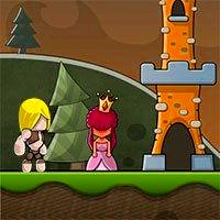
And that makes the fantasy feel good. You’re not a random soldier. You’re the last line of defense for a princess and a sky fortress that can’t afford to fail. It’s simple storytelling, but it’s effective, especially in a browser game. The stakes are easy to understand, and that clarity makes every clutch moment feel dramatic.
⚡🏹 The “flow state” moment when you finally control the chaos
If you stick with it, you’ll hit a point where the game suddenly feels smooth. Your upgrades kick in, your aim feels confident, and your brain starts predicting waves instead of reacting late. Enemies appear and you already know where to focus. Coins drop and you already know what you’re saving for. Your defense feels like a machine you built, not a mess you’re barely surviving.
That flow state is the real reward. Not just winning, but feeling in control. And when you lose after that, it’s not because the game is random. It’s usually because you got greedy, you misread a wave, or you tried to hold one side too long instead of adjusting. Losing becomes information, and that makes you want to run it again immediately. One more attempt. One better purchase. One cleaner defense. 😈
🌈🏰 Why Flying Castle hits on Kiz10
Flying Castle is the kind of defense game that doesn’t need to be complicated to be sticky. It gives you clear stakes, satisfying upgrades, and wave pressure that grows at the perfect speed to keep you engaged. It’s a castle defense challenge with a fantasy sky twist, and it’s built for that “quick session, big intensity” rhythm Kiz10 does so well. You can jump in, defend for a few minutes, feel the progress, and either win cleanly or lose and instantly know why.
If you like tower defense vibes, wave survivals pressure, upgrade-driven gameplay, and that satisfying feeling of turning coins into power while monsters try to ruin your day, Flying Castle is a great pick. Protect the princess, keep the sky fortress alive, and try not to panic-buy the wrong upgrade when the screen gets loud. You’ll do it at least once. Everyone does. 🏰☁️🪙





 4.4 (28 votes)
 Share
Share
 Embed
Embed