🌈🟦 A tiny hero, a huge rainbow promise
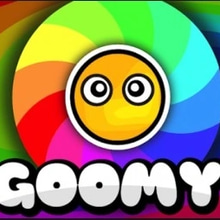
Goomy Journey to The Rainbow Land begins with that classic fairy-tale rumor you instantly want to believe: somewhere ahead there’s a place called Rainbow Land, and it’s not just pretty colors and happy vibes… it’s the kind of “everything finally feels right” destination. Goomy doesn’t look like the usual action hero, which makes the whole adventure feel even better. He’s small, squishy-looking, and weirdly determined. Then the level starts and you realize the world isn’t going to let him stroll there peacefully. Not even close. It’s a jump-and-shoot platform game where the road to happiness is basically paved with traps, angry enemies, and the occasional “why is that platform placed exactly there to ruin me” moment. And on Kiz10, that’s the charm: simple controls, fast pacing, and the constant feeling that you’re one clean run away from looking like a platforming genius.
The first few seconds teach you the vibe. You move, you jump, you fire. You see coins and your brain immediately goes, yes, collect everything, become rich, become legendary. Then an enemy shows up, you hesitate for half a beat, and suddenly you’re scrambling. The game is cute, but it’s not sleepy. It wants you alert. It wants your hands awake. It wants you to respect the space between platforms, because that space is where mistakes live.
🧩⚡ Jump timing that feels like a conversation with gravity
Platformers always come down to timing, but this one does a neat trick: it feels forgiving until it isn’t. Early jumps are friendly, like the game is letting you find your rhythm. Then it starts mixing in awkward distances, tiny ledges, and moments where you need to jump while thinking about something else, like an enemy drifting into your landing zone. That’s when the game becomes a little chaotic in the best way. You’re not only jumping to move forward. You’re jumping to survive.
And gravity in Goomy Journey is… moody. It doesn’t feel random, but it feels like it’s waiting for you to get comfortable. The moment you start jumping on autopilot, you land a little short, or you clip an edge, or you bounce into danger like you’ve accidentally volunteered for pain. That’s when you start playing smarter. You slow down for a second. You watch patterns. You stop treating every gap like it’s the same gap. Suddenly your run improves, not because you got “better reflexes,” but because you started paying attention like a real platformer player.
🔫👾 Shooting that turns fear into control
The shooting is what gives the game its bite. Without it, you’d just be hopping through a colorful world. With it, every encounter becomes a tiny decision: do you clear enemies first, or do you rush past them and risk getting tagged mid-jump? Shooting feels simple, but it changes how you approach the stage. Sometimes it’s safer to pause for one second, fire, and reclaim the space. Other times pausing is exactly how you get swarmed or knocked into a pit. So you learn to shoot while moving, shoot while jumping, shoot as you land, like you’re doing a tiny action choreography. It’s not complicated, but it feels satisfying when it clicks, because you can feel yourself controlling the chaos instead of reacting to it.
Enemies in this kind of game aren’t usually “deep,” but they don’t need to be. Their job is to steal your rhythm. One enemy at the wrong time can break your flow and make a simple section feel messy. The more you play, the more you recognize that rhythm is the real health bar. When your rhythm is intact, you’re fine. When it breaks, everything starts going wrong at once. The game rewards players who keep calm, who fire with intention, who don’t panic-jump into the next problem.
🪙✨ Coins as bait, coins as confidence
Coins are everywhere, and they’re not just decoration. They’re little shiny suggestions. They guide you, they tempt you, they sometimes lie to you. A line of coins might point to the safest route… or it might pull you into a jump that’s harder than it looks. And you will fall for it, at least once, because coins are basically the oldest trap in platformer history. The funny part is that the game doesn’t make it feel unfair. When you miss a risky coin line and tumble into trouble, you immediately know what happened. You got greedy. You chased sparkle over safety. It’s embarrassing, but it’s also the kind of embarrassing that makes you laugh and hit restart because you’re sure you can do it cleaner.
Over time, coins become less of a distraction and more of a confidence marker. When you’re playing well, you collect naturally. Your jumps line up. Your movement flows. You scoop coins almost without trying. When you’re playing badly, you miss obvious trails, you land awkwardly, and coins become a reminder that you’re rushing. That’s what makes them clever: they don’t just reward you, they reflect your performance.
🌈🛤️ Levels that feel like a colorful obstacle course
Rainbow Land isn’t served to you as a postcard. It’s earned. The stages feel like a journey: bright, whimsical, but filled with hazards that keep you honest. You’ll deal with platforms placed to test your spacing, enemies positioned to force quick reactions, and stretches where the safest path isn’t the fastest one. The game doesn’t need long storytelling to feel like an adventure because the act of moving through the levels becomes the story. You’re literally fighting your way toward something better, one jump at a time.
And there’s a nice sense of forward pull. Even if you’re not a completionist, you’ll want to keep going because each section feels like it’s hiding the next “pretty” moment. The colors change. The layout shifts. The danger escalates. It’s like the world is constantly saying, keep going… you’re close… just don’t mess up right here. Which is, of course, exactly where you mess up. Then you laugh, then you do it again.
😵💫🎮 The flow state, and the moment it snaps
There’s a special kind of platformer joy when you enter flow. Your jumps hit clean. Your shots land. Enemies stop feeling like obstacles and start feeling like timing markers. You’re not thinking in full sentences anymore, you’re thinking in motion. That’s when Goomy Journey feels the most fun, because it’s not heavy, it’s not slow, it’s just this bright sprint of decisions that you’re handling smoothly.
Then flow snaps. Maybe you misread a jump. Maybe you shoot half a second late. Maybe you land and instantly realize you have nowhere safe to stand. And suddenly you’re not in flow anymore, you’re in recovery mode, trying to save the run with quick improvisation. Those recovery moments are honestly some of the most exciting parts, because they make you feel like a scrappy little hero. You weren’t perfect, but you survived. That’s satisfying in a different way than “clean play.” It’s messy survival, and it makes the next attempt feel meaningful.
🏁🌟 Why this adventure sticks on Kiz10
Goomy Journey to The Rainbow Land works because it’s straightforward but not boring. It respects your time. You jump in, you understand the controls instantly, and the game starts challenging your rhythm right away. It’s colorful enough to feel friendly, but it has enough bite to keep you engaged. And it has that classic platformer magic where improvement feels real. You’ll notice it quickly. You’ll take jumps you used to hesitate on. You’ll clear enemies without stopping. You’ll stop getting baited by coins placed near danger… okay, you’ll get baited less. Let’s be honest.
If you like cute platform games, jump-and-shoot action, coin collecting, and that “one more try, I can do better” energy, this is exactly the kind of Kiz10 game that quietly becomes a habit. Because Rainbow Land isn’t just a place on the map. It’s the feeling you get when a tough section finally goes perfectly and you glide through it like you own the level. 🌈🟦✨






 Share
Share
 Embed
Embed


