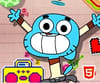
🍔🏫 Welcome to Elmore’s Cafeteria, Where Physics Is a Side Dish
Gumball Manic Canteen drops you into a cafeteria that feels normal for exactly one blink. Then the orders start. Then the tables become lanes. Then food starts flying like you’re running a snack circus with zero insurance. It’s a time management game with a cartoon brain, a game that looks cute and simple but secretly loves making you sweat over the tiniest decisions. On Kiz10.com, it plays like pure cafeteria chaos: classmates get hungry, you serve fast, you aim carefully, and you try not to turn a perfectly good pie into a tragic floor decoration. 😅
The charm is that it doesn’t pretend you’re doing calm restaurant management. This is not a slow, polite “place the burger on the plate” situation. This is rapid service under pressure, with tosses, timing, and the kind of frantic multitasking where your eyes keep darting from one side of the room to the other like you’re watching a tennis match made of pizza. You’re basically a snack-launching hero, and the cafeteria is your battlefield. Dramatic? Yes. Accurate? Also yes.
🍕🎯 Throwing Food Sounds Easy Until the Tables Start Betraying You
Serving in Gumball Manic Canteen is all about trajectory and timing. The food doesn’t teleport. You’re tossing it across tables, over little gaps, around obstacles, and sometimes it feels like the cafeteria itself is testing you. A clean throw lands exactly where it should, the customer gets fed, you keep the flow moving. A messy throw bounces, slides, or lands just slightly wrong, and suddenly you’re losing precious seconds while the next order is already shouting for attention.
That’s the tension: you don’t just need speed, you need accuracy at speed. The game rewards players who can stay calm while everything is happening at once. It’s very easy to fall into panic mode and start throwing food like you’re trying to win a pie-based lottery. Sometimes that works, hilariously. Most of the time it doesn’t. The best runs are the ones where you aim with intention, like you’re placing each throw into a rhythm rather than spamming actions and hoping the cafeteria forgives you.
And the cafeteria does not forgive. It judges. Quietly. With hunger bars.
🥧⏱️ Hungry Classmates, Short Tempers, and the Order Spiral
The customers in this game aren’t complicated, but they are demanding in the way only cartoon hunger can be. They want snacks. They want them now. They want them while you are already serving someone else. The pressure builds as multiple characters wait, and that’s when you feel the true core of the game: prioritization. Who is closest to losing patience? Who has the easiest order to fulfill quickly? Who is far enough away that you can serve them with one precise toss while you keep the near side under control?
You’ll start developing instincts without even thinking about it. Easy orders first to stabilize the room. Then the trickier throws. Then back to the fast ones when the waiting line starts looking dangerous. It becomes a loop of decisions where you’re constantly choosing between the safe play and the risky play. The safe play keeps the room calm. The risky play can save time and earn more points, but it can also cause a miss that turns the whole run into damage control. 😬
There’s also a funny psychological effect where the cafeteria makes you greedy. You’ll see a chance to serve two customers quickly and your brain goes, yes, perfect, I’m a genius. Then you miss one throw, and now both customers are unhappy, and you’re standing there like… wow, I really did that. All because I got excited. Classic.
🍎🌀 Combo Flow, Muscle Memory, and That One Throw You’ll Remember
Once you’ve played for a bit, something changes. You stop reacting to each order like it’s a surprise. You begin to recognize patterns. You learn where the throws land best. You learn the distances. You learn the timing windows. The game starts to feel less like chaos and more like a rhythm challenge. You’re not just serving, you’re chaining actions. Serve left. Quick flick to the center. Toss right. Back to left. You begin moving like you’re conducting an orchestra made of snacks. 🎼🍕
And the most satisfying part is when you hit a clean streak. Everything lands. Nobody complains. The room stays stable. You feel unstoppable for about ten seconds. Then the game throws in a situation that breaks your flow, because of course it does. But those clean streaks are what make the game addictive. They feel earned. They feel like you “figured it out,” even though you know the cafeteria will absolutely humble you again in the next minute.
There’s always one throw, too. The throw that barely makes it. The throw that you think will fail, then it lands perfectly. The throw that saves your run. The throw that makes you grin like you just hit a trick shot in a sports game, except it’s a pizza, and you’re proud anyway.
😵💫🔥 When the Screen Gets Busy, Your Brain Has to Get Quiet
The hardest moments in Gumball Manic Canteen aren’t necessarily the fastest moments. They’re the moments where too many things happen at once. Multiple hungry classmates. Multiple snacks. Multiple throw angles. Your attention splits, and this is where most runs fall apart. You start making tiny mistakes, and tiny mistakes in a time management game snowball fast. A missed throw isn’t just a miss. It’s a delay. A delay creates more waiting. More waiting creates more pressure. Pressure creates bad decisions. Bad decisions create more misses. That’s the spiral. 😭
The way out is surprisingly simple, but it takes discipline: you slow your mind down, not your hands. You pick a priority and commit. You stop chasing perfection and focus on keeping the cafeteria stable. You aim for reliable throws first. You reset your rhythm. Once the room is under control, you take the riskier throws again.
It’s a great little lesson in composure. The game looks silly, but the skill you build is real: calm under pressure, fast decision-making, and the ability to keep performing even when your screen is basically yelling at you.
🏆🍬 Why It’s So Addictive on Kiz10.com
Gumball Manic Canteen works because it’s instant fun with real improvement. You don’t need a complicated tutorial to understand it. You throw food, you feed people, you keep going. But the better you get, the more the game opens up. You start anticipating orders. You start landing throws cleanly. You start maintaining flow instead of surviving chaos. And that shift feels good because it’s you getting better, not the game gettings easier.
It also nails the cartoon energy. The whole thing feels like a snack-based emergency in Elmore, loud in spirit even when it’s just you and your screen. If you like time management games, fast reflex serving, funny arcade multitasking, and that “one more try” pull where you’re sure you can do the run cleaner, this is exactly the kind of game you’ll keep replaying on Kiz10.com. Just one more round. One more perfect streak. One more cafeteria miracle. 🍕⚡😄





 Share
Share
 Embed
Embed