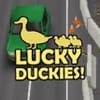
𝐓𝐢𝐧𝐲 𝐟𝐞𝐞𝐭, 𝐡𝐮𝐠𝐞 𝐩𝐚𝐧𝐢𝐜 🦆
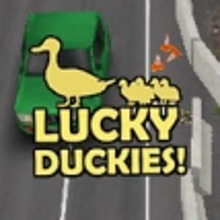
Lucky Duckies looks adorable for about three seconds. Then the road appears, the traffic starts moving, and suddenly this sweet little animal game becomes a full emotional crisis with wheels. The basic idea is beautifully simple: help a mother duck guide her baby ducklings across a dangerous road without letting the whole family get flattened by speeding cars. The Kiz10 page describes it exactly that way, focusing on guiding the duck family across a very busy road while their slow movement makes the challenge much harder.
That setup is enough to make the game instantly memorable. You are not controlling some giant armored hero with lasers and explosions. You are protecting tiny yellow fluff with legs. The stakes should not feel this intense, and yet they absolutely do. The moment those ducklings begin waddling behind their mom, your brain changes. Suddenly every passing car becomes a villain. Every gap in traffic feels like a prayer. Every wrong move feels deeply personal. It is a crossing game, yes, but it also feels like a miniature survival drama starring the smallest possible protagonists.
And that is the trick Lucky Duckies pulls so well. It takes something cute and harmless on the surface, then wraps it in timing, tension, and just enough danger to make every step matter. What begins as “aww, little ducks” quickly becomes “no no no not now MOVE.”
𝐓𝐡𝐞 𝐫𝐨𝐚𝐝 𝐢𝐬 𝐭𝐡𝐞 𝐦𝐨𝐧𝐬𝐭𝐞𝐫 🚗
A lot of casual browser games try to be relaxing. Lucky Duckies does something smarter. It looks relaxing until you actually play it. The level of pressure comes from one cruel little fact: the ducks are slow. Not action-hero slow. Real duckling slow. Soft, uncertain, waddling-across-traffic slow. That changes everything. If they moved fast, this would just be a cute arcade game. Because they move like tiny feathery mistakes, the game becomes a careful dance of timing and route planning.
That is what makes it engaging. You cannot just dash ahead with blind optimism and hope the road respects your confidence. It will not. The cars keep moving, the danger stays real, and your only advantage is choosing the right moment to cross. That means Lucky Duckies becomes a reflex game mixed with a light puzzle rhythm. You read the traffic, judge the distance, and commit at exactly the right time. Too early and you risk disaster. Too late and the whole crossing falls apart. It is one of those mechanics that feels obvious until you actually try it and realize your nerves have become unreliable.
There is also something very funny about how quickly your priorities change. In another game, missing a jump might annoy you. In Lucky Duckies, a bad crossing attempt feels like a direct attack on your soul. The duck family makes the game emotionally louder than it should be. You do not just want to win. You want to protect them. You want all the ducklings to make it to the other side in one happy little line. That emotional layer gives the gameplay more weight without making it complicated.
𝐂𝐮𝐭𝐞𝐧𝐞𝐬𝐬 𝐮𝐧𝐝𝐞𝐫 𝐩𝐫𝐞𝐬𝐬𝐮𝐫𝐞 💛
The charm of Lucky Duckies comes from how confidently it leans into contrast. Everything about the visual idea says lighthearted animal game. Ducks, waddling, bright energy, simple goal. But the actual experience has this sneaky undercurrent of urgency. Traffic does not care how cute the ducklings are. That little clash between adorable visuals and genuine danger gives the game its personality.
It also makes success feel surprisingly satisfying. A clean crossing is not just a correct move. It feels like a rescue. You watch the family move safely forward and there is this ridiculous little spark of relief, as if you have personally prevented a tiny roadside tragedy. That emotional payoff is much stronger than it has any right to be, and that is exactly why the game sticks in your memory.
Games like this often work best when they keep the objective clear and the tension constant. Lucky Duckies understands that. It does not need endless systems or flashy upgrades. It just needs one strong challenge delivered well. Protect the duck family. Read the road. Time your moves. Repeat until your instincts sharpen and your heart rate becomes slightly unreasonable for a game about waterfowl.
On Kiz10, that makes it a very easy game to get into. You understand the mission instantly. There is no barrier between the player and the fun. But there is still enough difficulty to keep the experience alive. That balance matters. Cute games sometimes become forgettable when they are too soft. Lucky Duckies avoids that by giving the sweetness a dangerous environment to survive.
𝐖𝐡𝐲 𝐨𝐧𝐞 𝐦𝐨𝐫𝐞 𝐭𝐫𝐲 𝐭𝐮𝐫𝐧𝐬 𝐢𝐧𝐭𝐨 𝐟𝐢𝐯𝐞 🎯
The replay value comes from the same place as many classic arcade-style games: you always feel like the next attempt will be cleaner. You can see the mistake. You know what you should have done. The road pattern made sense a second too late. So you restart. And again. And maybe again after that. Not because the game is unfair, but because it makes improvement feel possible at all times.
That is a powerful loop. Lucky Duckies never asks the player to memorize some massive world or learn complicated systems. It asks for timing, observation, and calm under pressure. That means each new try feels useful. You get a little sharper. You wait a little better. You stop panicking, or at least you panic in a more organized way. The game becomes more satisfying as your control improves.
It also helps that the duck family theme stays charming instead of getting old. Some simple arcade games lose their magic after a few rounds, but Lucky Duckies keeps its emotional hook because those little followers matter. You want to keep them safe. You want the crossing to work. You want the road to stop behaving like a machine built specifically to ruin duck-related happiness.
For players who enjoy cute animal games, reflex challenges, traffic-dodging gameplay, and classic crossing mechanics, this is a really appealing little title on Kiz10. It is easy to read, genuinely tense, and much more dramatic than its soft look suggests. That mix makes it memorable. It is not trying to be huge. It is trying to be effective, and it succeeds.
𝐀 𝐡𝐚𝐩𝐩𝐲 𝐞𝐧𝐝𝐢𝐧𝐠 𝐰𝐢𝐭𝐡 𝐚 𝐥𝐨𝐭 𝐨𝐟 𝐧𝐞𝐚𝐫 𝐦𝐢𝐬𝐬𝐞𝐬 🌼
Lucky Duckies works because it understands that small stakes can feel enormous when the game gives you something worth caring about. A mother duck, a line of ducklings, a dangerous road, and a player trying very hard not to ruin everything. That is the whole formula, and it is surprisingly strong. On Kiz10, the game becomes a fast, cute, nerve-testing adventure where every safe crossing feels like a tiny miracle.
It is cheerful, yes, but never sleepy. It is simple, but not empty. It is the kind of game that looks harmless until you realize you are leaning forward, fully focused, trying to escort a waddling family through moving traffic like it is the most important mission of the day. Honestly, that is part of its brilliance.
Lucky Duckies turns softness into suspense. It transforms a road into a boss fight and ducklings into the reason you suddenly care far too much. That is a wonderful little trick for a browser game to pull off, and it is exactly why this one feels so easy to love.

















 4.6 (7 votes)
 Share
Share
 Embed
Embed