𝗦𝗹𝗲𝗲𝗽𝘆 𝗗𝗮𝗱, 𝗵𝘆𝗽𝗲𝗿 𝗞𝗶𝗱, 𝗮𝗻𝗱 𝘆𝗼𝘂 𝗶𝗻 𝘁𝗵𝗲 𝗺𝗶𝗱𝗱𝗹𝗲 😴🟥🧠
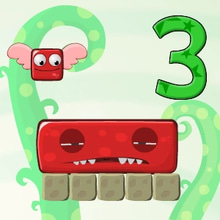
Monsterland 3 looks like a cute little block world… right up until you realize the “cute” part is basically bait. Junior is tiny, bouncy, impatient, and absolutely determined to reach his massive red dad, who is snoring at the bottom of the level like a brick-shaped mountain that refuses to wake up. Your job is simple to explain and strangely tricky to execute: remove the right blocks in the right order so Junior can drop, slide, hop, and tumble safely down to Dad’s head. That’s it. No complicated controls. No long tutorial speech. Just you, gravity, and a pile of blocks that will happily betray you the moment you click without thinking.
On Kiz10, Monsterland 3 feels like a quick brain snack that turns into a full meal. You start a level and think, okay, I’ll just remove this piece… then the whole structure shifts, Junior bounces in a direction you didn’t expect, and your plan melts like it never existed. The game doesn’t punish you with harsh drama. It punishes you with physics, which is somehow funnier and more painful at the same time. Because physics doesn’t argue. Physics simply happens, and then you stare at the screen like, wow… that was totally my fault. 😅
𝗧𝗵𝗲 𝗰𝗹𝗶𝗰𝗸 𝘁𝗵𝗮𝘁 𝘀𝘁𝗮𝗿𝘁𝘀 𝗮 𝗰𝗵𝗮𝗶𝗻 𝗿𝗲𝗮𝗰𝘁𝗶𝗼𝗻 🖱️⚡🧱
The magic of Monsterland 3 is that every level is basically a tiny physics domino machine. Some blocks are safe to remove. Some blocks are holding the entire world together by a single corner like a hero nobody thanked. The moment you delete the wrong support, everything tilts, slides, drops, and becomes a chaotic mess where Junior is no longer “traveling,” he’s just… falling with opinions. The game makes you respect the structure. It teaches you to look for the spine of the stack, the weak point, the piece that makes everything collapse in a useful way instead of a tragic way.
And when you get it right, it feels clean. Not loud, not flashy, just satisfying. Junior lands where you wanted, the path opens, and suddenly the level feels like it’s cooperating. That’s when you realize the real goal isn’t “remove blocks.” The real goal is “remove blocks in a way that makes gravity do your work.” Gravity is your employee here. Treat it well, and it delivers. Treat it like a toy, and it throws your kid monster into the void. 🌪️🟥
𝗝𝘂𝗻𝗶𝗼𝗿 𝗶𝘀 𝗮 𝘁𝗶𝗻𝘆 𝗽𝗿𝗼𝗯𝗹𝗲𝗺 𝘄𝗶𝘁𝗵 𝗵𝘂𝗴𝗲 𝗲𝗻𝗲𝗿𝗴𝘆 🧒🧨
Junior doesn’t move like a boring block. He feels alive, like a kid who can’t sit still for two seconds. That personality matters because it shapes how you play. You’re not guiding a robot with perfect balance. You’re guiding a little chaos cube who bounces, slides, and occasionally looks like he’s about to do something brave… and then immediately does something dumb. The funny part is that it’s not random. It’s physics plus momentum. You can predict it, but only if you stop rushing.
You’ll start noticing your own habits. If you play too fast, you remove a block and instantly remove another before the first reaction finishes. That’s when disasters happen. A platform might have been about to settle into a perfect landing spot, but you interrupted it and turned it into a ramp to nowhere. Monsterland 3 quietly rewards patience. Not slow play, but patient timing. Watch what moves. Let it finish moving. Then act. It sounds small, but it’s basically the difference between “puzzle solved” and “why is Junior falling again.” 😭
𝗗𝗮𝗱 𝗶𝘀 𝗻𝗼𝘁 𝗮 𝗴𝗼𝗮𝗹, 𝗵𝗲’𝘀 𝗮 𝗹𝗮𝗻𝗱𝗶𝗻𝗴 𝘇𝗼𝗻𝗲 🎯😴
In most puzzle games, the goal is an exit door or a flag. In Monsterland 3, the goal is a sleeping father who refuses to participate. That’s what makes it so charming. Dad just sits there, eyes closed, like, “If you want my attention, bring it to me.” Junior wants to jump on his head to wake him up, and that silly objective makes every successful level feel like a tiny prank that worked.
But Dad isn’t just a finish line. He’s also the safest place to land. If you can drop Junior onto Dad’s head, you’re done. So the whole puzzle becomes a question of delivery. How do you deliver a bouncy kid monster through a stack of obstacles without letting him slip, fall, or get tossed sideways? Every level is basically a delivery route in a world where roads are made of blocks and the truck is a hyperactive cube. 📦🟥
𝗧𝗵𝗲 𝗹𝗲𝘃𝗲𝗹𝘀 𝗳𝗲𝗲𝗹 𝗹𝗶𝗸𝗲 𝗹𝗶𝘁𝘁𝗹𝗲 𝘁𝗼𝘆 𝘀𝗰𝗲𝗻𝗲𝘀 𝘄𝗶𝘁𝗵 𝘁𝗿𝗮𝗽𝘀 🧸🪤
Each stage looks like a tiny diorama: blocks stacked, gaps waiting, sometimes awkward shapes that seem harmless until you interact with them. The design is friendly, but the puzzles have teeth. You’ll see obvious blocks that scream “remove me!” and yes, you can remove them… but not yet. Remove them too early and the whole stack shifts in the wrong direction. Remove them too late and Junior can’t reach the safe path.
This is the kind of puzzle game where order matters more than strength. There’s no brute force solution. There’s only sequencing. You become a little engineer, staring at the structure, imagining how weight will move. You’ll start thinking like, if I remove this left support, the top will lean right, Junior will slide, then I can remove that piece to stop the slide… and if it works, it feels like you just pulled off a clean trick. If it doesn’t, you learn something instantly, because the failure is visible. You don’t wonder what happened. You watch exactly what happened. That’s why it’s so replayable on Kiz10. Fail, adjust, try again. 🔁✨
𝗖𝗵𝗮𝗼𝘀 𝗶𝘀 𝗳𝘂𝗻𝗻𝘆 𝗯𝘂𝘁 𝘀𝘂𝗰𝗰𝗲𝘀𝘀 𝗶𝘀 𝗳𝘂𝗻𝗻𝗶𝗲𝗿 😈🏆
There’s a special kind of laughter that happens when you solve a level in Monsterland 3 with one smooth chain reaction. You click a block. Another piece slides. Junior drops perfectly. He lands, bounces once, then plops onto Dad’s head like it was scripted. That moment feels like you outsmarted the level without breaking a sweat, even if you actually tried six times before. The game creates these tiny cinematic wins where physics becomes a punchline you wrote.
And the opposite is true too. Sometimes you make a move that feels correct and it goes wrong in a way that is so dramatic it’s hard not to laugh. Junior launches off an edge like he’s auditioning for a space program. A block rolls in the worst direction possible. Something that looked stable turns into a slide the moment you touch it. It’s not cruel, it’s playful, which is why you keep going. You’re not fighting an unfair game. You’re learning a silly world with consistent rules that just happen to be unforgiving when you ignore them. 😅🧠
𝗛𝗼𝘄 𝗽𝗹𝗮𝘆𝗲𝗿𝘀 𝗴𝗲𝘁 𝗯𝗲𝘁𝘁𝗲𝗿 𝘄𝗶𝘁𝗵𝗼𝘂𝘁 𝗻𝗼𝘁𝗶𝗰𝗶𝗻𝗴 🧩👀
You’ll feel yourself improving fast. Early on, you’ll click the first block you see and hope. Later, you’ll pause for two seconds and read the whole level like a map. You’ll start spotting “support blocks” versus “decorative blocks.” You’ll recognize when a platform is likely to tilt. You’ll learn that removing a block can be used to create a controlled drop instead of a collapse. And you’ll get used to waiting for movement to finish before doing the next action.
A good habit is thinking in outcomes instead of actions. Don’t ask, what can I remove? Ask, where do I want Junior to end up next? Then remove only what helps that happen. Another good habit is leaving yourself a backup. If a structure is about to slide, sometimes you want to keep one block in place as a brake, then remove it later when Junior is in a safer position. It’s simple logic, but the game makes it feel like cleverness because the visuals are so immediate. 🧠🟥
Monsterland 3 is a perfect Kiz10 puzzle pick when you want something cute that still makes your brain wake up. It’s quick levels, smart physics, and that lovable goal of reuniting a kid monster with a sleepy dad. You’ll fail, you’ll laugh, you’ll start predicting the collapses, and eventually you’ll get that clean run where every click feels perfect. Then the next level appears, and the tower looks slightly more annoying, and you go… okay. One more. 😴➡️😈



 3.7 (55 votes)
 Share
Share
 Embed
Embed