🌀🧿 The moment you realize the prison is alive
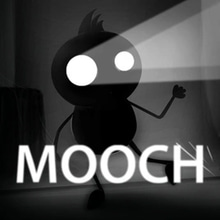
Mooch The Escape throws you into that weird kind of danger where the walls don’t just sit there looking grim… they feel like they’re watching you. You’re controlling Blink, a small creature with big “I refuse to quit” energy, and the goal sounds simple enough at first: collect the lost soul fragments of a friend and get out of this place. But this isn’t a cozy rescue stroll. This is an escape game that behaves like a trap-filled machine room wearing a prison costume, and it’s completely happy to erase your progress the second you get sloppy. On Kiz10, it feels like one of those games you click expecting a quick run, and then ten minutes later you’re still trying to beat the same section because you know you can do it cleaner.
The biggest surprise is how the game controls. You don’t move Blink with classic arrow-key platforming. You guide movement by dragging, like you’re steering a living magnet through danger. It sounds gentle… and then the first buzzsaw slides into frame and you realize you’re basically drawing your own path through a blender.
🧠🖱️ Drag-to-move, but make it stressful
The drag control is the heart of Mooch The Escape. You click, hold, and pull to guide Blink where you want to go. That instantly changes how your brain plays. You’re not just reacting with taps; you’re planning micro-routes. You’re thinking about curves, timing, and positioning because the threats don’t care about your intentions. The hazards are mechanical, fast, and blunt. The moment you drift too close, you get clipped. The moment you hesitate, the enemy cycle catches up. The moment you try to “sneak past” something with a shaky hand… it punishes you like it’s personal.
And because you’re dragging, movement can be smooth or chaotic depending on your confidence. When you’re calm, Blink glides through openings like you meant it. When you’re panicking, your path gets jagged and you start overcorrecting, which is basically the fastest way to get cut down. It’s a sneaky skill test: not just reflexes, but control under pressure.
⚙️🪚 Machines that don’t negotiate
The prison’s defenders aren’t monsters with feelings. They’re machines with routines, and that makes them scarier in a clean, cold way. Buzzsaws chase. Traps sweep. Hazards patrol like they were built only to say “no.” The game leans into that industrial nightmare vibe: metal things moving with purpose, closing angles, shaving off safe space until you’re forced to commit.
What makes it exciting is that you can usually see the threat coming… and still mess it up. You’ll spot the opening, start your move, feel confident for half a second, and then the timing shifts just enough to make you second-guess yourself mid-drag. That split-second doubt is lethal. Mooch The Escape is the kind of game where confidence is protective armor and hesitation is a magnet for disaster. 😅
🧩✨ Soul fragments and the greedy little voice in your head
Collecting soul fragments gives the game its mission flavor. You’re not just fleeing; you’re gathering pieces, moving through a hostile map with a purpose. And the fragments create the best kind of temptation: the safe route versus the rewarding route. Sometimes a fragment sits right along your path and you grab it without thinking. Sometimes it’s placed in a spot that screams “trap,” and your brain starts bargaining.
You’ll do the classic gamer math: If I swing wide, I live, but I miss the fragment. If I cut closer, I get it, but the saw’s cycle might clip me. Then you take the risk anyway because the fragment feels like the real point of the run. That’s a great design trick: it turns a simple escape chase into a decision-making loop where greed and survival constantly argue in your head like two loud roommates.
🌀🟣 Teleport pads: the emergency exit you forget exists
One of the most satisfying mechanics in Mooch The Escape is the teleport pad. When you’re boxed in, cornered, or absolutely doomed, a circular teleport spot can save you… if you remember it and if you reach it in time. It’s the kind of feature that creates dramatic moments because it changes how you think about “dead ends.” A dead end isn’t always death. Sometimes it’s a setup for a teleport escape, a quick reposition that turns panic into a comeback.
But the game doesn’t hand it to you like a free pass. You still need to steer Blink onto it cleanly while danger is closing in. That makes teleporting feel less like a cheat and more like a clutch play. The best runs have that moment where you’re sure you’re finished, then you snap onto the teleport circle at the last second and Blink vanishes like a tiny hero doing a magic trick under pressure. 😈✨
🎮😬 The rhythm of survival: glide, pause, burst
Mooch The Escape has a rhythm that only shows up once you stop flailing. You can’t drag constantly at full speed and expect to win. The hazards are timed. The openings appear and close. The best approach is a mix: glide into position, pause just enough to sync with the trap cycle, then burst through the opening with a clean line. It’s almost like dancing with machinery, except the dance partner is a saw blade that hates you.
This is why the game feels so replayable on Kiz10. Each attempt teaches you something small. You learn where the traps sweep. You learn where the safe pockets are. You learn which corners are bait. Then your hands start following those lessons automatically, and the same section that felt impossible suddenly becomes “okay, I can pass this if I don’t get cocky.”
😵💫🏃 When you’re being chased, your hand becomes the camera
Because you control Blink by dragging, it feels like you’re pulling the character through the level rather than pushing buttons. That makes chases more intense. Your hand is basically the camera operator and the driver at the same time, trying to keep Blink moving while your brain tracks threats behind, obstacles ahead, and collectibles placed like evil decorations.
It’s a strange kind of immersion. You’re not watching a character run. You’re guiding them directly through danger, and that makes mistakes sting more, but victories feel cleaner. When you survive a tight squeeze, it doesn’t feel like the game was generous. It feels like you threaded a needle with your own hand. That’s the addictive part.
🧷🧨 Small tips that change everything
The game rewards smooth routes more than frantic zig-zags. If you want to improve, aim for controlled arcs and avoid sudden direction changes unless you have to. Use safe pockets to breathe for a fraction of a second and read the next hazard cycle. When you see a teleport pad, keep it in your mental map, even if you don’t need it right now. And when you’re going for a soul fragment in a risky spot, commit to the move fully. Half-commits are how you get clipped.
Most importantly, don’t let one mistake speed up your hand. After a fail, players usually drag faster out of frustration, and that’s exactly when they lose again. Mooch The Escape is calmer than it looks. The prison is loud. Your movement should be quiet.
🏁🧿 Why Mooch The Escape sticks in your head
It’s an escape runner, a skill game, and a trap-dodging challenge wrapped into one. It feels simple, but it’s built around precision: precision in timing, in route choice, in control. The soul fragments give it a reason to take risks. The machines give it pressure. The teleport pads give it drama. And the drag-to-move control makes it feel different from the usual browser runner.
If you like fast escape games, hazard dodging, chase tension, and that “I can do better” score-chasing mindset, Mooch The Escape is exactly the kind of Kiz10 game that turns a quick click into a stubborn little obsession. 😅🪚





 4.2 (19 votes)
 Share
Share
 Embed
Embed


