🛡️ A Kingdom on the Edge of Ruin 🔥
Netherland does not waste time pretending life is peaceful. The mood here is immediate: the kingdom is in danger, dark forces are coming, and somebody has to stand in the gap before everything gets swallowed whole. That “somebody,” unfortunately, is you. And no, you do not get to solve this problem with one oversized sword swing and a dramatic speech. Netherland is much meaner than that. Its basic setup revolves around leading a party of knights, archers, and wizards against evil forces in a turn-based fantasy war, with upgrades after battles pushing your team forward.
That alone already gives the game a very specific kind of tension. This is not just a casual click-and-watch adventure. It is the kind of game where every turn has a little weight to it. Every choice matters a bit more than you expected. Send the wrong unit first, and the fight starts leaning in the wrong direction. Forget to improve your team properly, and the next battle suddenly feels like punishment from a universe that keeps receipts.
What makes Netherland interesting is the contrast between its simple battlefield idea and the pressure that grows out of it. On paper, a party-based fantasy strategy game sounds tidy. In practice, it becomes this running little war of decisions, timing, and mild regret. You sit there staring at your formation, wondering whether your mage should strike now or wait, whether the archer can survive one more round, whether the knight is actually tanking like a hero or just standing there dramatically before collapsing. It gets personal fast.
⚔️ Knights, Archers, Wizards… and Bad Decisions in Armor 🧙
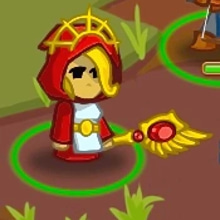
A lot of fantasy games throw the same classic trio at you and call it a day. Netherland actually gets mileage out of it because the party setup creates a natural rhythm in battle. Knights bring force and durability. Archers give you that cleaner distance-based pressure. Wizards, of course, feel like the answer to problems that are too ugly to solve politely. The whole fun comes from how these roles interact when the battlefield turns messy. Sources describing the game consistently frame it around the combined powers of knights, archers, and mages fighting evil, which is really the heart of the experience.
And honestly, fantasy combat becomes much more enjoyable when it is not just about raw damage. It is about order. Sequence. Knowing who should act first and who should be protected for one more turn. That is where Netherland starts feeling clever. Not loud-clever, not “look how complicated I am” clever. Just properly strategic. The kind of game that makes you mutter to yourself because you suddenly realize the battle was winnable three turns ago if only you had stopped improvising like a goblin with a headache.
There is a real pleasure in team-based browser RPGs when your party starts to feel like a machine you built through trial and error. At first, everything is chaos. Your units get hit too hard, your attacks feel inefficient, and every enemy seems slightly more prepared than you are. Then, little by little, you understand the shape of combat. You stop panicking. You start planning. And suddenly the same kind of battle that looked overwhelming earlier now feels manageable, maybe even elegant. For a moment, anyway. Then a harder wave appears and the game reminds you not to get smug.
🌑 Turn-Based Battles with Real Bite 👑
Turn-based combat has a strange advantage over faster action games: it gives you time to witness your own mistakes in slow, painful detail. Netherland benefits from that beautifully. Since the game is built around turn-based fantasy battles, each move becomes visible, deliberate, and impossible to blame on reflexes alone.
That matters because strategy games are at their best when the player feels responsible for both victory and failure. If you win, it feels earned. If you lose, it hurts in a very educational way. Netherland seems built for exactly that loop. You assess the threat, choose your attack order, try to preserve your strongest fighters, and hope your overall battle plan is smarter than whatever nightmare is advancing toward your lines.
The best part is that turn-based games create suspense without needing chaos on screen every second. A quiet battlefield can still feel intense because the danger is in the decision itself. Attack now? Defend? Save resources? Risk the mage? Commit the knight? One click can shift the whole battle, and that gives the game a kind of focused pressure that never really goes away.
There is also something deeply satisfying about a fantasy war game that respects patience. Netherland is not the sort of experience that rewards mindless aggression. It rewards timing, composition, and reading the shape of a fight before it turns ugly. Which it will. It absolutely will.
💰 Upgrades, Recovery, and the Beautiful Illusion of Control ✨
One of the strongest hooks in Netherland is the progression between fights. Descriptions of the game emphasize upgrading your equipment and skills after each battle, and that detail changes everything because it turns survival into momentum. You are not just trying to scrape through one encounter. You are building a stronger army for the next disaster waiting around the corner.
This is where the game starts becoming addictive in that quiet, dangerous browser-game way. You finish one battle and immediately want to see how your improved squad performs in the next. A stronger knight changes the frontline. Better abilities for the wizard can completely reshape your approach. Even a modest upgrade can make the whole team feel less fragile, which is important when the enemy seems determined to erase your optimism.
And yes, there is also that classic strategy-game trap where upgrades make you feel invincible for about two minutes. Then a stronger enemy appears, your perfect formation crumbles, and suddenly you are back to staring at the screen with the expression of someone who has just realized the campaign was not impressed by their recent confidence. That cycle is great, though. It keeps the progression honest. You get stronger, but the game keeps asking more from you.
A good fantasy RPG never lets improvement feel flat. It should feel like preparation. Like sharpening blades before the next storm. Netherland seems to understand that instinctively.
🏰 Why the Dark Fantasy Tone Works So Well 🩸
The name Netherland already sounds like a place where comfort goes to die. It has that heavy, old-world fantasy feeling to it, like a kingdom half-buried under ash, curses, and military reports nobody wants to read. Pair that with evil armies and a party of warriors fighting to stop the collapse, and the tone almost writes itself. The core premise across available game listings is consistent: dark forces threaten the realm, and your heroes must stand together to resist them.
That atmosphere is important because strategy games become much more memorable when they feel like a world rather than a mechanic. Netherland is not just “move units, attack enemy.” It is a defense of a kingdom that feels under siege. The fantasy tone gives your decisions emotional texture. You are not merely optimizing damage output. You are holding the line in a world that seems one battle away from complete disaster.
And that is why the game sticks. It mixes old-school fantasy class roles, turn-based planning, and a dark kingdom-at-war vibe into something that feels immediately readable but still tense. No unnecessary noise. No bloated systems. Just pressure, planning, and the constant hope that your squad is finally strong enough to handle what comes next.
👑 One More Battle, One More Upgrade, One More Try 🎮
Netherland has the kind of design that quietly traps players in the best possible way. You tell yourself you will play one more battle. Then you want one more upgrade. Then you want to test the upgraded party. Then the next fight goes badly and now it is personal. That is how these games win.
For players who enjoy fantasy strategy, turn-based combat, heroic class combinations, and kingdom defense with a darker edge, Netherland is exactly the sort of Kiz10 game that can turn a quick session into a determined campaign. It has enough tactical structure to stay interesting, enough progression to keep you engaged, and enough grim fantasy energy to make every victory feel like a small miracle dragged out of chaos.
It is not about flashy nonsense. It is about choices. Hard fights. Better preparation. And that deeply satisfying moment when your battered team survives one more impossible-looking battle and you realize, with a slightly unhinged smile, that you are absolutely playing another round.





 4.5 (37 votes)
 Share
Share
 Embed
Embed