🐸🎨 One Hop, One Color, One Very Judgmental Board
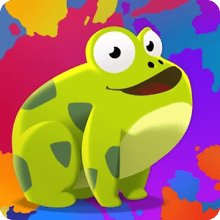
Paint the Frog looks adorable until you realize it’s quietly ruthless. You see a grid full of cute little frogs, you click one, it jumps, and suddenly the rules appear in your head like a trap snapping shut: every hop matters. This is a logic puzzle game built around order, planning, and that particular kind of frustration where the solution is right there… but your hands keep choosing the wrong first move. On Kiz10, it’s the perfect “easy to start, hard to master” brain game because it asks for calm thinking while your instincts scream “just click faster.” Spoiler: clicking faster is how you lose. 😅
The goal is simple and satisfying. You need to paint all the frogs. Usually that means making each frog jump onto another in a specific sequence so colors spread correctly and no frog gets left behind unpainted. You’re basically conducting a tiny amphibian ballet. A very cute ballet where one wrong leap destroys everything.
🧠💥 The Rules Are Simple… The Consequences Are Not
The magic of Paint the Frog is that it doesn’t need complicated mechanics. The puzzle is about movement and coverage. When you jump, you change the board state. You remove options. You create new ones. It’s like a chain reaction puzzle where your brain has to predict what the next three moves will look like, not just the next one.
At first, you’ll play it like a casual click game. “Okay, this frog jumps there, nice, next.” Then you hit a level where the board gets tighter and you realize you’ve been living a lie. Now you have to think. You start looking for patterns. Which frogs are isolated? Which jumps are mandatory? Which move creates a dead end? You stop seeing frogs as cute characters and start seeing them as nodes in a puzzle graph, which sounds dramatic for a frog game, but… that’s what it becomes. 🐸📌
One of the best feelings is when you find the correct opening move. Because the opening move is usually the key. Get it right and the level starts flowing, like dominos falling in the correct direction. Get it wrong and you’ll spend the next minute doing “salvage mode” until you admit defeat and restart.
🎯🐸 Planning Like a Tiny Frog Chess Match
The board in Paint the Frog feels like chess, except your pieces are frogs and your reward is color. You’ll start thinking in routes. You want to avoid leaving a single frog stranded with no legal jumps. You want to keep pathways open until you’ve used them. You want to “consume” the board logically, clearing areas in a way that doesn’t trap you later.
Sometimes the smartest play is counterintuitive. You’ll be tempted to paint a big cluster early because it looks efficient. But that might close off the only bridge to another section. Other times the best move is to tackle the lonely frog first, because if you leave it, you’ll never be able to reach it again. The game teaches you that loneliness matters. If a frog looks isolated, it’s probably important. 😬
And when you get it right, it feels smooth. You start hopping in a satisfying chain, each move making the board cleaner, each jump feeling like progress instead of guesswork. That’s where the game shines: it turns logic into rhythm.
🌈✨ Cute Presentation, Serious Puzzle Energy
Paint the Frog has that friendly look that makes it approachable for everyone. But under that, it’s a legit thinking game. It rewards patience. It rewards looking ahead. It rewards recognizing the board structure. And because the art is simple and charming, it never feels heavy. Even when you fail, it’s not rage-inducing. It’s more like… “okay, the frogs outsmarted me again.” 😭🐸
The color theme also makes completion feel extra satisfying. You’re not just finishing a level, you’re making the board look “done.” The visual payoff is real. Everything painted, everything clean, no loose ends. It scratches that little part of the brain that loves order.
🌀🔍 Levels That Train Your Instincts
As you go deeper, levels start forcing you to use more deliberate strategies. You’ll meet layouts where the solution isn’t a straight line, it’s a carefully arranged sequence. You’ll start thinking about “forced moves,” spots where only one jump makes sense. You’ll also learn to spot traps: moves that look correct but create an isolated frog later.
This is why the game has replay value. Even if you beat a level, you’ll remember hows you beat it. Next time, you’ll do it faster, cleaner, with less hesitation. You’ll start building a puzzle instinct that carries over to other logic games too. It’s not just memorization; it’s pattern recognition.
And the quick restart loop makes it addictive. Fail? Restart. Try a different opener. Fail again? Restart faster. Then suddenly you solve it and feel like a genius for 10 seconds. That’s the entire Paint the Frog experience in a nutshell: tiny despair, sudden brilliance, repeat. 😅✨
😌🐸 Small Tips That Make a Big Difference
If you want to improve, start by scanning the board before clicking anything. Identify frogs that can only be reached through one path. Those are your priority targets. Keep an eye on bridges between clusters. Don’t cut bridges too early. And when you’re stuck, don’t keep clicking randomly hoping it fixes itself. It won’t. Step back, restart, change the first move. The first move is often the door key.
Also, don’t be afraid to slow down. This is a puzzle game, not a speed test. When you rush, you miss structure. When you read the board, you see the route.
Paint the Frog on Kiz10 is perfect if you want a logic puzzle that feels light and playful but still gives your brain a real workout. Cute frogs, clean mechanics, satisfying color, and that constant “I can solve this” itch that keeps you coming back. Hop smart, paint everything, and try not to take it personally when a frog-shaped grid humiliates you. 🐸🎨🧠



 4.6 (7 votes)
 Share
Share
 Embed
Embed